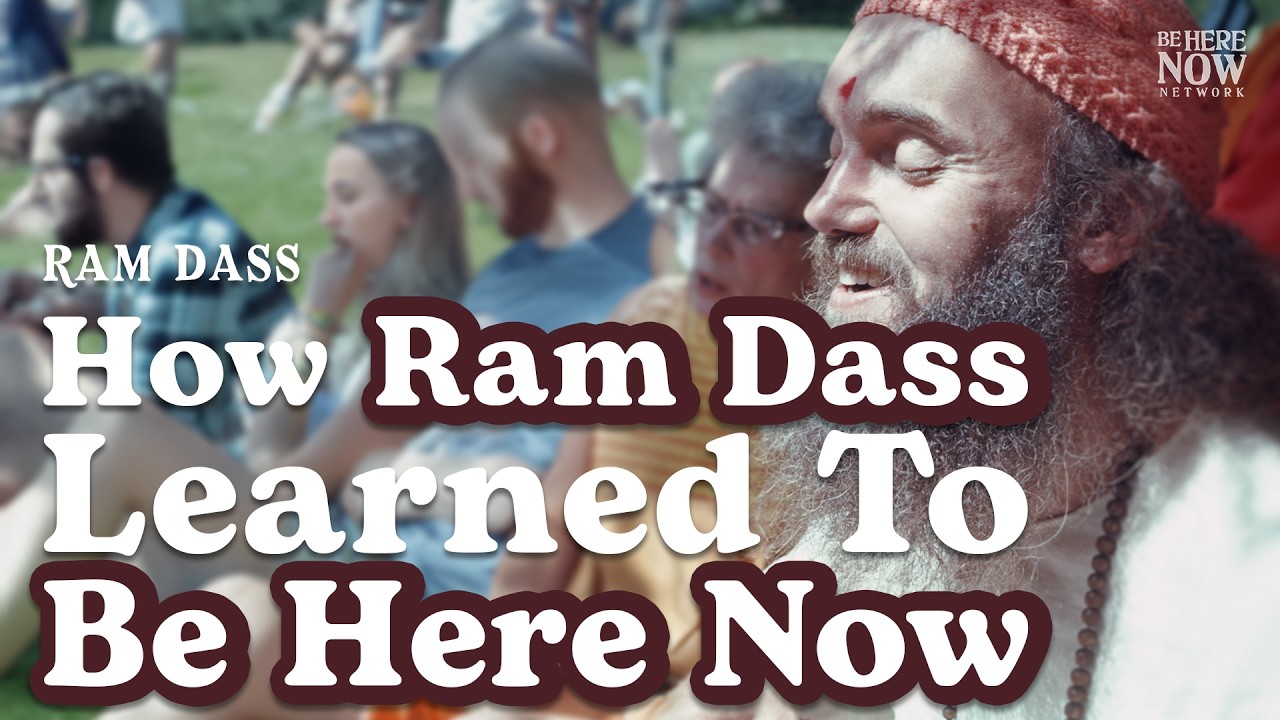
Resting in awareness is a core spiritual practice that involves aligning with the fundamental nature of mind—spacious, equanimous, and love-infused—rather than contracting around the contents of thought and sensation. Across fifty years of teaching, the speaker has consistently returned to this theme: when you stop clinging to phenomena and allow your awareness to expand to embrace everything, you step out of the egoic construct of time and enter a state where awareness itself becomes the primary reality. This is not a technique to achieve something new, but rather a recognition of what awareness already is, accessible through meditation and the intentional cultivation of presence.
What Does It Mean to Rest in Awareness?
Resting in awareness is fundamentally different from being caught in the stream of thoughts, emotions, and sensations. Rather than identifying with the constant mental activity—the voice narrating your experience, the emotions rising and falling—resting in awareness means recognizing the space in which all of that occurs. The speaker describes this using a powerful metaphor: awareness is like the sky, while all the phenomena of life—your thoughts, feelings, sensations, your entire sense of self—are like clouds passing through that sky.
"Your whole concept of who you think you are, all the stuff of 'me' is all the cloud," the speaker explains when discussing awareness in the Virgin Islands (1995). "And the cloud is being appreciated or embraced or carried by the sky. The sky is just awareness." This analogy captures something essential: the content of consciousness is temporary and ever-changing, but the awareness that holds it all is stable, unchanging, and fundamentally spacious.
The practice itself is deceptively simple but profoundly subtle. It involves gradually learning to shift your identification from the clouds (the contents of mind) to the sky (awareness itself). This shift happens not through force or will, but through a gentle turning of attention—noticing that awareness is already present, already functioning, and learning to rest in it rather than constantly grasping or pushing away the content it contains.
How Does Awareness Relate to Harmony With the Tao?
In 1976, speaking in Washington, D.C., the speaker connects resting in awareness to the concept of the Tao—the Way of things, the fundamental pattern or flow underlying all existence. When you are aware without clinging to what you perceive, and when you move in harmony with all the forces at play, something remarkable happens: "you are no longer in time." This is not a poetic statement but a direct description of how consciousness shifts when the ego's constant grasping relaxes.
The ego exists in time. It is always reaching backward to past experiences, forward to future possibilities, trying to secure itself against loss and death. But awareness, when uncontracted, is naturally aligned with the present moment—which is always timeless. By resting in awareness and flowing with what is, rather than resisting reality or trying to force things into a predetermined shape, you align yourself with the Tao. You become, in a sense, an instrument of the larger intelligence that moves through all things.
This alignment is not achieved through more effort or willpower. Paradoxically, it comes from relaxation—from allowing your grip on how things "should" be to loosen. When you stop fighting against what is, when your awareness becomes open and responsive rather than narrow and defensive, you discover that you are already part of the flow. You were never separate from it.
What Are the Qualities of Aware Consciousness?
In 1985, the speaker meditates on specific qualities that become apparent when you rest in awareness. These are not qualities you have to create or develop from scratch; rather, they are inherent to awareness itself, and become accessible as you learn to rest in it. Three primary qualities emerge:
Spaciousness: When your identification shifts from the contracted sense of "me" to the sky-like awareness that contains all experience, there is a natural expansion. The mind no longer feels cramped or squeezed. There is room for everything—all thoughts, all emotions, all sensations—without any of it being a problem. This spaciousness is not mental relaxation alone; it is a fundamental shift in how you relate to your own existence.
Equanimity: From this spacious awareness, phenomena arise and pass like clouds. Some are pleasant, some are unpleasant, but the awareness itself neither clings to the pleasant nor rejects the unpleasant. This is equanimity—not indifference or detachment, but a balanced, inclusive presence that can hold all of life's variations without being thrown off center.
Love: Perhaps most surprisingly, awareness itself has a loving quality. When the defensive structures of the ego relax and awareness expands, love naturally emerges. This is not the emotional love that depends on conditions or objects. It is a fundamental loving-kindness, a gentle embrace of all that is. The speaker emphasizes that "awareness and love are really the same thing." As the boundaries of self dissolve in expanded awareness, love becomes not something you have to generate but something you recognize as the nature of awareness itself.
The speaker encourages practitioners to "become instruments of light, love, and presence." This is not about performing or pretending, but about allowing these qualities to flow through you once the obstruction of ego-contraction is removed. "Just allow your awareness to expand, to embrace everything you hear or feel or think," the speaker says in 1985. This simple instruction contains the entire practice.
How Does Awareness Remain Consistent Across Different Life Circumstances?
A striking feature of the teaching across the decades is how the speaker returns again and again to resting in awareness, even as life circumstances change dramatically. In 1976, the teaching emphasized harmony with the Tao and stepping out of time. In 1985, the qualities of spaciousness, equanimity, and love take center stage. In 1995, the sky-and-clouds metaphor illuminates the relationship between awareness and all phenomena. And in 2016, having lived through illness and continued practice, the speaker teaches a guided meditation into "the space of loving awareness," encouraging practitioners to "go for a swim in the ocean of love."
What remains constant is this: no matter what is happening in the content of life, no matter what challenges arise, awareness itself is stable and available. The teaching does not dismiss the reality of suffering or difficulty, but it points to something that remains unharmed beneath the level of circumstances. By resting in awareness, you are not trying to escape from life or pretend difficulty doesn't exist. Rather, you are recognizing that there is a dimension of your being that is not threatened by life's changes.
This consistency is crucial. A spiritual practice that only works when things are going well is not very useful. But if you have learned to rest in awareness—if you have tasted the spaciousness, equanimity, and love of consciousness itself—then you have access to something that holds steady even when circumstances are turbulent.
What Is Loving Awareness, and How Do You Enter It?
In the final teaching from Maui in 2016, the concept of loving awareness becomes explicit. At this point in the speaker's life, he had clearly learned to rest completely in loving awareness. He guides a meditation to help others access this state, describing it as a space where all beings can "go for a swim in the ocean of love."
Loving awareness is not a special state you have to create through advanced techniques. It is simply awareness with the heart fully open—awareness infused with love, warmth, and embrace. The meditation invitation suggests a direct path: move your attention into the space of loving awareness, not as a concept or idea, but as a lived experience. Feel the ocean of love that is your own true nature.
This is a significant deepening of the teaching. In the earlier decades, the emphasis was on recognizing awareness, finding harmony with the Tao, and cultivating the qualities of equanimity and spaciousness. But by 2016, the teaching has integrated the heart. Loving awareness is not cold, detached, or merely spacious. It is spaciousness infused with love—an embrace of all existence from the heart's intelligence.
The instruction to enter this state is simple but requires practice: instead of trying to achieve or manufacture love, you relax into it. You allow your awareness to embrace whatever you are experiencing with kindness rather than judgment. Over time, as the defensive structures of self soften, you discover that love is not something you create but something you recognize as fundamental to consciousness itself.
Where to Go From Here
If this teaching resonates, the next step is practice. Resting in awareness is not a concept to understand intellectually but a direct experience to cultivate. Begin with simple meditation: sit quietly and notice the awareness that is present, aware of sounds, sensations, thoughts. Don't try to change anything or achieve a special state. Simply notice the sky-like awareness in which all phenomena are occurring. When you catch yourself contracted into identification with thoughts or emotions, gently widen your attention again to include the spacious awareness that holds it all.
As you practice, the qualities of spaciousness, equanimity, and love will naturally emerge. You may begin to notice moments where time seems to drop away, where you are in harmony with what is rather than fighting against it. Slowly, resting in awareness becomes not just a meditation practice but a way of being in life. The ocean of love that is your true nature becomes more accessible, not just in quiet moments but in the midst of living, relating, and serving others.