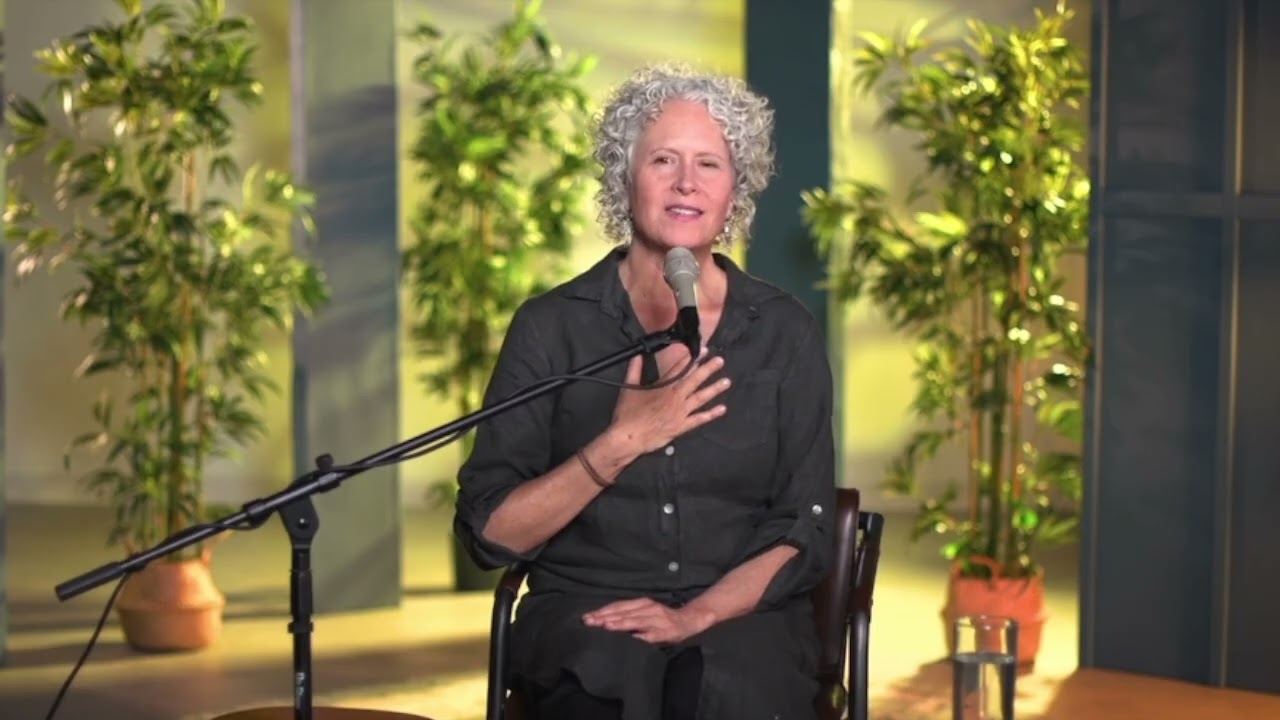
A weekly, free Meditation Town Hall led by Lama Surya Das, with senior student Nathan Mauck holding the space for the hour, opens not with a lecture but with a bell, a refuge prayer, and a gentle invitation to notice a wish already present in everyone on the call: that all beings be well. From there the session settles into one working method, repeated for nearly an hour. Recognize awareness, release with each out-breath, let thoughts arrive and leave on their own schedule, and begin again whenever the mind wanders off. The practice is simple to describe and quietly demanding to do, and the October 11, 2026 session is a clear window into how a teacher's lineage gets handed to the next voice in the room.
The session begins with a bell, a few moments of music, and then a recitation of the refuge and bodhisattva-style aspirations. In the opening minutes you hear the familiar lines: "May all beings possess happiness and the inner causes of happiness. May all beings be free from suffering and the inner causes of suffering." Mauck does not rush past them. He stops to check whether the wish is really his, admitting that he does not always feel he is rooting for everyone, and then noting that some part of him still wishes all beings to be well. That small act of self-inquiry is the real doorway into the session. Before any technique, the room is asked to recognize that the basic intention is already there.
This matters because the town hall format brings together people from very different places. Mauck remarks on the oddity of the group: people who somehow "managed to find ourselves to the same Zoom at the same time from all over the country and world." A shared container, even a digital one, becomes the setting for practice. The bell and the prayer mark the boundary between the ordinary day and an hour set aside for sitting.
Mauck names what the practice is resting from. "Rest from these kind of loops, these things we just kind of keep revisiting," he says in the session. These loops include "inner monologue things we need to take care of," stories about who we are or are not, worries, and even hopes. His phrase "great and small" recurs throughout, a reminder that the mind's repetitive loops range from trivial errands to deep identity narratives.
The instruction is not to eliminate these loops, and it is not to judge them. It is to take a break from clinging to them. Notice the in-breath, notice the out-breath, and with each exhale let the body and mind relax a little more. The emphasis is on release rather than effort. Mauck returns to this word, release, many times across the hour, and it is worth taking literally: the practice asks you to loosen your grip, not to build a fortress against thought.
The central move of the session is recognition. Rather than working to produce calm or stillness, the practitioner is asked to recognize the awareness that is already present and rest in that recognition. Mauck describes it this way: "Nothing to fabricate, nothing to force. Just simply allowing natural unfolding of things as they are." The language is open and spacious. Awareness is described as "open, spacious, clear, radiant, naturally occurring," and the practitioner is invited to notice that this knowingness is inseparable from whatever arises in experience, including sound, sensation, and movement.
There is a useful distinction here for anyone who has tried meditation and felt they were failing at it. The session explicitly says not to shoot for stillness at the expense of movement. A thought arrives, a cat walks past a window, a feeling passes through the body. Each of these is recognized as a movement within the same open awareness. Mauck even reminds the group that "Any position will do," which removes one more layer of performance from the sit. What is required is not a perfect posture or an empty mind but attention that stays fresh.
When distraction happens, and it will, the instruction is simple and kind. Start fresh. Mauck says plainly: "If we get distracted, no problem at all. Just start fresh over and over as many times as needed." That repeated beginning is not a sign of failure. It is the practice itself, returning to recognition as often as needed.
"Relaxing into the recognition, releasing into the recognition rather than straining or struggling. Resting, allowing. Leave it as it is." (Nathan Mauck, guiding the October 11, 2026 Meditation Town Hall)
Around the midpoint of the session, Mauck offers an image that does much of the explanatory work. "I like the image of picturing myself kind of floating down the river," he says, "and instead of grasping every tree branch and paddling upstream and swimming away from everything, just kind of drop and flop and float." The key line follows: "Already in the flow. Don't need to get in the flow. It's already flowing."
This is a sharp teaching about effort. Much of our suffering comes from trying to climb out of a current that is already carrying us. We grab branches, stress about the drop ahead, and paddle against what is happening. The river image asks a different question: what would it take to let go of the branch? The answer offered is not passivity but trust. The session returns to this trust throughout, describing it as "trusting that recognition, relying on that," and "learning to trust in just being."
The river picture also explains why the session keeps repeating the word "natural." Awareness is not something to be manufactured. It is already the ground on which experience happens, and the practice is a matter of recognizing that ground rather than building it.
After the stretch break and a long stretch of open practice, the session moves toward a dedication. The text read aloud asks that beings be awakened, liberated, and healed without exception, and it names suffering in its visible forms: "cruelty, pandemics, famine, droughts, natural calamities that beset us all." The transcript cuts off mid-phrase at the end, so the full closing words are not available here. What is clear is the intention. The merit of sitting is not kept private. It is turned outward.
This gives the whole hour its shape. It opens with a wish for all beings, moves through a method for resting the mind, and closes by offering the fruits of that rest back to the world. In a few brief exchanges between sits, Mauck also shares a personal, human note about balancing a household and a practice, which keeps the teaching grounded. He says he tries to keep the practice accessible: "easy to access, always" available, throughout the day.
If this session has you curious about the practice, the most useful next step is to try the core instruction on your own for a few minutes. Sit comfortably, and notice the in-breath and out-breath. With each out-breath, release a little. When thoughts arise, recognize them without blocking or chasing. When you drift, start fresh. You do not need a perfect state to begin.
The video itself is a free weekly offering from Lama Surya Das, and the channel description directs viewers to dzogchen.org to register for the free sessions or to make a dana donation. Watching the full recording will give you the pacing, the long silences, and the voice of a guest host who speaks openly about his own path, including how the writings of Lama Surya Das first drew him into practice. Treat the hour as an invitation rather than a test. As Mauck puts it near the close, the practice is about "Just tuning into that which is upstream from personality to our essentiality."