BrightStar

Browse All Events

Discover conscious gatherings

events

Yoga
Meditation
Breathwork
Qigong
Tai Chi
Sacred Music
World Music
Medicine Music
Sound Healing
Ecstatic Dance
Popular Destinations
BaliSedonaLos AngelesCosta RicaNew YorkSan FranciscoAustinMiamiJoshua TreeTulum
View All CategoriesView All Destinations

Explore All Features

Powerful tools to grow your events

Platform Features

Smart Dynamic Pricing
Ticket Categories
Assigned Seating
Abandoned Cart Recovery
Visitor Recovery
Donations & Sliding Scale
Affiliate Engine
Ticket Scanner
Coupon Codes
Custom Questions
Ticket Sharing
Upsells & Add-ons
Analytics & Reporting
Email Sequences
Waitlist / Notify / Remind
People & Places
Artists & TeachersEvent OrganizersVenues & StudiosKnowledge BaseGlossaryInspiration
View All FeaturesAbout Us
PricingBlog
Language
Saved events
Browse All Events

events

YogaMeditationBreathworkQigongTai ChiSacred MusicWorld MusicMedicine Music

Popular Destinations

BaliSedonaLos AngelesCosta RicaNew YorkSan Francisco

People & Places

Artists & TeachersEvent OrganizersVenues & StudiosKnowledge BaseGlossaryInspiration

Platform Features

Smart Dynamic PricingTicket CategoriesAssigned SeatingAbandoned Cart RecoveryVisitor RecoveryDonations & Sliding ScaleAffiliate EngineTicket ScannerCoupon CodesCustom QuestionsTicket SharingUpsells & Add-onsAnalytics & ReportingEmail SequencesWaitlist / Notify / Remind
View All FeaturesAbout Us
PricingBlog
Log inFind EventsHost Events
  • Browse All Events
  • For Seekers
  • Yoga
  • Meditation
  • Breathwork
  • Qigong
  • Tai Chi
  • Sacred Music
  • World Music
  • Medicine Music
  • Sound Healing
  • Ecstatic Dance
  • Retreats
  • Workshops
  • All Categories →
  • Bali
  • Sedona
  • Los Angeles
  • Costa Rica
  • Tulum
  • Byron Bay
  • San Francisco
  • Austin
  • New York
  • San Diego
  • Denver
  • Seattle
  • Portland
  • Miami
  • All Cities →
  • Join the Movement
  • Why we list
  • Sell Globally
  • For Creators
  • For Teams
  • For Writers
  • For Teachers
  • For Kirtan Artists
  • For Studios
  • For Festivals
  • For Retreat Centers
  • For Nonprofits
  • Brand Ambassador
  • Free Ticketing
  • Elevate
  • Amplify
  • 500K+ Buyer Network
  • Abandoned Cart Recovery
  • Smart Dynamic Pricing
  • Ticket Categories
  • Recurring Events
  • Assigned Seating
  • Affiliate Engine
  • Waitlist / Notify
  • Ticket Scanner
  • Embed Widget
  • Event Syndication
  • Message Center
  • Integrations
  • Reports
  • All Features →
  • About
  • The Ecosystem
  • Blog
  • Glossary
  • Inspiration
  • Help Center
  • Contact
  • API Docs
  • Brand Assets
  • Careers
  • Press
  • Terms of Service
  • Privacy Policy

Events

  • Browse All Events
  • For Seekers
  • Yoga
  • Meditation
  • Breathwork
  • Qigong
  • Tai Chi
  • Sacred Music
  • World Music
  • Medicine Music
  • Sound Healing
  • Ecstatic Dance
  • Retreats
  • Workshops
  • All Categories →

Destinations

  • Bali
  • Sedona
  • Los Angeles
  • Costa Rica
  • Tulum
  • Byron Bay
  • San Francisco
  • Austin
  • New York
  • San Diego
  • Denver
  • Seattle
  • Portland
  • Miami
  • All Cities →

For Creators

  • Join the Movement
  • Why we list
  • Sell Globally
  • For Creators
  • For Teams
  • For Writers
  • For Teachers
  • For Kirtan Artists
  • For Studios
  • For Festivals
  • For Retreat Centers
  • For Nonprofits
  • Brand Ambassador
  • Free Ticketing
  • Elevate
  • Amplify

Features

  • 500K+ Buyer Network
  • Abandoned Cart Recovery
  • Smart Dynamic Pricing
  • Ticket Categories
  • Recurring Events
  • Assigned Seating
  • Affiliate Engine
  • Waitlist / Notify
  • Ticket Scanner
  • Embed Widget
  • Event Syndication
  • Message Center
  • Integrations
  • Reports
  • All Features →

Company

  • About
  • The Ecosystem
  • Blog
  • Glossary
  • Inspiration
  • Help Center
  • Contact
  • API Docs
  • Brand Assets
  • Careers
  • Press
  • Terms of Service
  • Privacy Policy
BrightStar
Get the app
Download on theApp StoreGet it onGoogle Play
© 2026 BrightStar. All rights reserved.
Inspiration

Remember Where We Come From: Simrit's Chant of Women and Pharaohs

Simrit
Simrit
Oct 26, 2026
7 min read

From SIMRIT

Watch · 8

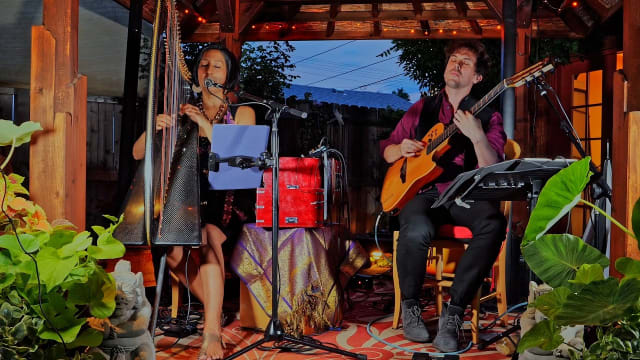
Somewhere past the first minute of this live recording from the Center for the Arts, a single phrase, "Bidi lang lang," rolls back and forth between the singer and the room until it stops sounding like nonsense and starts sounding like a pulse. Then a voice opens a question into the space: "Do you know ancient pharaohs?" The answer comes not as a lecture but as a chant, a list of names sung over and over until the names themselves become the melody. "Come From," the song Simrit performed with dub creative, is a short piece with a large idea at its center: that everyone who is alive came through a woman, and that the first teacher any of us had was a woman too. It is built from the simplest tools a chant has, a repeated phrase, a refrain, and a call answered by a crowd, and it ends up doing something most songs about ancestry never attempt. It sings a history.

Read · 5 sections

What is the "Come From" song actually about?

Simrit introduces the piece before it begins, and the introduction is the closest thing to a program note. "This next song is a song called Come From," the performer says, "and we love the male, we love the female. And this is about where we all come from." That last sentence is the whole premise, and it is worth taking literally. The song is not a manifesto against men or a generic celebration of motherhood. It starts from origin, and it insists that origin is feminine, which is an old idea given a fresh, physical sound.

The refrain makes the point before any history arrives. "Remember where we come from," the voices sing, and then, as a corrective to the abstraction, "We come from our woman." The phrase is plain on purpose. In the live recording, the lyric moves from the general, "where we come from," to the particular, "our woman," and then to a claim about education: "First teacher is our woman." A few lines later the song adds, "Respect our woman." Taken together, these lines describe a sequence of origin, teaching and respect, and they do it in the language of a family rather than a textbook.

How does a chant turn a list of names into music?

This is where "Come From" earns its place as more than a slogan. Around the middle of the recording, the song pivots to a question and a roster. "Do you know ancient pharaohs?" the lead asks, and then supplies the answer the song has been circling: "Our woman they came before. They laid the foundation." From there the piece sings a sequence of names. Sobekneferu. Queen Ahhotep II. Nefertari. Hatshepsut. Nefertiti. The names are drawn from Egyptian history, and the song is careful to hand them to the listener as a set of rulers who came before, not as a footnote.

What turns the roster into music is repetition. The names are not recited once and dropped. They are sung, then sung again, then looped, with "the third" attached to several of them, until the phrase "Sobekneferu the third" settles into a groove that the band and the crowd can hold. This is the same logic that makes a call-and-response chant work in any tradition: a short unit is repeated until the body learns it, and the repetition itself carries the meaning. The listener does not walk away with a timeline of Egyptian dynasties. The listener walks away with the names in their mouth.

"We come from our woman. First teacher is our woman. Respect our woman."

Lyrics from the live recording of "Come From," Simrit feat. dub creative, Center for the Arts

The structure matters for the same reason. The song moves in loops: the refrain "Remember where we come from," then the chant of nonsense syllables that work as breath and bridge, then the list, then back to the refrain. Each return to "Remember" is a reset. The chant lets the audience re-enter the idea every time it comes around, so the claim that women came before and laid the foundation is not heard once. It is returned to.

Why does the song move from "woman" to "mama"?

One of the quieter moves in the recording comes near the end of the chant section, when the refrain shifts its noun. "Remember where we come from," the voices sing, and then the answer changes: "We come from mama." The shift from "woman" to "mama" is small on paper and large in the room. It takes the abstract claim about origin and makes it familiar, the kind of sentence a child says to a parent. The song holds two registers at once, the civilizational one (the pharaohs who laid the foundation) and the domestic one (the mother who taught you first). It does not choose between them, and that is part of its strength.

After the list, the piece returns to its percussive syllables, "Bong bong" and "Bong de de bong," which function less as words than as a pulse to hold the room together while the singers catch their breath. This is a kind of structural honesty. A song that is about remembering needs a pause in which to remember, and the nonsense syllables give the audience that space without asking them to parse anything.

What the performance tells you beyond the song

The spoken coda at the end of the recording gives the performance its context. "Thank you so much family," Simrit says. "Feels so good to be here in the hometown. We just came off the road. We were traveling into in the Pacific Northwest and it feels so wonderful to be home with y'all." The remark is ordinary, the sort of thing a touring musician says at a hometown show, but it reframes the song. A piece about where we come from, performed by someone who has just returned from the road, is a piece about return. The song is sung to a room that is, in a literal sense, where the singer comes from.

It is worth being plain about what this recording is and is not. It is a single live take, posted to YouTube with a description that points listeners to the album "become" and to streaming links for the artist. The lyrics here were transcribed from auto-generated captions, which render some of the chant syllables imperfectly, so the spellings "Bidi," "Biddy," and "Bong de de bong" should be read as approximations of what the crowd sang rather than an official lyric sheet. The view count at the time of writing is modest, 554, which means this is a document of a single night rather than a widely circulated hit. That is not a flaw. A chant is supposed to be sung by a room, and a room is always particular.

Where to go from here

If the song has stayed with you, the most useful next step is to listen to the full album, "become," which contains "Come From" in its recorded form, and to notice how the studio arrangement differs from the live chant. Then try the simplest version of the practice at home: pick a short refrain about where you come from, sing it as a call, answer it yourself, and let it repeat until the words feel like a pulse. The song's lesson is not really about pharaohs. It is about the discipline of remembering, and a refrain you sing often enough is one of the few ways to keep a memory in the body rather than on a shelf.

For a deeper read, look up the Egyptian rulers the song names, starting with Hatshepsut and Nefertiti, and see how the chant's list compares to the historical record. Then return to the refrain. "Remember where we come from." Simple enough to sing, and harder to forget.

Comments

Loading the conversation…

Transcript

[0:03] [music]

[0:04] >> This next song is a song called Come

[0:06] From.

[0:08] And [music] we love the male, we love

[0:10] the female.

[0:11] And this is about where we all come

[0:13] from.

[0:14] >> [music]

[0:20] [music]

[0:27] [music]

[0:31] [music]

[0:36] [music]

[0:41] [music]

[0:47] [music]

[0:52] [music]

[1:01] [music]

[1:07] [music]

[1:12] [music]

[1:17] [music]

[1:25] [music]

[1:28] >> Bidi lang lang

[1:30] >> [music]

[1:32] >> Bidi lang lang

[1:33] >> [singing]

[1:37] >> Bidi lang lang lang lang

[1:40] >> [music]

[1:41] >> Bidi lang lang

[1:42] lang lang

[1:46] Bidi lang lang

[1:47] >> [music]

[1:50] >> Bidi lang lang

[1:52] >> [music]

[1:55] >> Bidi lang lang

[1:57] >> [music]

[1:59] >> Bidi lang lang lang lang.

[2:02] >> [music]

[2:03] >> Remember [singing]

[2:04] where we come from.

[2:08] >> [music]

[2:08] >> Remember where we come from. [singing]

[2:13] Remember where we come [music] from.

[2:17] We come from our woman. [singing]

[2:22] Remember [music] where we come from.

[2:26] Remember where we [music] come from.

[2:31] Remember where we [singing] come from.

[2:35] >> [music]

[2:35] >> We come from our woman.

[2:40] >> [music]

[2:46] [music]

[2:51] [music]

[2:56] [music]

[3:05] [music]

[3:09] [music]

[3:17] >> We grow in our

[3:18] >> [singing]

[3:19] >> woman.

[3:20] >> [music]

[3:21] >> First teacher is our woman. [singing]

[3:25] >> [music]

[3:26] >> Respect our woman.

[3:28] >> [singing]

[3:29] >> Bidi lang lang lang lang lang.

[3:32] >> [music]

[3:35] >> Do you know ancient [music and singing]

[3:37] pharaohs?

[3:40] Our woman they came before.

[3:44] They [music] laid the foundation.

[3:45] [singing]

[3:48] Bidi lang lang lang

[3:50] lang lang.

[3:52] >> [music]

[3:54] >> Sobekneferu

[3:55] [singing] pharaoh.

[3:57] Queen Ahhotep II pharaoh.

[4:03] Nefertari [music]

[4:04] [singing]

[4:04] the pharaoh.

[4:06] Biddy lang lang lang lang.

[4:08] >> [music]

[4:12] >> Sobekneferu

[4:13] the third.

[4:15] >> [music]

[4:16] >> Hatshepsut the third. [singing]

[4:21] Nefertiti the third.

[4:24] Biddy lang lang lang [music and singing]

[4:25] lang.

[4:30] Sobekneferu

[4:32] the third. [music and singing]

[4:34] Sobekneferu

[4:36] the third.

[4:38] >> [music]

[4:39] >> Sobekneferu

[4:40] the third.

[4:42] Biddy lang [music and singing] lang lang

[4:43] lang.

[4:48] >> [music]

[4:48] >> Sobekneferu

[4:49] the third.

[4:52] Sobekneferu [music and singing]

[4:54] the third.

[4:57] Sobekneferu

[4:58] the third.

[4:59] >> [singing]

[5:00] >> Biddy lang lang lang lang.

[5:04] Remember where we come from.

[5:07] >> [music]

[5:09] >> Remember where you come from.

[5:12] >> [music]

[5:13] >> Remember where we come from.

[5:18] We come from

[5:20] >> [music and singing]

[5:20] >> mama.

[5:22] Remember where we come from.

[5:27] Remember where [music and singing] we

[5:28] come from.

[5:32] Remember where we [music and singing]

[5:33] come from.

[5:36] We come from mama.

[5:38] >> [music and singing]

[5:43] [music]

[5:46] >> Bong bong.

[5:51] Bong bong.

[5:52] >> [music]

[5:55] >> Bong de de bong bong.

[5:56] >> [singing]

[5:59] >> Bong de de bong de [music] de bong.

[6:04] Bong bong.

[6:05] >> [music]

[6:11] [music]

[6:18] [music]

[6:25] [music]

[6:31] [music]

[6:37] [music]

[6:42] [music]

[6:46] [music]

[6:51] [music]

[6:56] [music]

[7:04] [music]

[7:09] [music]

[7:14] [music]

[7:20] >> Thank you so much family. Feels so good

[7:23] to be here in the hometown. We just came

[7:25] off the road. We were traveling into in

[7:27] the Pacific Northwest and it feels so

[7:30] wonderful to be home with y'all. Thank

[7:32] you so much for coming out tonight.

Featuring

Artists in This Story

Simrit
Simrit
Musician

With multiple #1 albums and singles on the iTunes World Music charts and Top 5 Billboard New Age placements, SIMRIT moves effortlessly beyond genre – offering an evocative and…

Explore Topics
Call-and-responseChantSacred-feminineAncestral-remembranceKirtan

Got Questions?

Frequently Asked Questions

The song is built on the refrain "Remember where we come from," answered by "We come from our woman." Simrit introduces it as being about where everyone comes from, and it treats origin, teaching and respect as feminine in nature. The live version then sings a list of Egyptian female rulers to make the point concrete.
The live recording names Sobekneferu, Queen Ahhotep II, Nefertari, Hatshepsut and Nefertiti, with the phrase "Sobekneferu the third" repeated as a sung refrain. The names are sung as a roster of rulers who came before and laid the foundation.
Yes. The lead sings a line and the crowd answers, and phrases like "Bidi lang lang" and "Bong de de bong" repeat as a pulse between verses. The repetition is what turns the list of names into a melody.
The YouTube description says the song is from the album "become" by Simrit feat. dub creative. This live recording was made at the Center for the Arts.
The refrain shifts from "We come from our woman" to "We come from mama" near the end of the chant section. The change moves the claim from the civilizational to the domestic, from the pharaohs who laid the foundation to the first teacher a person knew.
The lyrics quoted here come from auto-generated captions of a live recording, so chant syllables like "Bidi" and "Biddy" are approximations. The sung phrases about women, teaching and the pharaohs are clear in the transcript.

Continue Reading

More from Simrit

View All
Prithvi Hai: Earth, Ether, and a Pandemic-Born Chant
Inspire

Prithvi Hai: Earth, Ether, and a Pandemic-Born Chant

Simrit's live "Prithvi Hai" at Center for the Arts, with dub creative, traces a chant from pandemic songwriting to a call for unity. Here is…

9 min read
Become Live at Center for the Arts: Chant and Call-Response
Inspire

Become Live at Center for the Arts: Chant and Call-Response

A seven-minute live performance of "Become," from the album by Simrit feat. dub creative, built on repeated vocal phrases, held vowels and c…

5 min read
Harp, Bansuri and Fretless Guitar at Denver's Enchanted Garden
Inspire

Harp, Bansuri and Fretless Guitar at Denver's Enchanted Garden

A summer evening at Denver's Enchanted Garden Concert, harp and bansuri meet fretless guitar in a short live clip. Here is what the performa…

4 min read
Friday Night Mantra Gathering: Harmonium, Voice, Loops
Inspire

Friday Night Mantra Gathering: Harmonium, Voice, Loops

A Friday night devotional mantra session the evening before Halloween, with harmonium, voice and loops. What the hour-long recording holds, …

7 min read

Keep exploring

Continue your journey

More wisdom and gatherings from across the BrightStar directory.

More Articles

Browse the full library of teachings, interviews, and guides.

Back to all articles →

Teachers & Artists

Explore the lineages, musicians, and guides of the conscious world.

Explore artists →

Find an Event

Kirtan, retreats, sound baths, breathwork, festivals — happening soon.

Browse events →