What is the Oneness Approach to Stress?
The oneness framework addresses stress not merely as an emotional state to manage, but as a symptom of fragmentation—a sense of separation from life itself, from others, and from one's own deeper nature. Traditional stress-management techniques often treat the symptom (anxiety, tension, racing thoughts) while leaving the root cause untouched: the underlying feeling of being disconnected or isolated.
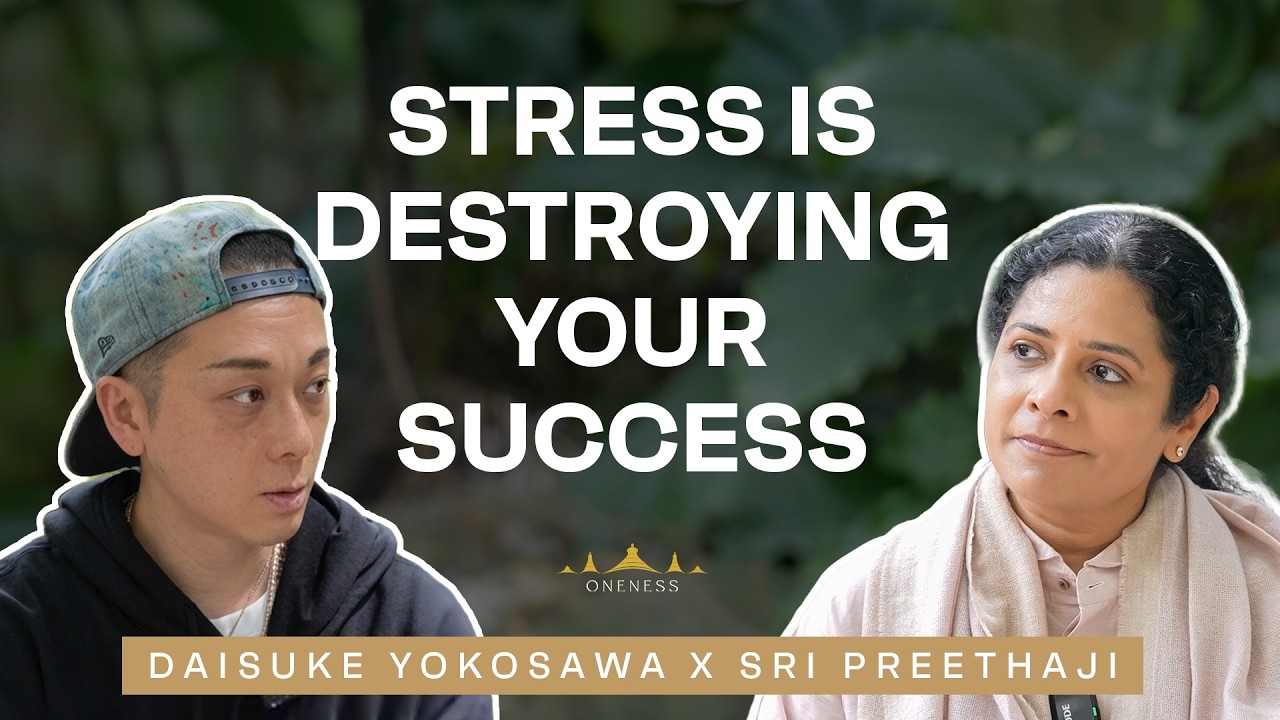
Oneness practices work differently. Rather than focusing on stress reduction techniques alone, they cultivate a lived experience of interconnection. This shift from understanding oneness intellectually to experiencing it directly appears to be where the real transformation begins. The practitioner in the video had invested years in spiritual work—suggesting he was already committed to inner development—yet found that the oneness approach opened access to states of inner peace that had remained elusive despite prior practice.
How Do Oneness Practices Access Deeper Inner States?
The video indicates that oneness events and guided practices create conditions for accessing what the practitioner describes as "profound inner states." These are not states that arise from effort or accumulation of more knowledge, but rather from a shift in perception itself—from seeing oneself as separate to experiencing oneself as interwoven with all of life.
This distinction matters for understanding why someone might practice meditation, yoga, or other spiritual disciplines for years and still feel something is missing. Many traditional practices work within the framework of the individual self trying to improve or transcend. Oneness practices, by contrast, invite a fundamental reorientation: recognizing that the sense of separation itself is the illusion, and that peace naturally arises when that illusion dissolves.
The practitioner's experience suggests that when this recognition becomes felt, not just conceptual, it transforms how one relates to stress itself. Stress typically arises from the sense that "I" am threatened, "I" am not enough, "I" am separate from what I need. When the sense of fundamental separation dissolves, the conditions that generate stress lose their power.
Can Oneness Practices Help With Real-Life Challenges?
The video emphasizes that these inner states are not merely blissful experiences to be cherished during meditation and then forgotten. Rather, they translate into a tangible shift in how one faces "life's challenges" with "greater calm, awareness, and connection."
This is a crucial claim. It suggests that oneness practices produce a stabilization of consciousness that carries over into daily life. The practitioner can now encounter difficulties—financial pressures, relationship tensions, health concerns, professional challenges—without the same reactivity, defensiveness, or sense of being overwhelmed. The deeper awareness he touched doesn't remove challenges, but it changes one's relationship to them.
This aligns with reports from other contemplative traditions: when practitioners touch states of profound peace or non-dual awareness, they often report that ordinary problems retain their practical urgency but lose their emotional charge. They can respond to difficulties more creatively and compassionately, because they are not filtered through the lens of a self that feels fundamentally threatened.
Why Might Spiritual Seekers Feel Something Was Missing?
The fact that this practitioner had already invested "years of spiritual work" yet found something new at the oneness event points to a real pattern in contemplative practice. Many sincere practitioners find themselves on a plateau—they meditate regularly, their mind is calmer, they understand non-dual philosophy intellectually, and yet something still feels incomplete. There remains a subtle sense of separation, or an experience of peace that is fragile and conditional on continued effort.
Oneness teachings and practices appear designed to address precisely this gap: they offer direct transmission or guided experience of the truth that separation is illusory. This is not information to be acquired but a recognition to be awakened. Traditional practice might prepare the ground through discipline and refinement of attention; oneness events and intensive practices may function as catalysts that allow the recognition to crystallize.
What Changes When You Move From Stress Into Peaceful Living?
The shift described in the video is not from having problems to having none. Rather, it is from a stressed relationship with existence to a peaceful one. Stress, at its root, is a signal that something is wrong—with me, with my circumstances, with the world. Peaceful living, in the context of oneness understanding, means abiding in a recognition of fundamental okayness, even as challenges arise and must be addressed.
This does not result in passivity or spiritual bypassing (ignoring real problems). Instead, it produces what some traditions call "engaged compassion." The practitioner can be fully present to difficulties—his own and others'—without the distorting filter of a self trying to protect itself. This clarity of perception often leads to more effective action and more genuine connection with others.
The "greater awareness" mentioned in the video likely refers to this clearer seeing. When stress loops are quieted, when the constant internal narrative of threat and protection falls silent, one's perceptual apparatus naturally becomes clearer. You notice nuances you had been missing, sense other people's feelings more directly, perceive situations more accurately.
How Do Oneness Events Facilitate This Work?
The video points to the oneness event as the catalyst for this practitioner's breakthrough. This suggests that group settings, guided practices, and direct facilitation by experienced teachers create conditions that individual practice alone may not. Several factors may contribute to this:
- Collective resonance: When many people gather with the intention to recognize oneness, the shared field can amplify individual experience.
- Guided access: Teachers trained in oneness practices offer direct pointers and guided experiences that help bypass the intellect's habitual patterns.
- Permission and trust: In a group context with experienced facilitators, practitioners may be more willing to release control and open to states they might resist when alone.
- Transmission: Some traditions speak of transmission—a direct transfer of recognition or state from teacher to student—which occurs more readily in live settings.
Where to Go From Here
If you recognize yourself in this practitioner's journey—years of sincere spiritual work but a sense that something deeper is still calling—oneness-based teachings and practices offer a distinct pathway. The Oneness Global Summit (July 18–20, 2025) provides an entry point: a concentrated, facilitated experience designed to access the very inner states this practitioner describes.
The work does not end with a single event. Integration requires continued practice and a commitment to allowing your daily life to become the ground of recognition. But events like the summit can serve as pivotal moments where the shift from intellectual understanding to lived experience crystallizes—and from that point forward, stress and peaceful living are no longer abstract concepts but a tangible reality you inhabit.
The invitation is practical: to move beyond stress not by trying harder, but by recognizing that the peace you seek is not distant. It lies in the direct experience of oneness itself.
]]>