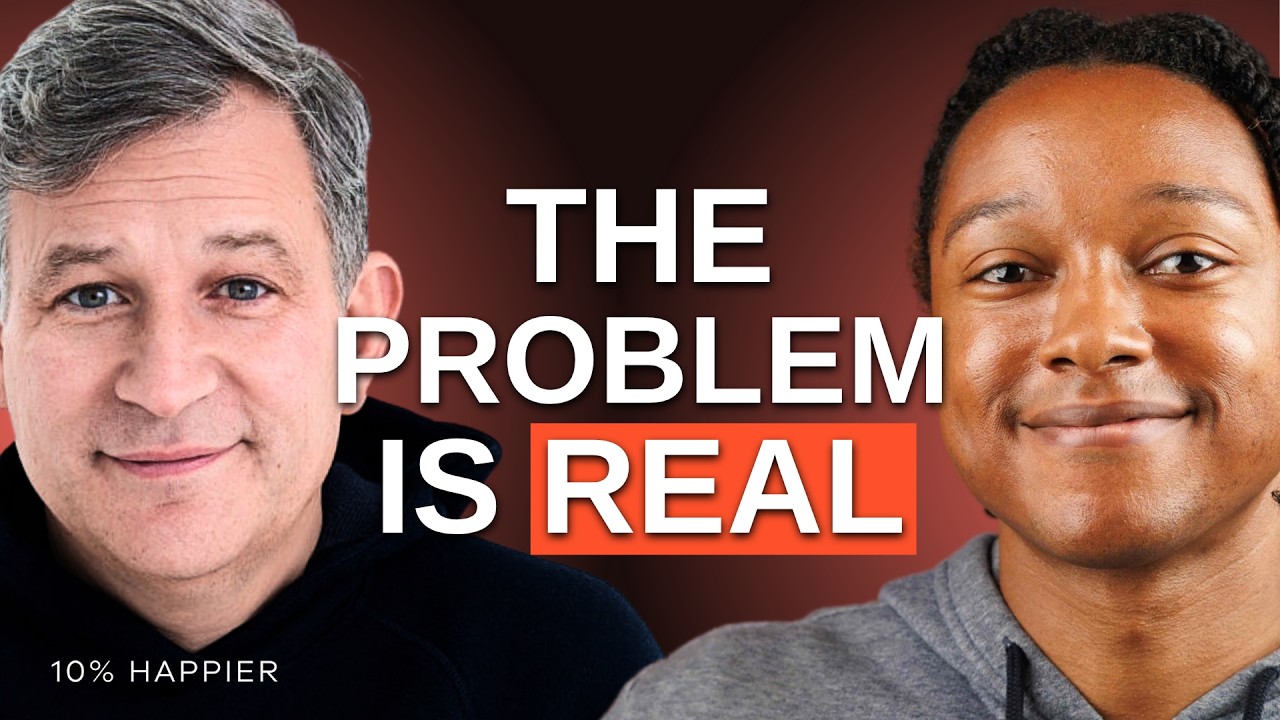
The belief is so ordinary it rarely gets examined. Once the inbox is empty, once the projects are finished, once the life is finally in order, then you will relax. It is the quiet promise running underneath most modern days, and it is the promise British journalist Oliver Burkeman spends a long conversation with Dan Harris taking apart. Harris's 10% Happier episode, first aired in April 2024 and brought back to the archive's front page in 2026, centers on what Burkeman calls imperfectionism: a way of living that gives up on the mythical moment of being caught up and makes peace with the unfinished, unresolved, mortal condition you are already in. Burkeman is the author of Four Thousand Weeks: Time Management for Mortals, The Antidote, and Meditations for Mortals, the book that anchors this discussion, and he also teaches courses on Sam Harris's Waking Up app. What follows explains the ideas in that conversation and why they land so hard for people who have spent years trying to get their act together.
The first thing to clear up is the most common misreading. Imperfectionism does not tell you to stop caring, aim lower, or shrug at quality. The idea is closer to a change in where you locate the reward. The usual plan says effort now, ease later. Imperfectionism says that later is not coming on its own schedule, so the place to live is inside the effort itself. You still do the work, still hold yourself to a real standard, still finish what matters. What you drop is the assumption that completion will deliver the inner settlement you have been waiting for.
Burkeman's framing is blunt about this, and the bluntness is the point. The episode treats the search for a fully ordered life as a kind of wishful thinking that quietly makes everyday life worse. If the reward is always deferred, every present moment becomes a waiting room.
The conversation names this as the central falsehood, the one most of us tell ourselves without noticing. You will get your sh*t together, the story goes, and then you will finally exhale. The trouble is structural. A to-do list is never finished in any way that produces lasting calm, because finishing one item reveals the next, and the next one is usually larger. Each completed task gets absorbed into a bigger backlog of obligations, responsibilities, and ambitions. The finish line keeps moving because the list is generated by a life that keeps producing demands.
Once you see that, the appeal of perfect order looks different. It is not a destination you will arrive at. It is a fantasy that keeps you tolerating the present in exchange for a payoff that never shows up. Burkeman's work repeatedly returns to this gap between the life we imagine we are preparing for and the life that is actually happening while we prepare.
The episode is candid that stopping the wait is not a single decision. It is a slow loosening. When you stop treating completion as the price of permission, a surprising amount of attention returns to ordinary things: the conversation you are in, the work in front of you, the small action you could take today rather than the perfect plan you keep rehearsing. Burkeman's position is that relief comes from accepting that the job will not be finished, and then acting well anyway, rather than from finishing.
This is where imperfectionism stops sounding like a consolation prize and starts sounding like a method. If you are not waiting for the moment of arrival, you can act now, imperfectly, and let the action count.
One of the episode's sharpest hooks is the phrase "Week 1, Day 1: It's worse than you think." It is a line from the book's structure, and it sounds like a gloomy opening. The conversation argues the opposite. Accepting that the situation is more tangled, more unfinished, and more chaotic than you hoped removes a whole layer of strain. When you stop expecting a clean slate that never arrives, you stop wasting energy on the gap between what is and what you believe should be.
In that sense, bad news about the state of your life is the good news. The mess is not a failure of your planning. It is simply what living looks like. Accepting that frees you to work with it.
The discussion of imposter syndrome follows naturally. Most people who seem composed have the same sense of improvisation running underneath. The episode makes the point that everybody is, in a real sense, winging it. Some people are simply more confident in the facade they present. The gap you feel between your inner uncertainty and the polished outside others see is less a personal defect than a common condition, and it becomes easier to live with once you suspect the people around you are carrying their own version of it.
Burkeman's metaphor of kayaks and superyachts gives a vivid picture of two ways of relating to a life. A superyacht promises insulation: size, control, and the sense that you can override the sea. A kayak is light and responsive. It asks you to read the water, adjust constantly, and accept that you are small relative to the conditions. The contrast is not a ranking. It is a way of noticing which posture you are actually taking toward your days. Plenty of anxious planning is the attempt to build a superyacht out of a kayak's circumstances.
If you are not waiting for the perfect plan, the practical consequence is to favor small, imperfect actions. A plan that is never executed does nothing. A modest step that is taken changes the situation and teaches you something real about it. The episode frames this as the alternative to the perfectionist loop, where the strategy keeps getting refined and nothing moves. Imperfect action is not sloppy action. It is the form action takes when you accept that you will never see the whole picture before you begin.
This is one of the more practically freeing claims in the conversation: you cannot care about everything, and you should not feel guilty about that. Modern life pushes the opposite message, that a conscientious person keeps every concern alive at once. Burkeman's view is that attention and care are finite, and that choosing what to let go of is not a failure of virtue. It is the precondition for caring deeply about the things you do keep. Guilt about the abandoned concerns only drains energy from the ones that matter.
The episode introduces the idea of Decision Hunting: the notion that you have to go looking for the choices that shape your life, because they rarely arrive on their own. Many of the decisions that matter most do not announce themselves as decisions. They drift past while we wait for clarity. Actively seeking them out, and naming them, turns a passive life into one where you are the one choosing.
This connects to Ellen Langer's advice, which Burkeman brings into the discussion. As the conversation presents it:
"Don't make the right decision — make whatever decision you make right."
The line dissolves a specific anxiety. If you believe there is one correct answer and you might miss it, every choice becomes a test you could fail. Langer's reframing puts the work of rightness after the choice rather than before it. Commit, then make the decision good through how you carry it out.
The conversation also takes up the habit of finishing things and the tendency to overcommit. Burkeman suggests that overcommitment can work as a low-grade denial of mortality. If you fill every hour and say yes to every opportunity, you never have to face the fact that time is limited and that choosing means excluding. Finishing things matters, but finishing the right things, with the honesty to accept that many possibilities will go unlived, is a different discipline from accumulating obligations to feel safe.
Dan Harris brings in Joseph Goldstein's phrase "lineage of thieves," and the reference fits the spirit of the episode. Practice and ideas are handed down through people who borrowed freely from those before them, and Harris, true to his habit, pays tribute to the teachers whose work he draws on. The point for the listener is humility: none of these ideas are original inventions owned by one person. They are inherited, adapted, and passed along, which is itself a kind of imperfection that keeps wisdom usable.
If imperfectionism has caught your attention, the natural next step is Burkeman's own writing. Meditations for Mortals is the book the conversation centers on, and Four Thousand Weeks extends the argument about time and limits. The Antidote rounds out his thinking about happiness and the habits that undermine it. For a fuller sense of the conversation itself, the 10% Happier episode is worth hearing in full, because much of the texture lives in the back-and-forth between Burkeman and Harris rather than in any single line. Start with one small imperfect action this week, and notice what changes when you stop waiting for the list to end.