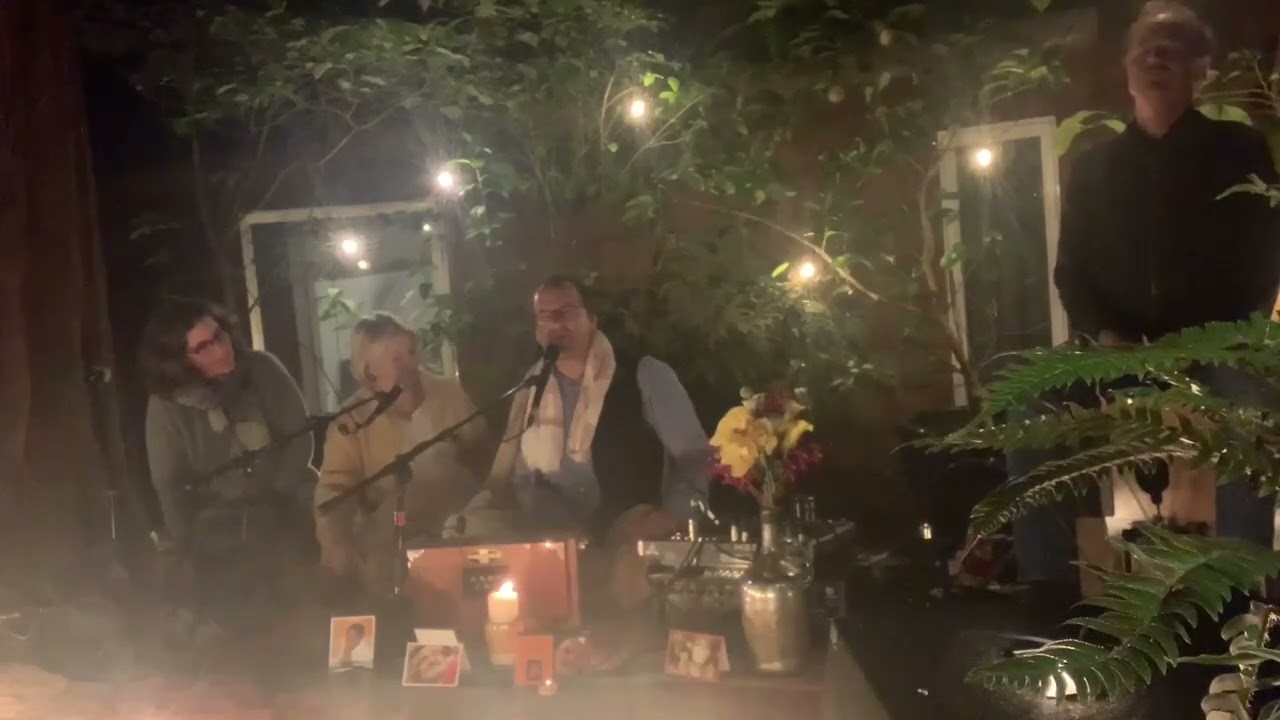
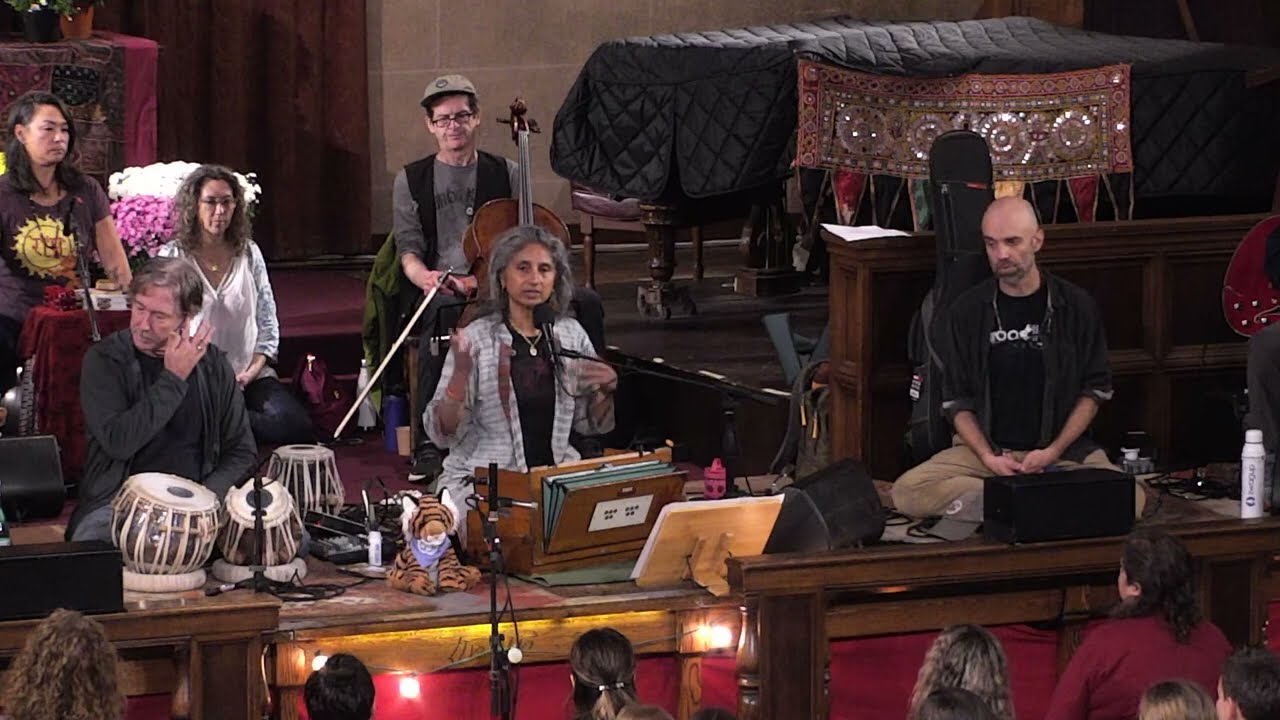
Ben Leinbach's "O Mundo"—Portuguese for "The World"—arrives not as a teaching or lecture, but as a sonic invitation. Released in 2014 as part of Yoga Soundtracks, Volume 1, the track gathers three distinct musical voices: Leinbach's work as a percussionist and sound architect, vocalist Katia Leonardo (whose name suggests Brazilian roots), and Bodhi Setchko. It is a piece built on the oldest principle of kirtan: that music itself is the teaching, that rhythm and melody and the human voice together create a container for practice, meditation, and the felt sense of unity the title promises.
The title O Mundo carries weight beyond geography. In spiritual music traditions—kirtan, bhajans, devotional song—naming something "the world" is an act of inclusion and witness. It suggests that this recording holds the world within it: the textures of multiple cultures, the layering of different traditions, the recognition that spirit moves through all places and all people. The collaboration of Leinbach, Leonardo, and Setchko embodies that multiplicity. No single voice dominates; instead, they weave together in the way that yoga itself is meant to work—a joining of different elements into a unified whole.
Ben Leinbach has long been known in kirtan and world music circles for his mastery of percussion—most notably the tabla, the North Indian drum that has anchored kirtan chanting for centuries. Kirtan, the call-and-response form of devotional singing rooted in Hindu and Sikh traditions, depends on rhythm as much as melody. The percussionist is not a background player; he or she is a conversation partner, a timekeeper who holds the sacred container open for singers and listeners alike. When Leinbach brings that sensibility to a work titled "The World," he is asserting something about the universal language of rhythm—that a heartbeat, a drum, a pulse, moves through all humans regardless of origin.
Yoga Soundtracks, Volume 1, released in April 2014 under the Old Bull Music label, positions itself squarely in a lineage: music designed not for passive listening, but for practice. A yoga soundtrack is not ambient wallpaper. It is meant to support the body's movement, the mind's settling, the breath's deepening. The album and this track within it carry the responsibility of that function. Every note, every silence, every rhythmic choice has to serve the practitioner.
What distinguishes "O Mundo" from a solo recording is its commitment to dialogue. Katia Leonardo's voice, paired with Bodhi Setchko's presence (the name itself—"Bodhi" referencing awakening in Buddhist tradition, "Setchko" suggesting Eastern European or Russian roots—speaks to the diaspora of yoga and spiritual practice in the modern West), creates a sonic mirror of yoga's actual practice: two bodies, two breaths, two intentions moving in concert. This is not orchestration in the Western classical sense, where a composer arranges instruments into a predetermined hierarchy. This is ensemble in the kirtan sense—each musician listening, responding, holding space for the others.
The choice of composer and songwriter, Robert Leinbach, and the production through Old Bull Music (an independent label rooted in the world music and spiritual music communities), reflects a commitment to authenticity over commercial polish. These are makers who understand that sacred music lives in the relationship between sound and listener, not in technical perfection.
One of the subtle power shifts in yoga culture over the past two decades has been the elevation of the music itself as practice. Where earlier generations might have practiced in silence or with the sound of a single harmonium, contemporary yoga often happens in rooms filled with sound—kirtan recordings, live chanting, instrumental pieces like "O Mundo." This is not incidental. The sound shapes the nervous system, anchors attention, and creates a shared field. A nine-minute track is not background; it is architecture. It holds the container in which bodies can release tension, in which breath can find its own rhythm, in which the mind can rest.
The act of naming this work "The World" while recording it with international collaborators suggests an understanding that yoga—far from being a niche practice confined to studios or ashrams—is a universal language. The world is present in this music because the world is present in every person who hears it. Whether you come to this track from Brazil, from Russia, from India, or from anywhere else, the rhythm recognizes you. The voices welcome you. The title tells you: you belong here.
If "O Mundo" resonates, consider exploring more of Ben Leinbach's work in kirtan and world music traditions. Dive deeper into how percussion anchors devotional practice—listen to tabla masters, study the relationship between rhythm and breath in yoga, and explore other collaborative works in the yoga soundtrack lineage. The album Yoga Soundtracks, Volume 1 itself may offer additional pieces that deepen what this track begins. Most importantly, if you practice yoga or meditation, allow this music to be what it was made for: not something to think about, but something to practice within.