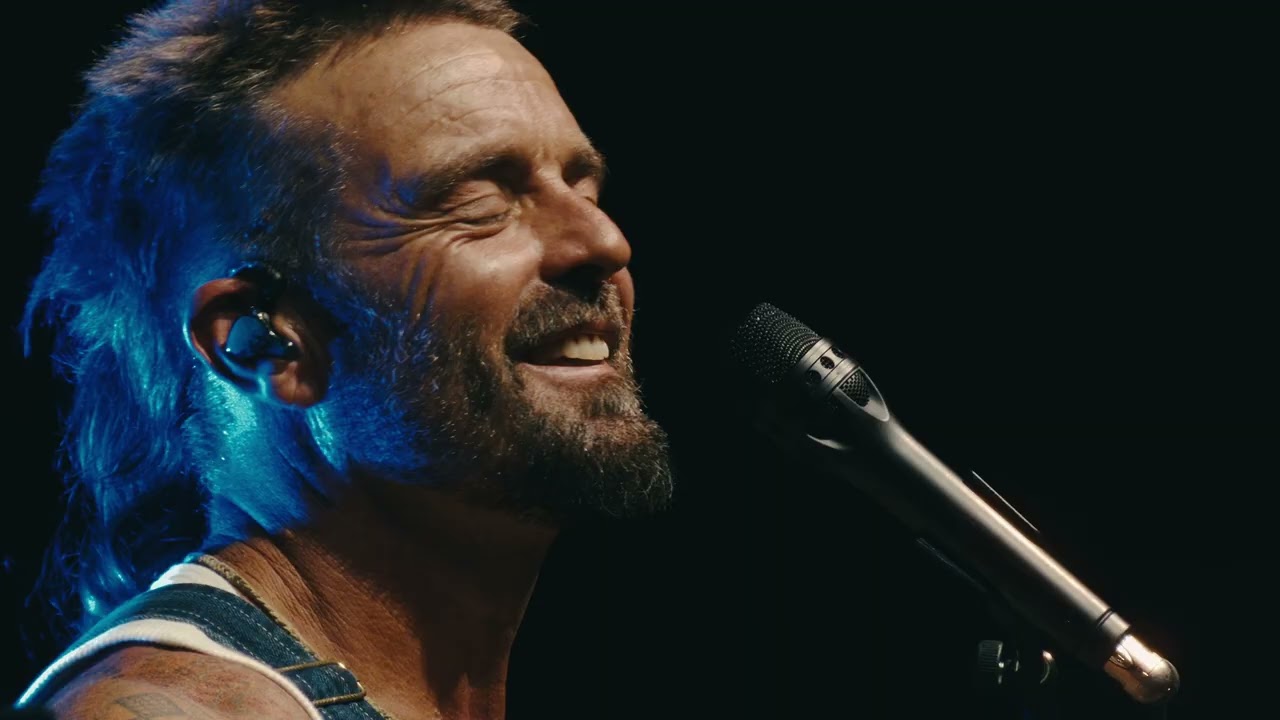
'NANNA,' from Xavier Rudd's album of the same name, is a devotional song rooted in the artist's relationship with ancestral feminine wisdom. Rather than a conventional narrative structure, the song functions as a prayer and acknowledgment—a musical act of respect directed toward what Rudd describes as "the old woman spirit that has always been with me and my songs" (at 0:21). The track is brief but dense with intention, positioning itself not as entertainment but as a spiritual practice of recognition and gratitude.
The song opens with a paradoxical instruction: "stand strong in what I know / stand aside from the ego" (at 0:03). This dual movement—anchoring oneself in knowledge while simultaneously stepping back from the ego's need to control or assert—sets the philosophical tone for the entire piece. Rudd is articulating a stance that many contemplative traditions recognize: conviction without rigidity, certainty without arrogance. To stand strong in knowledge while standing aside from ego is to hold a position grounded in truth rather than identity or self-protection.
This tension between strength and surrender runs throughout the work. The speaker is not asking for passivity but rather a discerning kind of presence—one that knows itself without being controlled by self-interest. The instruction arrives as the listener is oriented toward evening ("as the day turns in tonight"), a threshold moment in which the protective structures of daylight and active doing fall away.
What emerges in that threshold is perception: "through your Breeze I hear you cry" (at 0:11). The ancestral presence is not silent or distant. Instead, it communicates through natural elements—wind, breath, the subtle movements that carry intention. The address shifts from instruction to relationship. "I hear you cry" suggests not victimhood but yearning, calling, a reaching across time from the old woman spirit toward the present moment and the listener.
Rudd explains the song's origin directly: "the song NANNA is a song to pay respect to the old woman spirit that has always been with me and my songs / um ever since I can ever remember / and was time / to to sing a song / Back / NANNA" (at 0:21–0:38). This statement clarifies that the song is not a metaphor or artistic conceit but a genuine spiritual debt. The "old woman spirit" is presented as a real presence—a guide, muse, or guardian—that has accompanied Rudd's creative work from its beginning.
The decision to "sing a song back" is framed as something inevitable ("was time"), suggesting that reciprocity and acknowledgment are not optional but necessary parts of a sustained creative relationship. To receive guidance from such a presence and not return song is to break a compact. The song, then, is payment and conversation both—a way of speaking back to that which has spoken through the artist.
The latter portion of the song shifts into direct address and repeated affirmation: "NANNA I believe in you / I believe in you / I believe in you / I believe in you" (at 0:40–0:46). The repetition is not ornamental. Four consecutive declarations form a mantra-like structure, reinforcing commitment through rhythm rather than elaboration. This kind of repetition appears across many spiritual traditions as a technique to anchor consciousness, to move an idea from intellectual assent into embodied knowing.
The affirmation is also notably simple: not "I understand you" or "I honor you" but "I believe in you." Belief here carries weight—it is a choice to trust the old woman spirit's presence and wisdom even in moments when rationality or doubt might suggest otherwise.
The song concludes with a shift from belief to prayer: "I will pray for you / I will pray for you" (at 0:50–0:52), followed by an expression of tenderness or sorrow: "oh my / oh my boo" (at 0:54). Prayer here is not petition but rather a commitment to sustained attention and relationship. To pray for the old woman spirit is to acknowledge her needs, her reality, and the reciprocal nature of spiritual bonds. Just as the ancestral presence has guided and supported, the living person now holds space and intention for her.
The closing vocalization—"oh my / oh my boo"—introduces vulnerability into what has been a steadily affirmative song. The term "boo" (often used as an term of endearment) combined with the repeated "oh my" carries both grief and tenderness, suggesting that reverence includes heartfelt emotion, not just intellectual or spiritual alignment.
Listeners interested in Xavier Rudd's approach to ancestral spirituality and creative devotion can explore his broader work with The United Nations, particularly the full 'NANNA' album. The integration of indigenous Australian cultural perspectives with contemporary music-making offers a framework for understanding how spiritual relationships—especially with ancestral presences—can inform artistic practice in the modern world. Those interested in exploring similar themes of reciprocal relationship with non-human or ancestral presences might consider studying indigenous spiritual frameworks, contemplative traditions that emphasize devotion and prayer, and contemporary artists working at the intersection of cultural memory and creative expression.