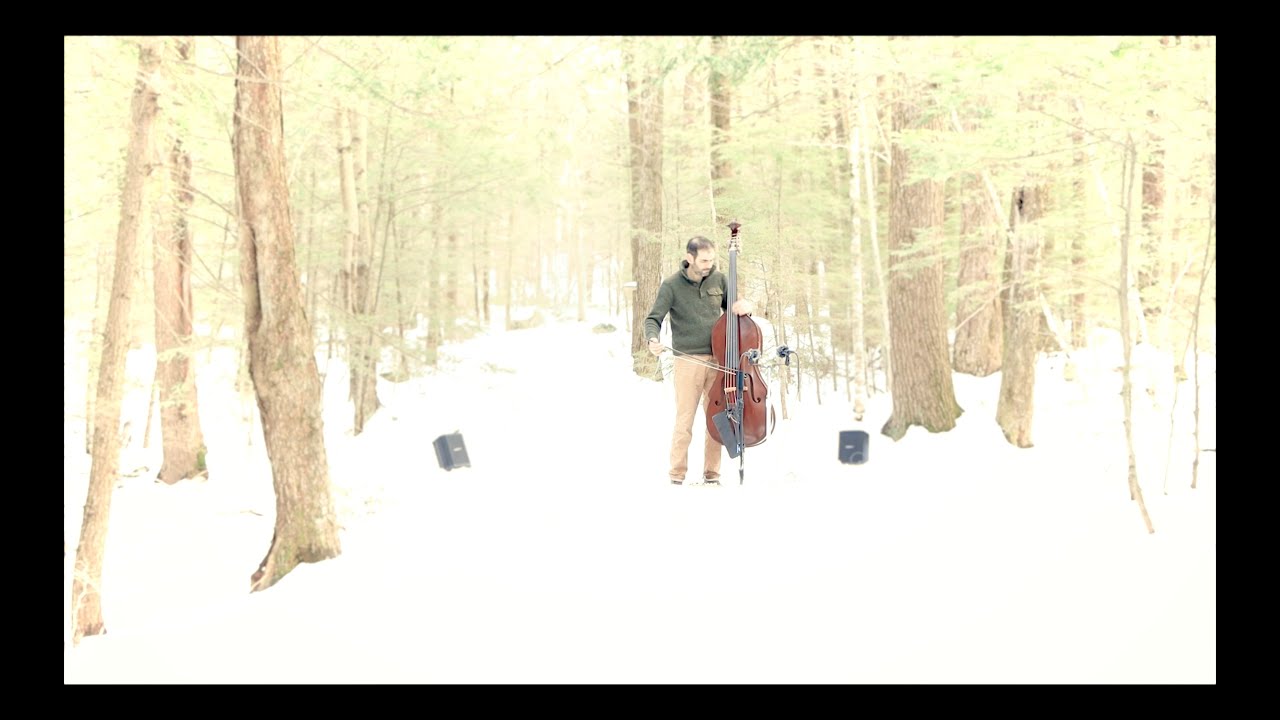
Garth Stevenson's "Music Meditation - Field" is an improvised piece recorded outdoors on April 20, 2020, and posted as a single video just over nineteen and a half minutes long. The uploader's description is brief: the sound was made in a field at a farm called Crimson & Clover, on the land of Nate Frigard, who gave permission for the session. There is no transcript, no spoken introduction in the written record, and no statement of intent beyond the words "music meditation" in the title. That sparseness is itself the spine of this article. The piece asks to be heard before it is explained, and what follows is an attempt to name the things a listener can actually know, without putting words in the musician's mouth.
The phrase places the work in a lineage where playing and attending are the same act. In general terms, a sound meditation asks the musician to stop steering the sound toward a destination and to follow what it is already doing: the decay of a tone, the way one note answers another, the silence that opens when a phrase ends. Improvisation is the natural vehicle for this, because it removes the score that would otherwise tell the player what comes next. The discipline is less about technique than about what the player keeps returning to when the mind wanders off to plan the next gesture.
Listeners who come to this kind of recording expecting a performance with a shape of verses and climaxes may need a few minutes to adjust. A meditative improvisation tends to hold a texture rather than build toward a peak. The reward is slower: a sense of the room, the instrument, and the attention behind them settling into the same frequency over time.
Almost every musical space we know is defined by its walls. A studio, a church, or a living room returns the sound to the player and the listener through reflections, and those reflections give a note its body and its sense of enclosure. A field offers none of that. There is no ceiling to bounce the tone back, no corner to gather it, and the sound disperses outward and is gone quickly. Any recording made in open air also carries whatever the land contributes: wind moving through grass, distant machinery or animals, the small changes in air pressure that a microphone catches and a human ear half-ignores indoors.
That is the first thing a listener should be ready for. The "room" in this recording is not a room at all but a large, uneven, unpredictable space, and an improviser working in it has to listen differently. Sustained tones may seem to thin out faster than they would indoors. Silences may feel longer, because nothing in the environment immediately fills them. For a meditative form, that openness is not a flaw. It is closer to the condition the practice points toward: a sound that arises, travels, and dissolves without being held in place.
The date matters, though the description does not dwell on it. April 20, 2020 falls within the first wave of pandemic lockdowns in many countries, when gathering indoors had become difficult or impossible for most musicians, and when public performance in general had largely stopped. Many players that spring moved their work into home studios, into streamed sets, or outdoors where it was still permitted. A session in an open field on a farm belongs to that moment, whether or not the musician framed it that way.
It would be easy to overstate the connection, and the description offers no account of why this field or why this day. What the date does do is anchor the recording in a specific season of uncertainty. Music made during a period when the usual structures of performance had been suspended has a particular weight for a listener who remembers that time, and an equally particular strangeness for one who has come to it later.
Start without the caption. Put the video on with the volume at a level that lets the outdoor noise and the instrument share the same space, and resist the urge to judge the piece as a finished composition while it is still unfolding. Nineteen minutes is a real commitment for a form that does not announce its turns, so consider listening in one sitting with the phone set aside, or in two parts if that suits your day.
Pay attention to what returns. In meditative improvisation the recurring elements, a particular interval, a rhythm that comes back after it seems to have vanished, a sound that the wind seems to answer, are often the clearest signs of the player's attention. Notice when your own mind drifts toward expectation, and let it come back to the sound without pressure. That gentle return is, in many traditions of contemplative music, the practice itself.
Listen to the recording once straight through, then once more with the purpose of noticing the environment as closely as the instrument. If you want to place the piece within a wider context, look for other outdoor and open-air improvisations and compare how the absence of walls changes the way sound behaves and the way players respond to it. The video's description gives only the date, the place, and the name of the farm, but that is enough to begin: a session on a particular afternoon in a particular field, shared with anyone willing to sit with it for nineteen minutes.