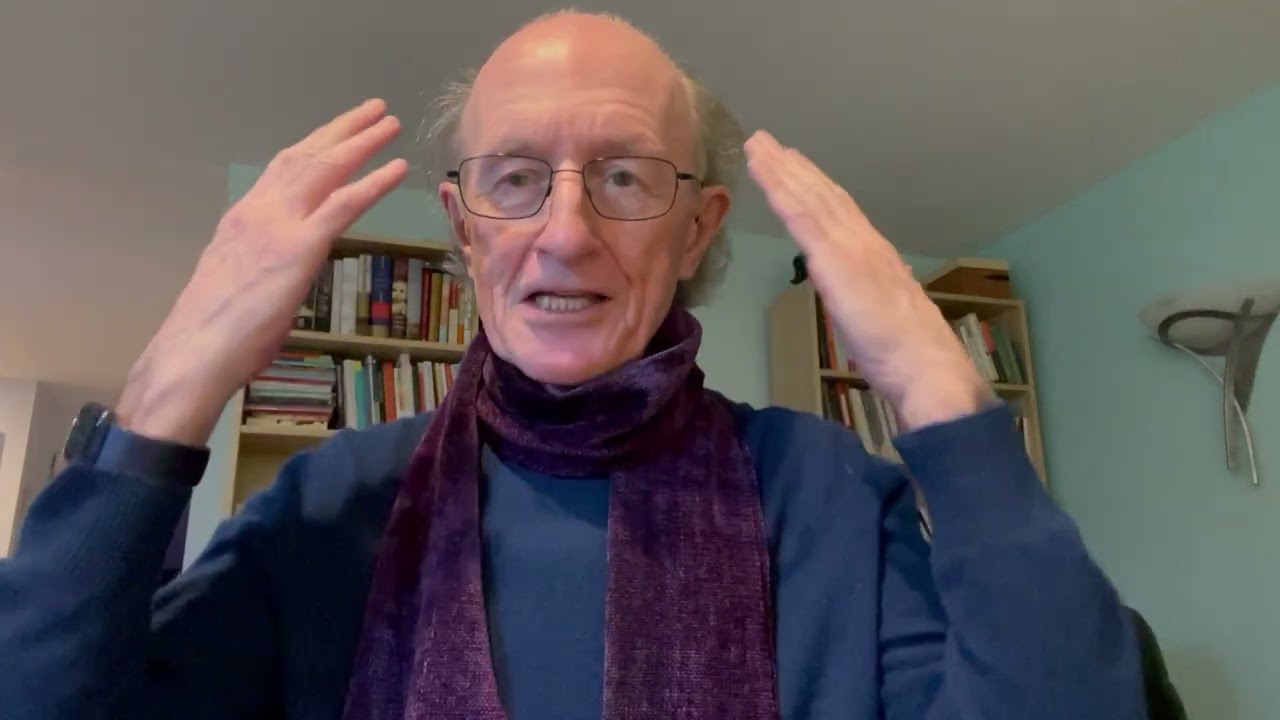
You sit down to meditate. Within moments your mind is planning tomorrow, replaying yesterday, evaluating the quality of your practice. By the time you finally notice you've been distracted, another ten minutes have drifted past. You might think you've failed at meditation. You haven't. According to meditation instructor Hugh Byrne, you haven't even begun misunderstanding the work yet.
The first thing Byrne addresses is the foundational myth that stops most people: that the goal of meditation is a blank mind, an absence of thought. This belief creates a terrible paradox. You sit down expecting clarity, only to discover your mind is as busy as ever. You interpret this as failure and give up. But Byrne's reframe changes everything: "Thinking isn't the problem in meditation."
What matters instead is attention. The practice is training your mind to notice when it has wandered and to choose, deliberately, to return. This isn't about suppression. It's about skill. Every time your attention drifts and you bring it back to the breath—back to the body, back to the present moment—you're not failing the practice. You're doing the practice.
This mechanism trains the mind. You move your attention back into the present moment, again and again, until the capacity becomes real. You develop the skill to notice. To remember what you're doing. To choose where your mind rests. There is no prerequisite of a blank mind. Beginners and seasoned practitioners alike work with this same basic cycle: attention wanders, you notice, you return.
The elegance of this reframe is liberating. Instead of fighting your mind, you're befriending it. Each moment you catch yourself lost in thought and gently return to the breath, you're doing the work exactly right. The thinking was never the failure. The failure would be not noticing the thinking. Not returning.
Before any of this mental work can happen, Byrne starts with the body. Sit in a way that's both relaxed and comfortable. This isn't mysticism; it's physics. If your legs are going numb or your back is screaming, your attention will dwell there, not on the breath. Byrne gives permission explicitly: your hands can rest comfortably in your lap or on your knees. You're not here to suffer.
And before you even formally begin, he offers a preliminary instruction. Give yourself permission to be here. Not tomorrow. Not after you've dealt with your email. Here, now. You might consciously put aside the plans that you have for later or the memories of things that have happened. This is the psychological setup. You're not ignoring the future; you're consciously choosing to shelve it temporarily. Choose to be here now as fully present as you can be in this moment.
This act of choosing—of directing your will toward presence—is where the practice begins. Not in some passive emptying of the mind, but in an active decision: I will be here now. This permission structure is often what people need to unlock genuine meditation. You have the right to prioritize your presence. You don't need to justify it.
Once you're seated, the breath becomes the object of attention. As you breathe in, just know that you're breathing in. As you breathe out, know that you're breathing out. This isn't analysis. You're not improving your breath or trying to make it deeper or more controlled. You're simply acknowledging the experience as it happens, in real time. In-breath. Out-breath. In-breath. Out-breath.
Why the breath? Because it's always now. You cannot breathe in the past. You cannot breathe in the future. The breath is the present moment made literal. When your attention is on the breath, your attention is on now. And whenever the mind wanders—when it leaves the breath to chase a thought or a plan or a worry—you notice it and come back. Come back to the breath. Come back to the body.
This return, repeated dozens or hundreds of times in a single sitting, is the entire work. Not perfection. Repeated return. Each return strengthens the circuits of attention, the neural pathways that allow you to notice and to choose. You're not pursuing some mystical state. You're exercising a skill.
One of Byrne's most useful teachings is the instruction to sit in a way that's both relaxed and alert. This sounds like a contradiction. Relaxation and attention seem opposed. In practice, they're not.
Bringing these two qualities together: a quality of ease, relaxation on one hand, and attention on the other. Many beginners make the same mistake. They either collapse into drowsiness (relaxation without vigilance) or tense up trying to "do" meditation correctly (attention without ease). The result is striving and strain, which is the opposite of what meditation asks.
The instruction to be "relaxed and alert" at the same time is permission to stop fighting your own nervous system. You don't have to white-knuckle your way to clarity. You can be alert without tensing. You can be at ease without zoning out. This is a Middle Way, and it's immediately accessible to anyone with a body and a breath.
As you meditate, things arise. Sensations in the body. Emotions. Memories. Itches and tensions. The untrained response is to react: fix it, push it away, ignore it, grasp it. Byrne offers something different. See if you can open to whatever is here right now. Welcome the guests.
Pleasant experiences, unpleasant experiences—they're all invited. Maybe there's some tightness or tension in the body or a difficult emotion. See if you can just open to that emotion and just see how it comes and stays for a while and then passes.
This instruction contains something revolutionary. You're not trying to feel good. You're not trying to transcend your experience. You're practicing the capacity to be present with what actually is. Without judgment. Without trying to change it. Just meeting it, observing it, allowing it to be.
In that observation is a perception that changes everything. Emotions, sensations, experiences don't stay fixed. They arise. They crest. They dissolve. How it comes and stays for a while and then passes. This isn't a belief about impermanence you've been taught. It's a lived observation. You watch the anger come, hold its shape, and subside. You feel the physical tightness emerge and release. Everything flows.
This direct perception of change is deeply stabilizing. When you understand that nothing stays frozen—not the joy, not the grief, not the boredom—you stop grasping quite so desperately and resisting quite so fiercely. You can relax into the movement of experience itself. The practice begins to naturally decrease your suffering because you're no longer fighting the nature of things.
The practice Byrne describes is not mystical. It's practical skill-building. Each time you notice your mind has wandered and you return to the breath, you're strengthening the circuits of attention. You're training your mind to notice. To remember. To choose.
This has immediate utility beyond the meditation cushion. If you can return your attention in a quiet room, focusing on breath, you can return your attention in a busy day. At work, when you notice your mind spinning with anxiety, you remember how to pause and return to what's actually happening—the keyboard under your fingers, the breath moving in and out. With someone you love, when you catch yourself planning what you'll say next instead of listening, you can gently bring your attention back to their words, their presence.
The skill developed in three minutes of meditation becomes available everywhere. You're not meditating to escape your life. You're meditating to show up for it.
Byrne's instruction assumes nothing about your background. No special knowledge. No cultural fluency with Eastern philosophy. Just a place to sit and a willingness to be here now. If you haven't meditated before, this template offers an entry point. Sit. Release plans. Choose presence. Notice the breath. Notice when your mind wanders. Come back. Notice the balance between ease and attention. Open to whatever arises without judgment. Watch how it changes. Return to the breath. That's the whole thing.
If you're already practicing, Byrne's reframes—especially the permission to think, the emphasis on noticing and returning rather than suppressing, and the equality of relaxation and attention—offer useful refinement and encouragement when the work feels unclear.
The real question isn't whether you can meditate "correctly." It's whether you can choose, right now, to be fully present. Not perfectly. Not without distraction. But as present as you can be in this moment. That is the entire practice. And it begins whenever you decide to sit down and choose to be here.