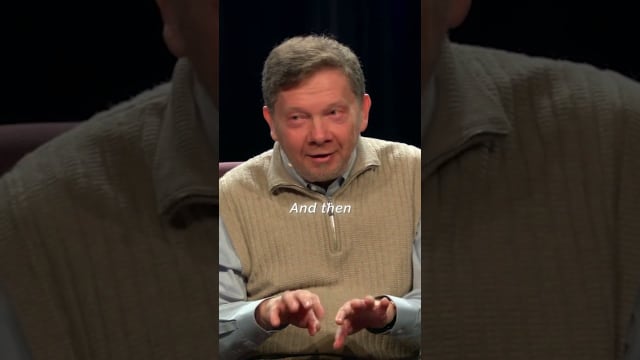
The video opens the way a good conversation over coffee does, with a stranger describing a feeling you recognize before you have named it. "You're a midlife woman and you're tired of being meek," says Jen, the founder of Laughing Lotus Wellness, in the first seconds of an eight-minute talk. She is tired of "keeping things tucked in," she says, even though she knows she has "so much to say" and "so much power within." Somewhere along the way, she suggests, you may have gotten disconnected from that power. From there, the video becomes a short, personal coaching talk built on an acronym, BOLD, and three instructions: stop shrinking, stand for what you stand for, and stop apologizing. It is an unpolished piece of self-coaching, and its clarity is its strength. What follows unpacks the ideas beneath those three steps so the talk can be useful to someone who never presses play.
The phrase is playful, and Jen says so herself. "I know this sounds so goofy," she tells viewers, "but this is so my personality." Underneath the joke is a serious claim about how people come to be seen. Jen describes her work as a transformational coach who draws on more than 20 years as a clinician and social worker, and she says the thing that never stops moving her is other people's stories. "I'm always shook," she says, no matter who someone is or where they have been. Her argument is that if every person carries a profound story, then the job is not to make that story presentable to everyone. It is to stop minimizing it.
That is what "waving your freak flag" means here: showing up in your actual texture, the quirks and humor and intensity that a more cautious version of you might edit out. Jen names the cost of editing plainly. People "minimize, shrink, or put it in a box because we think that it's somehow unpalatable." Her reply is that if your story is unpalatable to someone, that is acceptable, because someone else "can't wait to hear the funky weird beautiful quirky story that you and only you can bring."
Much of the video's energy comes from a reframe of the life stage itself. "We hear so much about crisis," Jen says, "and I think it could be celebration and awakening." She asks viewers to step into that perspective rather than "the old school one that's been divvied up for a million years." She is not asking for denial. She acknowledges the real pressures she lists, including career path changes, financial shifts, children leaving home, aging parents, and the sense that "we're dice in a dice cup," tossed around and thrown back out. Her point is that a season of disruption can also be a season of recalibration, a chance to notice which parts of an earlier vision still belong to you.
The reframe matters because it changes the posture you bring to the work. A crisis asks you to repair what broke and get back to normal. A celebration asks what you have been holding back and whether it is time to let it out.
Jen defines the word as "bravely owning the life of my dreams," and the video is organized around that phrase. Around the one-minute mark she introduces the acronym as a frame for the rest of the talk. The first letter, bravery, is the one she returns to most, and it connects to the freak-flag idea: to own a life, you have to be visibly yourself inside it.
She also frames the bravery in relational terms. Her stated aim is for viewers to "stay authentic" and "be brave," to stop getting smaller, and to start "standing in the authentic version of who you are, whatever that looks like." She says she loves it most when people do this "unapologetically," and that is the thread that ties the three steps together.
The first step asks you to stop making yourself smaller. Jen's tone here is almost fond of the risk. Her reasoning is that the people who do not "vibe" with your story were never going to be the people who need it most. She draws a contrast between being acceptable and being yourself, suggesting that the second is what attracts the people who will light up around you.
Practically, this means noticing where you soften your language, drop a joke, or hide an opinion to keep a room comfortable. The question Jen leaves with the viewer is not whether you are too much for everyone. It is whether you are showing up at all.
The second step is the most concrete. Jen asks viewers to "stand for what you stand for," and she gives a test that works like a filter: "If you're bumping into scenarios, situations, people, places, anything in your job, your career, the vision that you're building, and it doesn't land for you, then it is not for you." She describes the feeling of alignment as "a holy hell yes," and the feeling of misalignment as a no. You do not have to argue yourself into a decision. You notice which response your body gives first.
She then reframes your values, energy and time as "precious resources," and she uses an image that is hard to forget. Protect them, she says, "like you're a warrior protecting the castle under siege." The guard is not hostile. The guard simply knows what the castle is for. Her closing question for this step is one a reader can take into any week: how am I going to honor, protect, and hold space for my value set, and show up as the person I was intended to be?
The last step is the one Jen returns to with the most heat. "Stop apologizing," she says, "again, stop apologizing." She describes the cycle many women know from the inside: apologizing for what they say, what they think, what they do, and how they show up. Her midlife response is blunt. "I got to midlife and I'm like, listen, if I'm not for you, there's the door." She adds quickly that she does not mean it to be offensive, and that she fully respects people who are not her cup of tea.
"I am the right people's cup of tea for me and that's all that matters." (Jen, Laughing Lotus Wellness YouTube video, January 2024, around 5:08)
This is the freedom the step is after. Jen wants viewers to release the idea that they must please everyone. She wants to please herself and the people "in my wheelhouse," the ones who want that energy. She describes those people as feeling like "missing pieces of the puzzle," folks who show up excited to be around you. The payoff she names is a life spent with people who create space to grow, and who make you curious about yourself by being their own authentic selves.
She turns the lens on herself to illustrate. "I am feisty," she says, around the six-minute mark. "I have always been a little bit fiery and salty, and it's been the way I've been my whole life." Her sense of humor and her swearing are part of the package, and she is comfortable with a room that finds them off-putting. The example is personal rather than instructive, and that is part of its value. She is showing the step in action rather than asking viewers to take it on faith.
Honesty is the right posture toward a talk like this. It is short, emotionally direct, and built around a memorable acronym, and that makes the three steps easy to carry into a week. It does not cite research or outside frameworks, and most of its evidence is Jen's own experience and her attention to other people's stories. At the time of capture, the video had 47 views on YouTube, which is a modest audience for a piece with this much heart. Its value is less in new information than in the reminder it offers: the qualities you have been editing out may be the ones that make your life legible to the people who need you.
The talk is most useful as a set of small experiments rather than a resolution. Three practices follow directly from it.
- Think of one situation from the past month where you shrank, softened a sentence, or hid an opinion. Name what you were protecting.
- Run Jen's "holy hell yes or no" test on one commitment in your work or home life. Notice the first response before the reasons arrive.
- List the people you find yourself apologizing to, and ask which of them actually have the power to make you wrong.
Jen ends the video by inviting viewers who are "on the fence" to reach out to Laughing Lotus Wellness for a free call about how to live more boldly. Whether or not you take her up on it, the three questions in the talk stand on their own: what is your freak flag, what do you stand for, and who has been asking you to apologize for it?