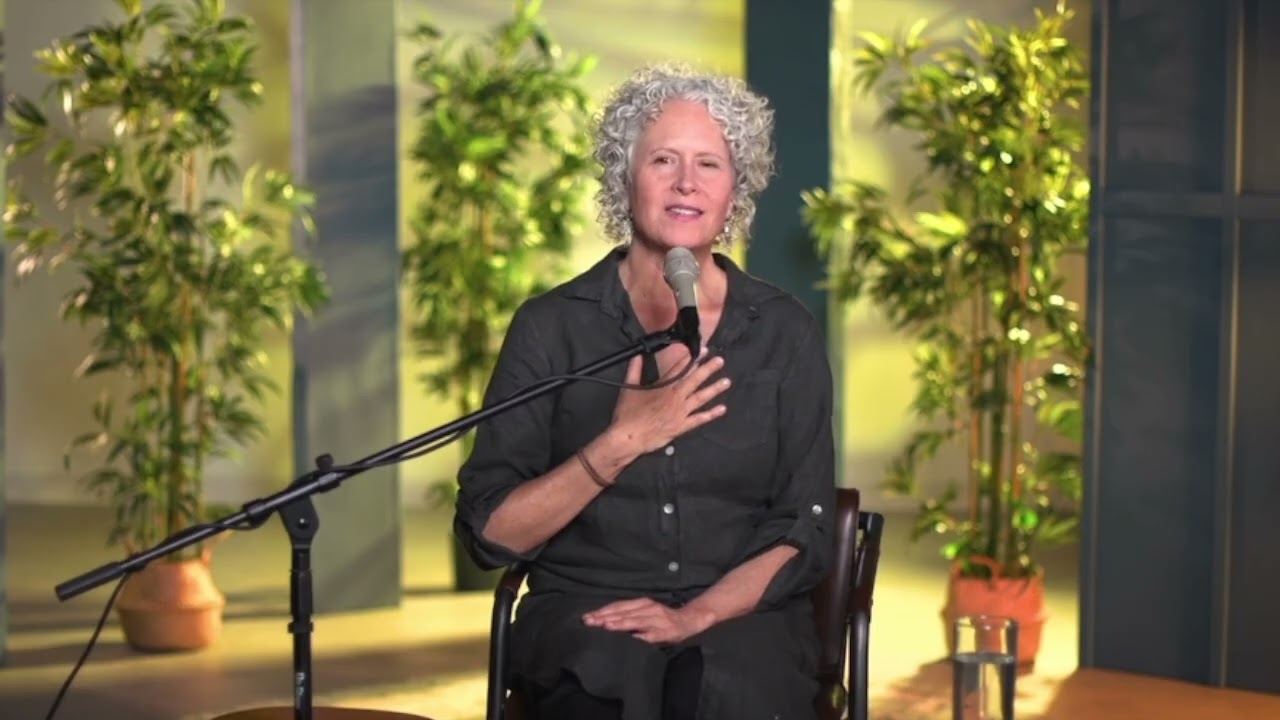
Settle in, the teacher says, and remember that comfort is queen. A long breath goes in, a hand rests over the heart, and the eyelids drift closed. Then four short phrases begin to repeat, almost like a refrain in a groove: May I be happy. May I be well. May I be peaceful. May I be free. The recitation in davidji's seven-minute guided metta prayer is spare, and that spareness is the first thing to understand about it. It takes the old idea of loving-kindness and turns it into a sequence you can actually move through, phrase by phrase, circle by circle, until the wish has traveled from your own chest to the far edges of the universe and then folded back on itself into the hardest material of all: asking forgiveness and loosening your grip on the people who have hurt you.
Start with the rhythm, because the rhythm is doing real work. Each wish is delivered as a triplet, three short declarative lines, and the same three endings return again and again: may they be well, may they be peaceful, may they be free. A musician hears the vamp immediately. Once the ear locks onto the pattern, the mind stops having to construct the next sentence and can simply ride the phrase. That is what the teacher is inviting when he says you can repeat each line with him "or simply let the words wash over you" (0:32).
The opening frames the whole practice as a settling-in, not a performance. There is an explicit instruction to rest a hand on the heart and take a long, slow, deep breath, repeated twice before any words arrive. The breath is not decoration. It is the tempo setting. A reader who has tried to recite a devotional text while still racing through the day knows how different the same words feel once the body has slowed down first.
"Remember comfort is queen and feel free to rest your hands on your heart or a hand on your heart." (davidji, "The Metta Prayer," 0:45)
That instruction matters more than it first appears. The metta practice asks you to hold a warm and sometimes uncomfortable feeling for several minutes. A body that is braced or uncomfortable will resist the wish. By telling you to get comfortable before you begin, the teacher treats physical ease as a precondition of the practice rather than a bonus.
The first wish is aimed inward, and it is worth noticing where it lands. After the breath, the words begin with a statement about the heart's condition: My heart fills with loving kindness. The very next line is I love myself. Only after that do the wishes turn outward: May I be happy.
This ordering is the foundation of the whole structure. The prayer does not ask you to skip past yourself to reach the world. It makes the self the first recipient, and the wishes that follow are built on that first act of directing warmth at yourself. If the inner circle is cold, the outer circles tend to become abstract. Starting from "I love myself" gives the practice a source before it begins to radiate.
After the self, the prayer moves outward in a series of concentric rings, each one larger than the last. The sequence in the recitation runs roughly like this:
- all beings in my vicinity
- all beings in my city, then my state or province
- all beings in my country, then on my continent
- all beings in my hemisphere, then on planet Earth
- all the children on "sweet mother Earth" (about 3:30 in the recording)
- my loved ones, then the animals in my life
- my parents, then my friends
- all beings in the universe (about 4:39)
Notice how the circle contracts and expands. It begins with the nearest and widest geographic reach, moves through the particular people and creatures in your life, and then returns to the largest scale. Geography and intimacy alternate. The city and the country are impersonal, while your parents and friends are specific. The sequence keeps the practice from becoming a generic wish for "the world" that never touches an actual face.
Some of the most affecting moments come from these small hinges. The prayer names the parents separately, as its own line, rather than folding them into "loved ones." It also names the animals in your life, which many devotional texts would leave out. The result is a practice that is structured like a map, with each ring pointing to a different relationship you already carry.
About halfway through the recitation, the tone shifts. The prayer stops sending wishes only to those who are easy to love and begins to address the wrongs in both directions. It opens with an admission and a request: If I have hurt anyone knowingly or unknowingly in thought or word or deed, I ask for their forgiveness.
Two details matter here. The first is the phrase "knowingly or unknowingly." The prayer does not require you to have a complete accounting of your harms in order to begin. It acknowledges that you may have caused hurt without intending to, and it extends the request to cover those cases too. The second is the list of channels: thought, word, or deed. Harm is not limited to what you did with your hands. The prayer asks you to see the hurt you may have caused through what you thought and said as well.
Then the direction reverses. The prayer turns to those who have hurt you, and the language is notably active: I send them healing energy. And I release them from my grip. I release myself from their grip. I release myself of my attachment to them. The phrasing is careful. It does not ask you to pretend the harm was small. It asks you to stop holding the other person as a fixed point of pain, and to recognize that you are also being held, which is why the line says "I release myself from their grip."
"And I release them from my grip. I release myself from their grip. I release myself of my attachment to them." (davidji, "The Metta Prayer," about 5:25)
The final wish in that section changes its shape. Where the earlier lines ask for freedom in general, this one narrows it: May I be free of them for all eternity. Then the prayer widens again to every being, "whether near or far, whether known to me or unknown."
The recitation closes the way it opened, with a long slow breath and a return to the body. The teacher asks you to give your heart "a gentle massage" and to notice "the shift that's taken place inside of you" (about 6:34). The instruction is intentionally physical. After several minutes of naming people, animals, and continents, the practice grounds back into a single sensation under the hand.
There is a useful craft lesson here. The metta prayer is not designed to leave you with a concept. It is designed to leave a residue in the body, so that the next time you encounter a difficult person or a news story about suffering, the response has a different texture. Ending on a physical cue gives that residue a place to settle.
The video does not end with a single session. It closes with an invitation: "I invite you to return to this practice every day for the next 55 days and feel the transformation that has awakened inside your heart, your soul, and in your life" (about 6:57). The number is specific, and the instruction is repetition rather than intensity. Seven minutes a day, the same words, the same order.
That is how loving-kindness practices are usually learned in practice: through the slow familiarity of returning. A single session can feel moving, but a line that has been said dozens of times starts to feel like your own sentence. If you want to test the prayer as a practice rather than a one-off listening experience, the video offers a clear container.
Several practical steps follow directly from the recording:
- Begin with the two long breaths and a hand on the heart before you say anything. Let the body settle first.
- Say "I love myself" and let it land before moving to "May I be happy." Don't rush the self-directed wish.
- Stay in each ring long enough for one specific face or place to appear, especially the "my parents" and "my friends" lines, which are easy to skim.
- When you reach the forgiveness section, you can pause on "knowingly or unknowingly." Notice what comes up without trying to resolve it.
- Finish with the heart massage and a noticing of what has shifted, however small.
The prayer is short enough to memorize, which means you can use it outside a recorded session. A metta practice doesn't require a studio or a quiet room. It requires the four wishes, the breath, and the willingness to direct them at people who are hard to think about.
Strip the prayer down and its arc is simple: begin with yourself, widen to the world, turn honestly toward the harms you have caused and received, and return to the body. What makes it effective is that the difficult material is not treated as an afterthought. Forgiveness and release sit inside the same breath as the wishes for happiness and peace. The practice does not promise that you will feel warm toward everyone. It shows you a route from the warm center of your own heart to the people and places where that warmth is hardest to send.
Listen to the full recording once through, with the hand on your heart and no agenda. Then decide on a single daily time for the next 55 days, as the teacher suggests, and keep the sequence the same each session. If the forgiveness section stirs something you didn't expect, let it stay in the practice rather than arguing with it. The metta prayer is short, but its structure gives you a complete arc to live inside, and the value of that arc comes from returning to it, day after day.