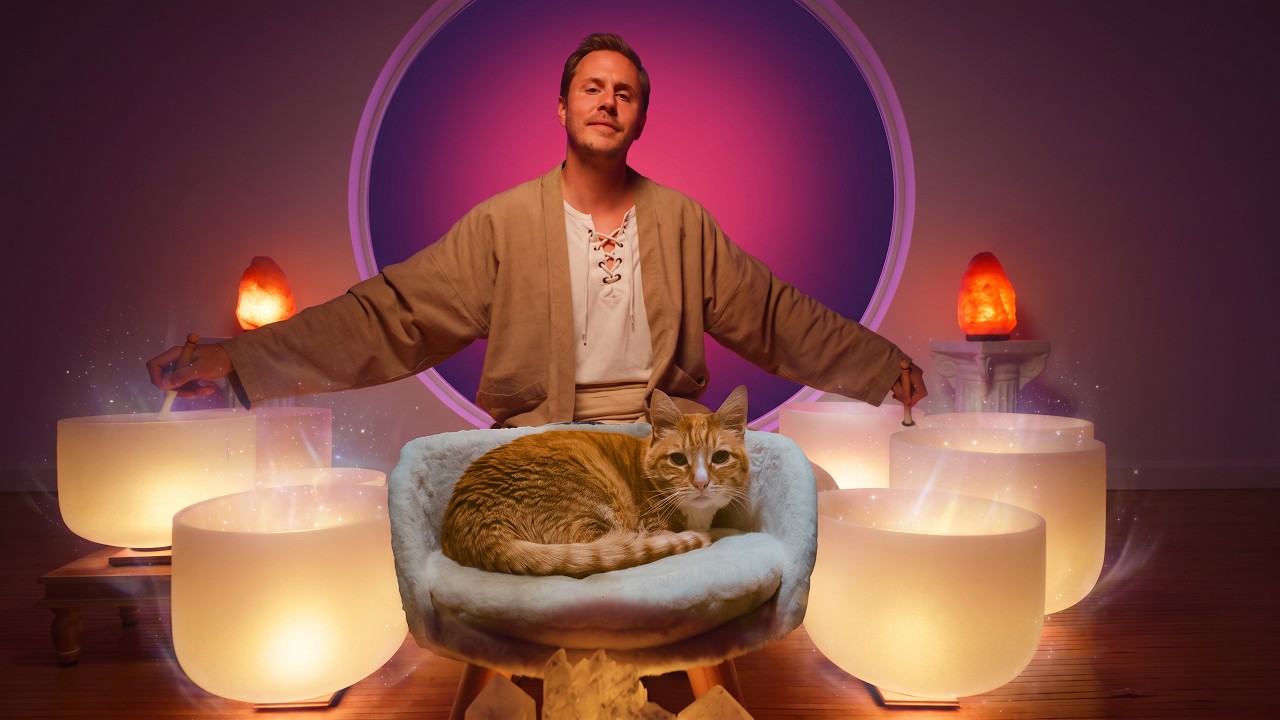
Jaw tension has a way of sneaking into the body without permission. You may not notice it until your teeth are clenched, your temples feel tight, or the muscles around your face simply refuse to relax. For many, this tightness becomes a chronic state—a physical echo of daily stress that persists whether you're in the middle of a workday or trying to fall asleep. The relationship between emotional pressure and jaw clenching runs deep; the temporomandibular joint (TMJ) and surrounding facial musculature often absorb stress that the conscious mind hasn't yet processed. When the nervous system remains in high alert, the jaw follows, locking down as if bracing for impact.
Crystal singing bowls offer a different pathway to release. Unlike forced relaxation techniques that demand you "let go," sound baths work with the body's natural capacity for resonance. The slow, resonant tones produced by crystal bowls create a gentle acoustic environment that invites the nervous system to downregulate. This is not mere distraction; it is a shift in the baseline frequency at which your body is operating. When the external soundscape becomes calmer, slower, and more coherent, the internal nervous system tends to mirror that state.
The specific frequencies produced by crystal singing bowls—particularly when played with intention toward the jaw and face—can encourage muscles to release effort they have been holding unconsciously. The sound doesn't force relaxation. Instead, it creates a softer, quieter internal rhythm that allows the body to respond in its own way and time. As you listen to such a session, the invitation is simple: let your tongue rest, allow a little space between your teeth, and notice whether the muscles around your jaw can soften even slightly.
The jaw is uniquely positioned as both a functional tool for eating and speaking and an emotional barometer. The masseter and temporalis muscles—the primary muscles of mastication—are among the most powerful in the human body relative to their size. They can also become hyperactive in response to stress, anxiety, or sustained mental effort. Teeth grinding, or bruxism, often occurs unconsciously during sleep or periods of intense concentration. TMJ dysfunction can develop when this chronic tension goes unaddressed, leading to clicking, popping, limited mouth opening, or pain radiating into the ears and temples.
Many people don't realize how much effort their face is exerting until they practice deliberate softening. The muscles around the jaw, temples, and neck form an interconnected web; tension in one area amplifies tension in others. A sound bath designed specifically for TMJ and jaw release targets this cluster of muscles with frequencies and durations that allow nervous system downregulation to occur naturally. The longer, sustained tones of crystal bowls are particularly effective because they give the nervous system time to register safety and gradually ease out of its protective holding patterns.
The difference between a sound bath that merely plays audio and one that genuinely facilitates release lies in intention and design. A session created specifically with jaw tension in mind uses bowl selections, playing techniques, and timing that prioritize calming the nervous system before asking the muscles themselves to relax. Slow, methodical tones offer the body something to synchronize with—a slower rhythm that eventually becomes internalized. Over time, as you listen, your heart rate may drop, your breathing may deepen, and your facial musculature may begin to unclench without conscious effort.
The practice of listening to such a sound bath is most effective when approached without pressure. There is no need to force relaxation or monitor whether you are "doing it right." The work happens in the background, at the level of nervous system tone. Some people feel immediate softening in their jaw. Others notice the benefits accumulate over multiple sessions. Both responses are valid. The key is consistency and creating a space where your body feels safe enough to let go.
A sound bath designed for TMJ and jaw release is most useful in specific contexts. If you find yourself clenching during the day—particularly during stressful moments at work or in challenging conversations—taking even 20-30 minutes to listen can interrupt the cycle and reset your baseline. If jaw tension follows you into the evening and interferes with sleep, a longer session before bed can help prepare the body for genuine rest. If you simply carry pressure in your face and neck throughout the day and need help letting go, a sound bath offers a passive way to address the issue without requiring active effort or willpower.
For those with persistent TMJ pain, bruxism, or other jaw-related conditions, it is important to note that sound baths are intended for relaxation and are not a substitute for medical or dental care. A healthcare provider or dentist can assess whether structural issues, bite problems, or other physical factors are contributing to your symptoms. Sound work complements these professional approaches by addressing the nervous system component of jaw tension, but it should not replace proper diagnosis and treatment of underlying conditions.
The mechanism by which crystal singing bowl sound baths facilitate jaw release involves the vagus nerve and the parasympathetic nervous system. The vagus nerve—the body's primary "rest and digest" signal—responds to slow, rhythmic, harmonic sounds. When the vagus nerve is stimulated, it sends signals throughout the body that it is safe to relax, digest, and restore. The muscles of the jaw, like all skeletal muscles, are partially under voluntary control and partially under autonomic (unconscious) control. When the parasympathetic nervous system activates, both dimensions relax.
This is why a sound bath works differently from simply telling yourself to "relax your jaw." The conscious mind's commands often fail when stress is high because the nervous system's threat-detection systems override them. But sound frequencies can bypass the thinking mind and speak directly to the nervous system's regulatory centers. Over time, as the body learns through repeated experience that it is safe to release jaw tension in the presence of these particular sounds, the response becomes more automatic and more complete.
The most effective use of sound bath sessions involves regularity rather than occasional use. If jaw clenching is a chronic habit, one-time listening may provide temporary relief but won't necessarily retrain your nervous system's baseline. Weekly or even bi-weekly sessions can gradually shift the nervous system's set point toward greater calm. Over weeks and months, you may notice that you clench less during the day, that your sleep quality improves, and that the tension you once considered normal becomes noticeable in its absence.
Creating a dedicated space and time for listening amplifies the benefit. This might be a quiet room, a comfortable chair or lying position, and a time of day when you are least likely to be interrupted. The body learns through consistency that this is a time for rest and nervous system recovery. Additionally, paying attention to your jaw between sessions—gently noticing when you are clenching and taking a few conscious breaths to soften—reinforces the work done in the sound bath itself.
If jaw tension is a familiar sensation, sound bath sessions offer a gentle, evidence-based approach to nervous system regulation and muscular release. Begin with a single session and notice without judgment what changes, even small ones. If you find benefit, consider integrating sound baths into your regular self-care practice—weekly or as frequently as feels sustainable. Pay attention to your jaw throughout the day, practicing gentle awareness rather than forced relaxation. If pain persists or TMJ symptoms worsen, consult a healthcare provider or dentist to rule out structural issues. The combination of professional care, sound work, and personal awareness creates the most comprehensive approach to reclaiming ease in your jaw and face.