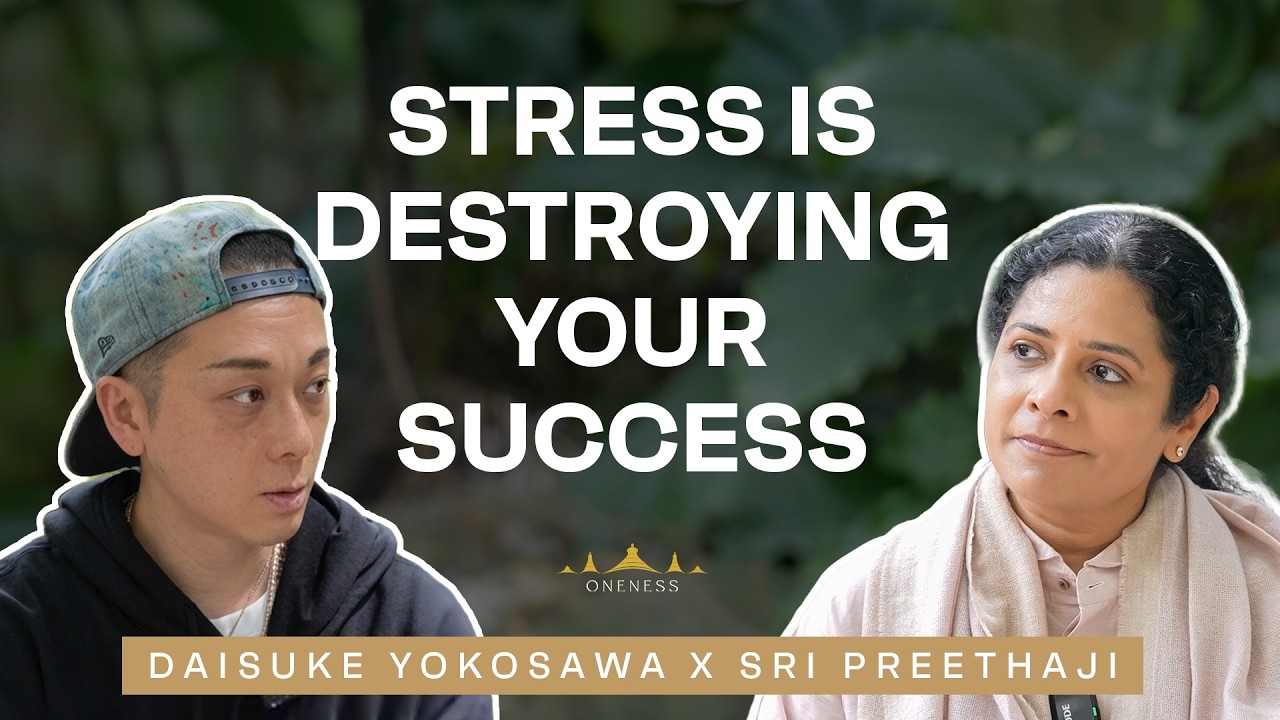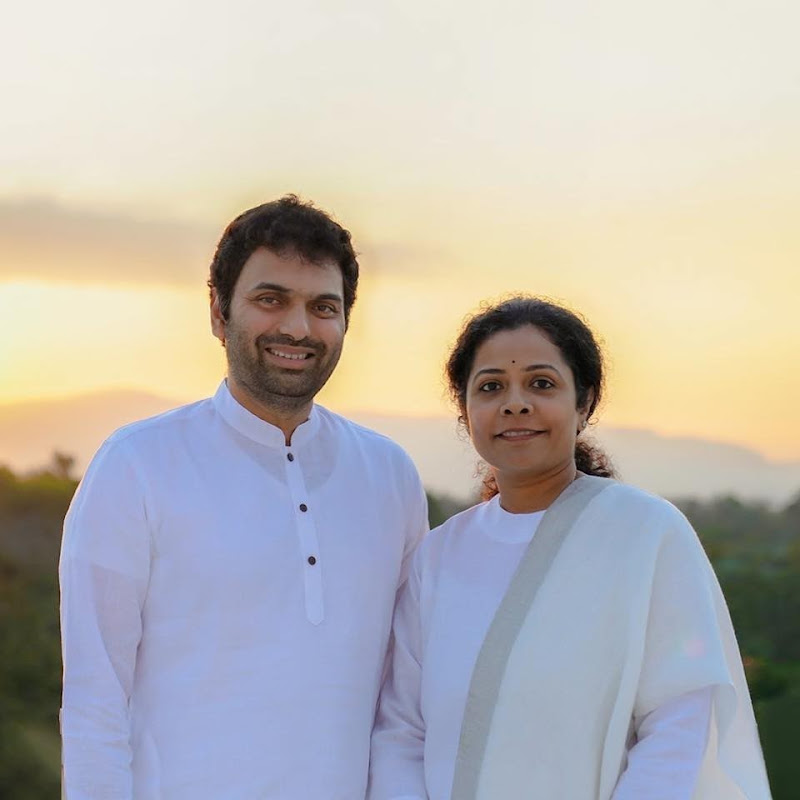
This brief spiritual exploration questions whether the words "thank you" constitute genuine gratitude or if authentic thankfulness demands something deeper—a shift in consciousness, embodied appreciation, and a transformation in how we relate to life's gifts. The inquiry challenges the assumption that verbal expression alone fulfills the practice of gratitude.
What Does It Mean to Say Thank You?
Most people understand gratitude as a social gesture: you receive something, you say "thank you," the exchange is acknowledged and complete. The words are polite, expected, and culturally normalized. Yet this brief teaching from Sri Preethaji & Sri Krishnaji invites us to look deeper into the question of whether words, however well-intentioned, constitute true gratitude or merely its surface.
The Oneness Movement's inquiry pivots on a crucial distinction: the difference between gratitude as a linguistic performance and gratitude as a state of consciousness. When we merely say the words, are we engaging in genuine thanksgiving, or are we simply following a script? This question becomes particularly important when we consider moments in life where gratitude feels forced, rote, or disconnected from our actual inner state.
Does Gratitude Require More Than Words?
The teaching suggests that authentic gratitude extends beyond verbal acknowledgment into the realm of felt experience and behavioral embodiment. Consider the difference between saying "thank you" while your mind is elsewhere, your heart closed, and your actions contradicting your words—versus a state where thankfulness permeates your entire being, influencing how you treat yourself, others, and the gifts you've received.
True gratitude, from this perspective, is a transformation of consciousness. It involves:
- Conscious presence — genuinely connecting with the gift or person you're thanking, rather than mechanically reciting words
- Heart resonance — feeling an actual sense of appreciation and warmth, not just thinking it
- Embodied response — allowing gratitude to shape how you move through the world, how you treat what you've been given, how you relate to those who've helped you
- Behavioral alignment — making choices that honor what you're grateful for, rather than squandering or disrespecting it
From this lens, saying "thank you" becomes insufficient when it remains disembodied—when the words float free from genuine feeling, awareness, or action. The teaching invites a more rigorous inquiry: Are your words backed by your presence? Does your gratitude change how you live?
What Is the Difference Between Gratitude and Grace?
One deeper dimension of this inquiry touches on the relationship between our gratitude and our receptivity to grace. The Oneness Movement teaches that life is fundamentally a gift—not something we've earned or deserve, but something bestowed upon us continuously. When we say "thank you" without truly understanding this, we miss the spiritual significance of acknowledgment.
Authentic gratitude becomes a form of attunement to grace itself. Rather than a thank-you that closes the exchange ("I owe you nothing more now"), it becomes an opening that allows us to recognize more deeply what we've received and to remain available to further gifts. This shifts gratitude from a transaction to a stance toward life.
How Does Gratitude Transform Consciousness?
The implications of this inquiry are profound. If gratitude is more than words, then practicing it becomes a form of spiritual discipline. It's not about memorizing polite phrases but about cultivating a state of consciousness where appreciation is woven into your perception itself.
When you practice gratitude as embodied consciousness rather than words alone, several shifts occur:
- Your attention naturally turns toward what is working, what you do have, what is being given rather than fixating on lack and complaint
- Your nervous system begins to shift from a stress-reactive state to one of receptivity and ease
- Your relationships deepen because people sense authentic appreciation rather than perfunctory politeness
- You begin to see that even difficulties and challenges contain gifts—lessons, growth, character development
- A natural impulse arises to care for, protect, and honor what you're grateful for
This is why the teaching frames the question as it does. It's not debating etiquette or social norms. It's asking: what is gratitude really for? What transformation does it actually facilitate in a human being? And can we access that transformation if we reduce it to words?
Can Words Without Consciousness Be Gratitude?
The philosophical heart of this inquiry is whether something can be called gratitude if the inner state is absent. A child taught to say "thank you" hasn't necessarily learned gratitude—they've learned a behavior. An adult who automatically says "thank you" while internally resentful or distracted isn't practicing gratitude either; they're performing it.
This doesn't mean words are unimportant. Language is powerful, and words can become a gateway to feeling. Saying "thank you" with presence and intention can help cultivate genuine gratitude. But the teaching invites us to not stop there—to not mistake the verbal gesture for the inner transformation it can catalyze.
Where to Go From Here
If this inquiry resonates, consider experimenting with gratitude beyond words. When you say "thank you" to someone—or to life itself—pause first. Feel the gratitude before you speak it. Notice the quality of appreciation in your body, your chest, your heart. Then let the words flow from that place rather than preceding it. Observe how this shifts the experience for both you and the person or moment you're thanking.
You might also examine moments in your life where you've expressed gratitude without truly feeling it, and moments where deep appreciation moved you without needing words at all. What's the difference? What happens when you drop the obligation to perform gratitude and instead allow yourself to be transformed by genuine appreciation?
The teaching of Sri Preethaji & Sri Krishnaji through the Oneness Movement invites us to honor gratitude as something sacred and transformative—not a social nicety to be checked off, but a portal to deeper consciousness and connection.