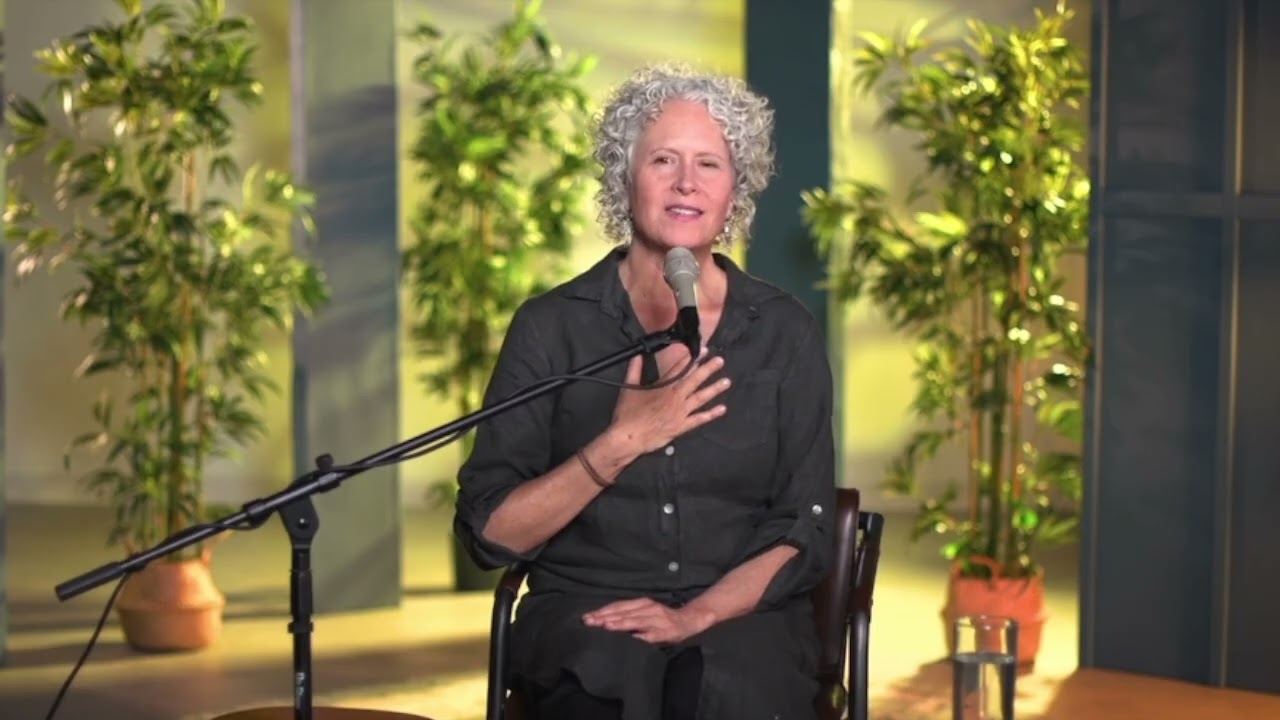
Within the first half minute of a quiet room, a voice asks you to rest your hands on your knees and let your thumb and index finger meet. That is how "10 Min Guided Meditation For Inner Strength & Clarity," a video published on October 11, 2026 by the Boho Beautiful Meditation channel, begins: not with a theory of transformation but with posture, breath, and a settling of the body. Recorded in Barbados according to its description, the piece runs just under twelve minutes and has drawn more than 62,000 views. It is built around one claim the teacher returns to again and again, that the self you are working toward is not waiting in some future moment, and that the real task is to notice the change already under way. What follows is a close reading of how the practice is structured, what each stage asks of the listener, and why its final line, "You are living inside it," is the hinge the whole sequence turns on.
A note on what the video does not offer: beyond the instructor's name, Juliana Spicoluk, listed in the description, there is no biography, no lineage, and no history of the practice. This reading therefore takes the words, the sequence, and the silence as they are given.
The opening is a settling protocol, and it is more deliberate than it first sounds. The listener is told to find a comfortable seated position, rest the hands on the knees, and connect the thumb and index finger in what the teacher calls a yana mudra, described as "creating an interlock of energy through your body." The eyes close and soften. Then comes the breath, framed not as a technique but as a gesture of welcome: a big inhale "into the heart," followed by a soft exhale on which the listener is asked to let go.
Notice what is anchored first. Before any imagery or affirmation, the attention is sent to the ground beneath the body and to the heartbeat. The guidance asks the listener to let the thoughts they arrived with "slowly drift into the background." That is a sensory sequence moving from outside to inside: floor, then pulse, then the mind's own chatter. Each exhale is given a job. The teacher tells the listener to release "whatever is no longer yours to carry," and names what that might be:
"All that heaviness, tension, pressure, let it go." (Guided audio, approx. 1:10)
Because the description says the practice is for people "carrying heaviness, tension, or pressure," as well as those who simply feel ready for a new chapter, this opening does double work. It meets someone who arrives weighed down, and it gives someone who arrives restless a clear physical task to hold.
At about 2:41, the practice shifts from body to life story. The listener is asked to "imagine that at the center of your being exist all the different pieces of your life." The list is specific: "Your experiences, your lessons, your strengths, even your challenges." The phrase "even your challenges" is the feature worth lingering on. Many meditations for confidence ask you to focus on what is strong and set the rest aside. This one places difficulty inside the same center as capability and asks the pieces to assemble themselves, "as if they instinctively know where they belong."
The teacher calls this "deep integration," the moment "your past, your purpose, and your inner wisdom begin to align as one." The description frames the same idea as bringing "your experiences, your lessons, your strengths and your challenges, all integrated into one grounded whole." The image is less a goal than a posture of acceptance: the past is not discarded so the future can begin; it is brought into the room.
Then the guidance makes a claim that is a belief rather than a technique:
"Nothing in this life has been given to you without deeper purpose. Every person, every lesson, every victory and loss entered your life in divine timing." (Guided audio, approx. 3:20)
A listener does not have to accept this framework to use the exercise. But the practice is clear about what it is offering: a lens in which losses and victories share the same purpose. For someone sitting with a difficult season, this is the sentence most likely to be remembered afterward, and it is worth noticing that the meditation presents it as something to rest in during a short session, not as a conclusion to be argued.
The emotional center of the practice arrives around 3:54, when the listener is asked to "notice a subtle strength rising from your core." The description of that strength is precise: "It is calm. It is powerful. It is you stepping into the truth of who you are becoming." Calm and power are placed side by side deliberately. Much of the culture of self-improvement treats strength as force. This meditation treats it as settled, and the adjectives are chosen to match.
Then comes the instruction that defines the whole practice:
"You don't need to become someone else. You are simply allowing the fullest, most empowered version of yourself to emerge from within." (Guided audio, approx. 4:40)
Notice the verbs. The listener is not asked to build, fix, or achieve. The work is "allowing," and "emerge." The shift from effort to recognition is the practical core of the session. If you accept that the empowered self is already present, the task changes from pursuit to noticing.
The visualization that follows makes this concrete. At about 5:04 the listener is asked to picture "the you who moves with clarity," "the you who trusts your intuition," and "the you who walks through life with grounded confidence and an open courageous heart." Those three qualities map neatly onto the title's promises: clarity, intuition, and inner strength. The instruction is to see this version standing in front of you, and crucially, "not in the future, not someday, but here and now." The practice then explains the reasoning in a sentence that is also its thesis:
"You are not waiting for transformation. You are living inside it." (Guided audio, approx. 5:58)
Everything before this line sets it up, and everything after it draws from it.
At about 6:13 the practice introduces a single thought to hold: "I rise from my center. I embody my truth. I step fully into the power of who I am becoming." The sentence is repeated, and the listener is told they can say it silently or quietly, or "simply stay in silence connecting to this high vibrational frequency you've activated within."
The mantra's three clauses move in an order worth noticing. The first locates the source: the center. The second names the expression: the embodiment of truth. The third describes arrival: stepping fully into power. Source, expression, arrival. Because each phrase is short, the mind can return to it easily when attention drifts, which is the function a centering phrase serves in a practice that spends long stretches without instruction.
The mantra also reuses the vocabulary of the earlier imagery. "Center" was the place where the life pieces gathered. "Who I am becoming" echoes the title. The language is closed in a loop, so that by the time the listener returns to it, the words feel already familiar, and the mantra works as a summary of everything heard before.
Roughly from the seven-minute mark until about ten minutes, the spoken guidance largely drops out. The transcript records almost nothing beyond musical tags, with a few fragments that do not form sentences. In an eleven-minute and forty-five-second video, this is the longest unbroken stretch of the session, and it is easy to mistake for dead air.
Read as structure, it appears intentional. The first six or seven minutes give the listener instruction, image, and language. The silent middle is where that language is supposed to settle without further direction. A teacher who keeps talking through that stretch would be asking the listener to keep following. By withdrawing, the practice tests whether the earlier ideas have taken hold on their own. Those who press pause or skip ahead lose the part of the session that does the most work on its own terms.
The return is signaled gently. At about 10:04, the voice says, "Gently begin to bring your awareness back to the breath," and then guides the listener to feel "the surface beneath you, the air around you, and the renewed strength inside of you" before opening the eyes. The returning move is grounding, the same movement that began the practice, so the session closes in a circle.
The closing words are direct: "You are aligned. You are empowered. You are ready to evolve into the best version of yourself." They sound like a conclusion, but the practice's logic points somewhere else. If transformation is already happening, the day after the meditation is not a return to the normal state of being unfinished. It is a continuation of the same recognition.
Several things follow from the structure, offered here as reading rather than instruction. The yana mudra and the breath can be used alone, in a few minutes, when heaviness shows up. The centering sentence can be repeated in the middle of a hard conversation or a decision. And the integration image can be turned into a question on paper: which of my experiences, including the difficult ones, do I still treat as separate from who I am?
If the ideas here are new to you, the most efficient path is to watch the video a second time with attention on the silent middle, since the first pass tends to be spent on the instructions. Then return to the opening posture and the breath on your own, without the voice, and see what the body remembers. The channel's description also lists a free eleven-day meditation challenge and a companion app for longer, structured sessions; those are separate from this reading and can be explored on their own terms. For readers drawn to the idea that the empowered self is already present, the sentence to keep is the one the video itself ends on in spirit: "You are living inside it."