What Is Meta Health and How Does It Connect to Inner Peace?
Meta health represents an emerging field that examines the relationship between consciousness, belief systems, and physical well-being. As a pioneer in this domain, Dr. Anu Mehta works at the intersection of mind and body, exploring how our internal states shape health outcomes. Her participation in the Oneness Abundance Festival was not driven by desperation or specific health concerns—she came with openness rather than expectation, which often allows for deeper shifts in perception.
The meta-health perspective recognizes that stress and anxiety do not originate purely from external events but from how consciousness interprets and responds to those events. A higher state of being, in this context, refers not to spiritual bypassing but to a genuinely elevated frequency of awareness from which life's challenges appear differently—less threatening, more workable, and embedded within a larger context of meaning.
How Can Shifting Into a Higher State of Being Transform Stress Response?
Dr. Mehta's central insight centers on a fundamental shift in how consciousness processes difficulty. When operating from contracted awareness—what many contemplative traditions call the conditioned mind—individuals tend to amplify threats, ruminate on problems, and lock into reactive patterns. This state is metabolically expensive and neurologically exhausting, creating the physiological patterns we recognize as chronic stress.
Conversely, a higher state of being is characterized by expansion rather than contraction. In this state, the same challenges that once triggered reactivity are perceived within a wider field of awareness. Problems retain their practical reality, but they no longer colonize the entire internal landscape. This creates space for what Dr. Mehta likely experienced as "absolute calm"—not the absence of challenge, but the presence of inner stability that does not depend on circumstances being perfect.
This shift is not philosophical posturing. It has measurable correlates in nervous system regulation, immune function, and cognitive flexibility. When the mind expands beyond problem-identification mode, the parasympathetic nervous system naturally activates, heart rate variability improves, and cortisol levels decline. The body recognizes safety not because threats have vanished, but because consciousness itself has reoriented.
What Role Does the Presence of Advanced Teachers Play in Consciousness Shifts?
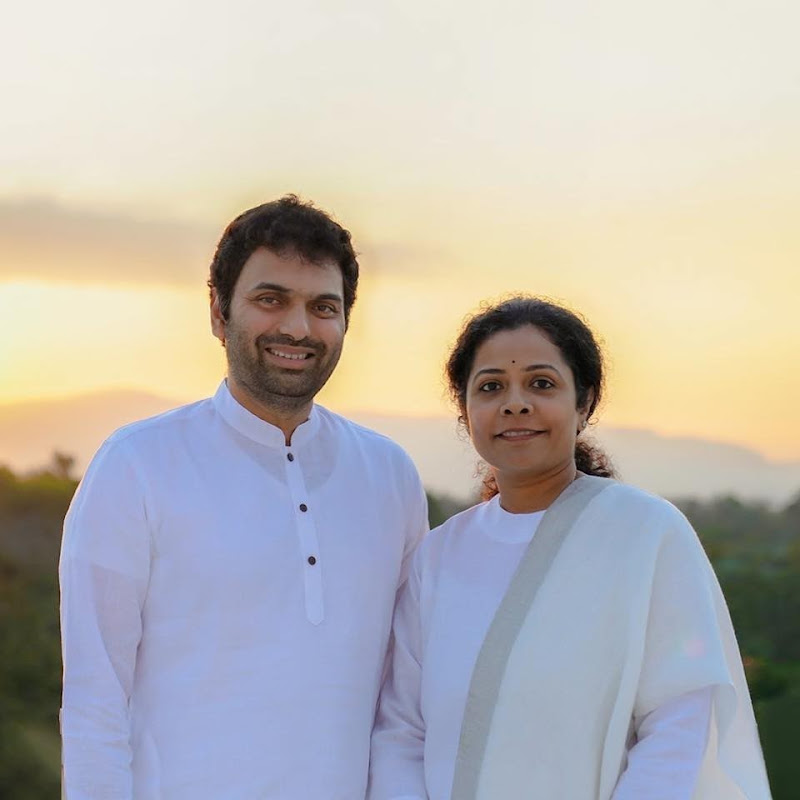
Dr. Mehta's experience at the festival included direct exposure to Sri Krishnaji, described in the account as possessing an "incredible presence." In many spiritual and consciousness-work contexts, the presence of an advanced teacher functions as a kind of attractor field that can entrain participants toward higher frequencies of awareness. This is not mystical but relates to principles of resonance and entrainment documented in neuroscience.
When a being operates consistently from an expanded state of consciousness, their nervous system broadcasts that state through subtle channels—tone of voice, facial expressiveness, the quality of attention, and what many describe as energetic transmission. Individuals in proximity can, through mirror neurons and oscillatory alignment, temporarily synchronize with that higher frequency. For Dr. Mehta, exposure to this presence apparently facilitated her own shift—not because she was hypnotized or influenced, but because she was offered a living demonstration of what expanded awareness actually feels like.
The festival context intensifies this effect. Group gatherings create a collective field of intention and openness that can accelerate individual breakthroughs. When many people converge with the sincere aim of awakening or shifting consciousness, the combined coherence amplifies the possibility of genuine transformation.
How Does True Inner Peace Differ From Temporary Relaxation?
An essential distinction in Dr. Mehta's discovery is the difference between relief and genuine peace. Temporary stress relief—through vacation, entertainment, or distraction—requires continuous external inputs to maintain. The moment those inputs cease, the old contracted state resurfaces. True inner peace, as Dr. Mehta appears to have encountered, is independent of circumstances. It is not vulnerable to setback because it does not rest on the external world remaining stable.
This form of peace emerges when consciousness itself has genuinely shifted rather than merely temporarily redirected. The higher state of being is not a mental state that can be lost if you stop concentrating or if something goes wrong. Instead, it becomes the ground from which you operate—a new baseline of awareness from which challenges are faced, processed, and moved through without being absorbed into identity.
The challenge for most people is that they have never experienced this distinction. They believe peace is something you achieve through effort or obtain through favorable conditions. Dr. Mehta's realization likely involved the recognition that peace is already inherent in consciousness itself—accessible whenever we shift from contracted, problem-focused awareness into a wider, more inclusive perception.
What Does It Mean to Face Life's Challenges With Absolute Calm?
Absolute calm in the face of challenge is often misunderstood as detachment or indifference. Dr. Mehta's account suggests something more precise: the capacity to engage fully with difficulties while remaining rooted in an inner stillness that does not disintegrate under pressure. This is active equanimity—the ability to think clearly, respond wisely, and take effective action without the interference of panic, reactivity, or despair.
In practical terms, someone facing a health crisis, relationship difficulty, or career setback from this state of absolute calm can still problem-solve, grieve if necessary, and adapt. But they do so from a nervous system that is not in fight-flight-freeze mode. The cognitive prefrontal cortex remains engaged rather than being hijacked by amygdala reactivity. Decisions arise from clarity rather than fear.
This capacity develops as the higher state of being becomes stabilized in consciousness. It is not willpower or technique; it is the natural expression of an awareness that has genuinely expanded beyond identification with the problem as an existential threat.
Can a Brief Festival Experience Produce Lasting Change?
Dr. Mehta's account describes a transformation that occurred during the Oneness Abundance Festival, raising the question of sustainability. Genuine consciousness shifts, particularly ones that alter baseline awareness, do tend to persist. However, the stability and depth of such shifts often depend on several factors: the clarity of the insight received, the intensity of the experience, the individual's readiness, and continued engagement with practices or community that support the new state.
A festival experience can catalyze a genuine breakthrough by removing the person from habitual patterns, exposing them to higher frequencies of consciousness, and allowing the nervous system to rest deeply enough that genuine reorganization becomes possible. Once that door opens and the person directly experiences what expanded awareness feels like, returning to the old contracted state becomes less automatic—not because they force themselves to maintain the shift, but because the contrast becomes obvious.
The key is that Dr. Mehta appears to have received not just an experience but a genuine realization—a shift in how she fundamentally understands and relates to her own consciousness and to life's challenges. Such realizations tend to be stable because they reorganize the person's fundamental assumptions about what is possible.
How Does Finding Your Answer Change Your Relationship to Seeking?
The title "I Found My Answer At Last" suggests an end to searching—a completion of a particular quest. For many spiritual and consciousness seekers, there is often an exhausting cycle of trying different practices, teachers, and modalities in search of the breakthrough that will finally bring peace or understanding. Dr. Mehta's experience, coming with "no expectations," may have paradoxically allowed her to actually receive what she was implicitly seeking.
When the seeking mind relaxes, when the person shows up open rather than grasping, they become available for a genuine encounter with truth. The answer she found was likely not a new concept or technique but a direct recognition: that the higher state of being, the inner peace, and the capacity for absolute calm were not distant goals to be achieved through years of effort but present possibilities available through a shift in consciousness. This realization itself can dissolve the driven quality of spiritual seeking and replace it with a natural expression of awakened awareness.
Where to go from here
If Dr. Mehta's account resonates with you—if you recognize the exhaustion of chronic reactivity and the hunger for a more stable inner foundation—several pathways deserve exploration. First, investigate your own capacity to recognize when consciousness is contracted versus expanded. Notice the physical signatures: tightness in the chest or throat, repetitive anxious thoughts, a sense of being locked in conflict with reality. These are markers of contracted awareness.
Second, seek direct exposure to spaces and teachers that operate from genuinely expanded consciousness. This might be a retreat, a festival, a meditation group, or individual work with a qualified guide. The presence of someone already established in a higher state can function as a tuning fork for your own nervous system.
Third, engage with meta-health approaches that recognize the consciousness-body connection. Work with practitioners who understand that true wellness is not merely the absence of symptoms but the presence of an inner state from which the body and mind naturally organize toward coherence and resilience.
Finally, remain open to the possibility that your answer—the realization that would genuinely transform your relationship to stress, challenge, and peace—may be closer and simpler than years of seeking have suggested. Sometimes, like Dr. Mehta, we find it not through desperation but through openness, not through force but through presence to what already is.
]]>