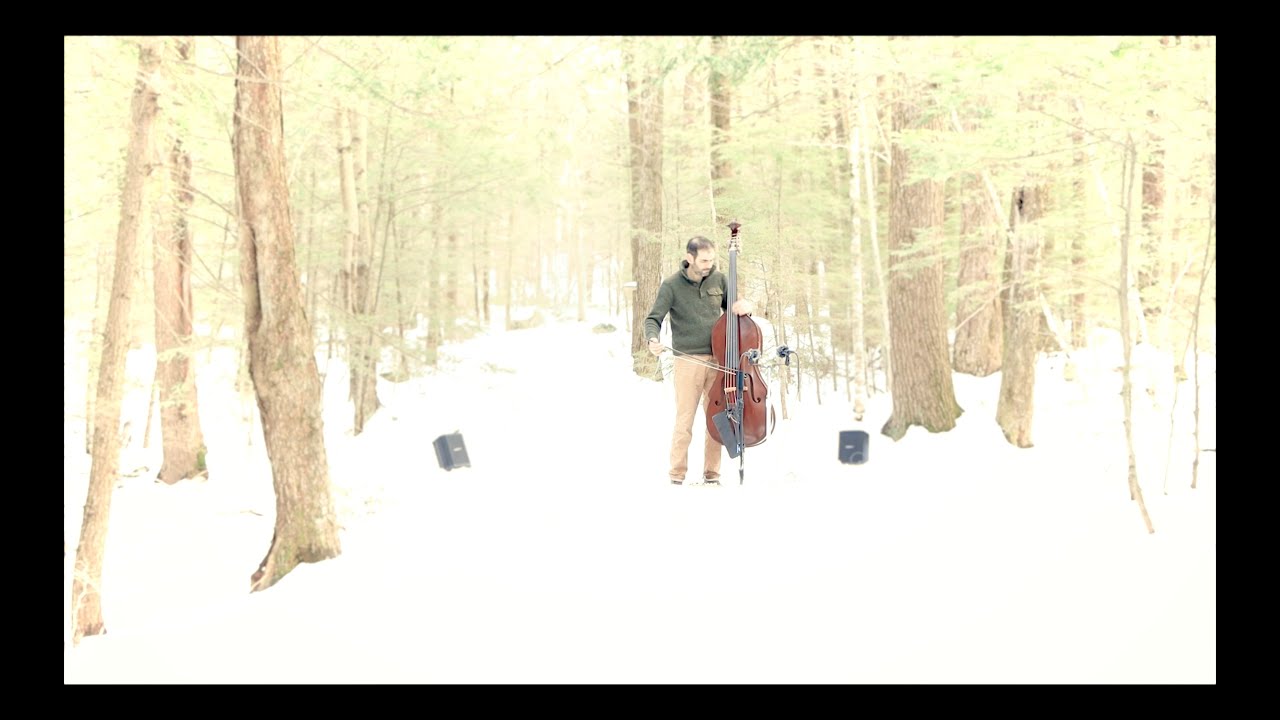
Imagine the edge of the Atlantic in November, when the beach is mostly empty and the air has the bite that tells you the season has turned. Somewhere on that shoreline, a musician sets up to play into the wind and the sound of the surf. That is the scene the video called Ocean puts in front of us. It is ten minutes long, it was posted to YouTube by Garth Stevenson in January 2008, and its description gives a single line of context: an improvisation, played to the cold November air at Rockaway Beach, New York. That is nearly everything the page offers. What follows is an attempt to take that line seriously without inventing what the video does not say.
A title is a piece of composition in its own right. Calling a piece Ocean sets an expectation before a single note sounds: the music is meant to be heard as water, as motion, as something vast that does not stop for the performer. Whether the sound is meant to imitate the surf, to answer it, or simply to share its space is a question the title leaves open. That openness is part of why an improvised piece with this name rewards attention. The listener is invited to hear the ocean as a collaborator rather than a backdrop.
Anyone who has played outside knows the instrument stops behaving the way it does in a room. Wind carries sound away and pulls it apart. Cold changes how the body responds: fingers stiffen, breath shortens, tuning drifts. Acoustic instruments in particular respond to temperature and humidity, and the performer has to adjust in real time. None of this is specific to the Rockaway recording as far as the page tells us, but it explains why a November beach is a demanding setting for improvisation. There are no walls to return the sound, no fixed monitoring, and no second take. Whatever happens is what happened.
That condition tends to strip away habit. When the room cannot be relied on, a player listens more and plans less. The sea supplies a pulse that is never quite regular, and the best improvisers tend to take that irregularity as material rather than as interference.
Honesty matters here, because the material available for this piece is thin. The video has no transcript, so no spoken words, no explanation from the performer, and no account of the instrument or the musical approach can be quoted. The description does not say what was played, what tradition or style the improvisation draws on, or how the recording was made. The January 2008 posting date and the November setting are both on the record, but the page does not connect them further, and this article will not guess at the story behind them. Nor will it place the performer in any lineage or body of work the source does not mention.
The view count, roughly 19,000 at the time this was prepared, indicates that the video found an audience. Beyond that, the page is silent.
For a viewer coming to Ocean cold, the most useful approach is to treat it the way one would treat a field recording with a musical pulse. Listen for the moments when the playing seems to respond to the sound around it. Notice where the performer holds space and where the sound thickens. Pay attention to how the piece begins and whether it moves toward resolution or simply continues until it stops. A ten-minute improvisation outdoors gives the listener time to settle into the rhythm of the water, and that patience is the point of the form.
Watch the video in full, preferably with headphones and at a volume that lets the surf come through. Then return to the title and ask what the piece is trying to do with it. If you want more context on the performer, the source description and channel page are the only places this material points to, and they are brief. For readers interested in improvised music played in unusual settings, the broader practice of outdoor and site-specific performance is a rich field to explore, and this recording is a small, direct example of why it draws players out of the studio and onto the shore.