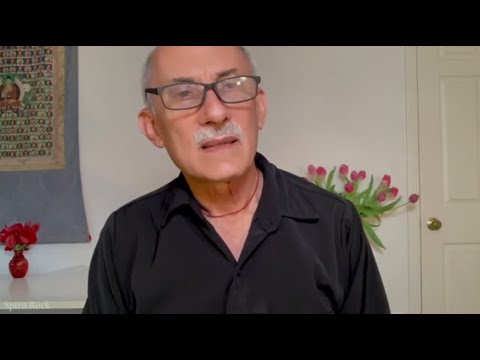
Jack Kornfield teaches a practical path for transforming anxiety and despair by quieting the mind, opening the heart, and centering yourself in loving awareness. Rather than suppressing difficult emotions, this approach recognizes that your true nature is loving awareness itself—a stable ground beneath suffering. Through meditative practice and conscious relationship with fear, you can access hope and trust even in difficult times.
What Is Loving Awareness and Why Does It Matter for Anxiety?
At the heart of Kornfield's teaching lies a radical recognition: who you really are is not your anxious thoughts or your despair, but loving awareness itself. This isn't a new concept to acquire or manufacture. Rather, it's a fundamental capacity that's been present all along, obscured by the constant chatter of the conditioned mind. When you quiet your mind—through meditation, contemplative practice, or conscious presence—you create space to access this deeper dimension of being.
Anxiety thrives in a closed system: the mind loops on threats, the heart contracts, and you become isolated in the story of what might go wrong. Loving awareness operates differently. It's spacious, inclusive, and capable of holding both difficulty and trust simultaneously. This isn't about denying real challenges or pretending despair doesn't exist. Rather, it's about expanding your identity beyond the anxious mind to include the awareness that observes and holds the anxiety itself.
How Does Quieting the Mind Actually Reduce Anxiety?
The practice of quieting the mind is not about achieving a blank slate or eliminating all thoughts. Instead, it's a gradual process of noticing the mind's habitual patterns without being consumed by them. Through meditation and mindfulness, you develop what's sometimes called "witness consciousness"—the capacity to observe thoughts and emotions without immediately believing them or acting on them.
When your mind is turbulent, anxiety feels solid and absolute. Every catastrophic thought feels like a prediction of the future. But when you quiet the mind even slightly, you begin to notice something crucial: thoughts arise and pass. They have a temporary, insubstantial quality. The anxious narrative that seemed like a prison is actually more like weather moving through space. This shift in perception itself is liberating. You're no longer trapped inside the anxiety; you're aware of it.
Kornfield's approach values consistency in this practice. Regular meditation—even brief daily practice—trains your nervous system to access states of calm and centeredness. Over time, this capacity becomes available even in moments of stress. You begin to have a choice: you can stay locked in the anxious story, or you can shift into centered awareness.
What Does It Mean to Open Your Heart When You're Afraid?
Opening the heart when you're experiencing anxiety or despair is counterintuitive. The natural instinct is to protect yourself, to withdraw and contract. Yet Kornfield points toward a paradoxical truth: closing the heart actually intensifies suffering. Fear and despair become crystallized, solid, and overwhelming. Opening the heart—not naively, but with wisdom—is the path through rather than around these states.
Opening the heart involves several dimensions. First, it means cultivating compassion for yourself in your anxiety. Rather than judging yourself for being afraid, you can acknowledge: "Fear is here. This is part of the human experience. I'm suffering, and suffering is real." This self-compassion creates internal safety, which paradoxically allows the nervous system to settle.
Second, opening the heart means remembering your interconnection with others. Anxiety often isolates you in a private hell of your own thoughts. But when you open your heart, you recognize that many people experience fear and despair. This recognition—"I'm not alone in this"—can be deeply healing. It breaks the spell of isolation that amplifies anxiety.
Third, opening the heart is an active practice of directing loving attention toward your own fear and toward the world. This isn't sentimentality; it's a disciplined cultivation of care. When loving awareness becomes the foundation of how you relate to your anxiety, the anxiety itself begins to transform.
How Do You Center Yourself in the Present Moment?
Centering is the practice of anchoring your attention and awareness in what is actually happening right now, rather than in the anxious stories your mind is telling about the future. Anxiety is fundamentally a future-oriented state: you're suffering about what might happen, what could go wrong, what you might fail at. The present moment, by contrast, is often workable and whole.
Centering practices might include grounding techniques (noticing your feet on the ground, your breath, physical sensations), body awareness, or returning attention to something that anchors you in now—a mantra, a prayer, a conscious breath. The specifics matter less than the intention: to return your awareness to what is directly available right now, rather than to the constructed narrative of future threat.
When you're centered, you can assess the actual situation in front of you rather than the amplified, catastrophic version your anxious mind has created. Many of the threats anxiety predicts never materialize, or prove much more workable when you actually face them with a clear, present mind rather than with the paralysis that anticipatory fear creates.
What Role Does Trust Play in Transforming Despair?
Trust is not naive optimism or denial of difficulty. In Kornfield's teaching, trust emerges from direct experience of loving awareness itself. When you've accessed, even briefly, the experience of being held in something vast, spacious, and loving—whether through meditation, nature, relationship, or spiritual experience—trust becomes possible. You're no longer betting your whole being on the anxious mind's predictions.
Trust also involves remembering your own resilience. You've survived 100% of your previous difficult moments. You've navigated challenges you didn't know you could navigate. This historical evidence of your own capacity and the support available to you creates a felt sense of trust—not that everything will go as you want, but that you can meet what comes.
Moreover, trust in this context often means trusting in the process of healing itself. Despair is partly an awareness that you cannot control outcomes or guarantee safety. Trust, in response, is a willingness to engage fully with life—to love, to work, to care—even knowing that suffering is part of the human experience. This is not weakness or passivity. It's active faith in the value and beauty of existence itself.
How Can Daily Practice Sustain Hope in Difficult Times?
Kornfield's teaching emphasizes the importance of regular contemplative practice, particularly meditation, as a foundation for accessing hope and trust. This isn't something you do once and solve. Rather, it's a daily or regular returning to the practices that reconnect you with your deeper nature.
In difficult times—whether personal crisis, collective upheaval, or existential uncertainty—the human system naturally contracts and closes. Without a practice to anchor you in something larger, despair can become the default. Regular meditation, prayer, time in nature, or other contemplative practices serve as a counterweight. They remind you, again and again, that you are more than your fear, that loving awareness is accessible, and that hope is not based on the outside world becoming perfect—it's based on your fundamental nature and your capacity to meet life with an open heart.
These practices also build what might be called "emotional resilience." The more consistently you meditate or engage in contemplative practice, the more your nervous system learns to regulate itself. You develop the capacity to feel difficulty without being overwhelmed by it, to hold uncertainty without collapsing into despair.
Where to Go From Here
The teaching Kornfield offers is not meant to be merely intellectual. The transformation of anxiety and despair requires direct practice and embodied experience. Consider starting with a simple daily meditation practice—even five or ten minutes—specifically focused on quieting the mind and opening the heart. Notice what happens when you shift from the anxious story into present awareness.
Explore self-compassion practices alongside meditation. When anxiety arises, practice speaking to yourself as you would a dear friend who was afraid. Investigate the actual present moment: What is happening right now? What is actually needed in this moment? Often, the answer is simpler and more workable than what your anxious mind predicts.
Seek opportunities to connect with others who are engaged in similar practices and inquiries. The recognition that you're not alone in your fear and despair, and that others have found pathways through to hope and trust, can itself be transformative. Finally, remember that the goal is not to achieve a permanently blissful state, but to develop a stable relationship with your own loving awareness—a ground beneath the ups and downs of life that allows you to meet whatever comes with both equanimity and care.