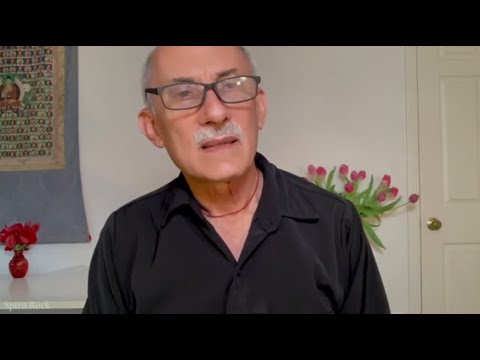
In an era of constant news cycles and social media, many people find themselves trapped in cycles of fear, guilt, and compulsive news consumption—a pattern known as doomscrolling. Jack Kornfield teaches that meditation and present-moment awareness offer a radically different perspective: rather than being swept away by the rising and falling waves of grief and fear, meditation invites you to step back and recognize that these emotional states are not who you fundamentally are. By staying rooted in the present moment, you can transform your relationship with fear, guilt, and the compulsion to consume bad news.
Doomscrolling—the compulsive consumption of alarming news and catastrophic information—has become a defining feature of modern life. The smartphone, designed to keep us engaged, delivers a constant stream of crises, disasters, and threats. Each notification pulls us deeper into what Kornfield describes as "the rising and falling of the ocean of grief and fear."
This pattern reinforces itself. When you scroll through news feeds, your nervous system registers each alarming headline as a potential threat. Your body tightens. Your breath becomes shallow. And then, seeking relief from that tension, you reach for your phone again—only to encounter more distressing information. The cycle becomes nearly automatic.
The guilt amplifies this trap. Many people feel ashamed of their anxiety or their inability to "do something" about distant crises. They doomscroll partly out of a sense of obligation—the belief that they should be aware, informed, responsible. Guilt drives them back to the screen, even as the screen deepens the very guilt they're trying to process.
Without deliberate practice, the human mind naturally gravitates toward rumination and anticipation. We replay past mistakes (guilt) or project worst-case futures (fear). This is not a personal failure; it's how the untrained mind operates. Neuroscience confirms that the "default mode network"—the brain's resting state—tends toward narrative self-concern and threat-assessment.
In this state, you believe that the anxious story you're telling yourself is reality. You believe that your guilt defines you, or that the catastrophes you imagine are inevitable. The news feed doesn't create this tendency; it hijacks and amplifies it, offering an endless supply of "evidence" for your fear.
Kornfield's insight is that this identification with fear and guilt is mistaken. The emotions are real—the weather in your mind and body is genuinely stormy—but they are not your essential nature. Meditation is the practice of learning to see this difference.
Meditation does not work by suppressing fear or guilt. Instead, it teaches you to relate to these emotions differently. When you sit in meditation, you notice thoughts and emotions arising and passing. You watch fear appear, intensify, and then dissolve. You observe guilt flare and fade. Over time, this observation builds a crucial skill: the ability to witness your mental and emotional weather without identifying as the weather itself.
This is not intellectual understanding. It's direct, embodied knowledge. Through repeated practice, your nervous system learns that fear is a temporary state, not your identity. You discover that you can be present with guilt without being consumed by it.
The ocean metaphor Kornfield uses is instructive. When you're caught in the waves, drowning in the water, you experience only chaos and struggle. But when you step back to the shore—or better yet, when you recognize yourself as the vast ocean itself, not just the surface waves—everything shifts. The waves continue, but you are not confined to them.
Meditation is the practice of learning to recognize yourself as the larger context, not the temporary weather patterns moving through it.
In a culture designed to keep you distracted, reactive, and afraid—because fear sells advertising and engagement drives profit—choosing to return to the present moment is a quiet but profound form of resistance. Doomscrolling keeps you locked in a cycle of helplessness: you feel overwhelmed, guilty, afraid, so you seek more information that makes you feel more overwhelmed.
Presence breaks this cycle. When you're truly present—aware of your breath, your body, the actual sensations in your hands or feet—you're not scrolling. You're not imagining catastrophes. You're not replaying your mistakes. You're simply here, now, alive in this moment that is neither as threatening nor as urgent as the anxious mind claims.
This isn't escapism. It's not denying that real problems exist in the world. Rather, it's recognizing that your most effective response to those problems comes from a grounded, clear, compassionate state of mind—not from a fearful, guilty, reactive state that doomscrolling produces.
Kornfield's teaching suggests several concrete practices:
- Establish a formal meditation practice: Even 10-20 minutes daily trains your mind to stay present rather than spiraling into fear and guilt. Meditation is the foundational tool for building this capacity.
- Notice when you reach for your phone: Pause and ask: Am I reaching for this from curiosity or from anxiety? From a desire to help or from guilt? This simple awareness interrupts the automatic pattern.
- Set boundaries with news consumption: Choose specific times to check news, rather than allowing it to interrupt throughout the day. This honors the legitimate need to be informed while preventing the addictive spiral.
- When fear or guilt arises, return to the body: Feel your feet on the ground. Notice your breath. This immediately anchors you in the present, where you are actually safe.
- Remember that you are not your emotions: Guilt and fear are visitors passing through the landscape of your consciousness, not residents, and certainly not your home.
There's an important distinction in Kornfield's teaching: being aware of the world's suffering is not the same as being drowned by it. In fact, when you're drowned—caught in the rising and falling of reactive fear—you're less effective at responding with compassion or wisdom.
Someone who practices presence can read difficult news and respond from a place of grounded clarity. They might feel sadness, which is appropriate, but not panic. They might feel moved to act, but not paralyzed by guilt or helplessness. The present moment, accessed through meditation, is where this kind of wise compassion becomes possible.
Kornfield's point is not that you should ignore the world. It's that you should relate to it from your full humanity—your capacity for reason, compassion, and discernment—rather than from the reactive fear-guilt loop that doomscrolling triggers.
If you recognize yourself in the patterns Kornfield describes—if you find yourself doomscrolling, caught in cycles of guilt and fear, unable to stay present—the first step is to establish a meditation practice. This doesn't require special equipment, belief, or even previous experience. It simply requires showing up, again and again, to practice noticing what's present in this moment.
As you deepen this practice, you'll discover what Kornfield points to: that the anxious stories your mind tells are not ultimate truth. That you are larger than your fear. That presence is always available, even in difficult times. And that this presence is not separate from compassion—it is the ground from which genuine compassion naturally arises.