
BrightStar

Browse All Events

Discover conscious gatherings

events

Yoga
Meditation
Breathwork
Qigong
Tai Chi
Sacred Music
World Music
Medicine Music
Sound Healing
Ecstatic Dance
Popular Destinations
BaliSedonaLos AngelesCosta RicaNew YorkSan FranciscoAustinMiamiJoshua TreeTulum
View All CategoriesView All Destinations

Explore All Features

Powerful tools to grow your events

Platform Features

Smart Dynamic Pricing
Ticket Categories
Assigned Seating
Abandoned Cart Recovery
Visitor Recovery
Donations & Sliding Scale
Affiliate Engine
Ticket Scanner
Coupon Codes
Custom Questions
Ticket Sharing
Upsells & Add-ons
Analytics & Reporting
Email Sequences
Waitlist / Notify / Remind
People & Places
Artists & TeachersEvent OrganizersVenues & StudiosKnowledge BaseGlossaryInspiration
View All FeaturesAbout Us
PricingBlog
Language
Saved events
Browse All Events

events

YogaMeditationBreathworkQigongTai ChiSacred MusicWorld MusicMedicine Music

Popular Destinations

BaliSedonaLos AngelesCosta RicaNew YorkSan Francisco

People & Places

Artists & TeachersEvent OrganizersVenues & StudiosKnowledge BaseGlossaryInspiration

Platform Features

Smart Dynamic PricingTicket CategoriesAssigned SeatingAbandoned Cart RecoveryVisitor RecoveryDonations & Sliding ScaleAffiliate EngineTicket ScannerCoupon CodesCustom QuestionsTicket SharingUpsells & Add-onsAnalytics & ReportingEmail SequencesWaitlist / Notify / Remind
View All FeaturesAbout Us
PricingBlog
Log inFind EventsHost Events
  • Browse All Events
  • For Seekers
  • Yoga
  • Meditation
  • Breathwork
  • Qigong
  • Tai Chi
  • Sacred Music
  • World Music
  • Medicine Music
  • Sound Healing
  • Ecstatic Dance
  • Retreats
  • Workshops
  • All Categories →
  • Bali
  • Sedona
  • Los Angeles
  • Costa Rica
  • Tulum
  • Byron Bay
  • San Francisco
  • Austin
  • New York
  • San Diego
  • Denver
  • Seattle
  • Portland
  • Miami
  • All Cities →
  • Be Found
  • Sell Globally
  • For Creators
  • For Teams
  • For Writers
  • For Teachers
  • For Kirtan Artists
  • For Studios
  • For Festivals
  • For Retreat Centers
  • For Nonprofits
  • Brand Ambassador
  • Case Studies
  • Free Ticketing
  • Elevate
  • Amplify
  • 500K+ Buyer Network
  • Abandoned Cart Recovery
  • Smart Dynamic Pricing
  • Ticket Categories
  • Recurring Events
  • Assigned Seating
  • Affiliate Engine
  • Waitlist / Notify
  • Ticket Scanner
  • Embed Widget
  • Event Syndication
  • Message Center
  • Integrations
  • Reports
  • All Features →
  • About
  • The Ecosystem
  • Blog
  • Glossary
  • Inspiration
  • Help Center
  • Contact
  • API Docs
  • Brand Assets
  • Careers
  • Press
  • Terms of Service
  • Privacy Policy

Events

  • Browse All Events
  • For Seekers
  • Yoga
  • Meditation
  • Breathwork
  • Qigong
  • Tai Chi
  • Sacred Music
  • World Music
  • Medicine Music
  • Sound Healing
  • Ecstatic Dance
  • Retreats
  • Workshops
  • All Categories →

Destinations

  • Bali
  • Sedona
  • Los Angeles
  • Costa Rica
  • Tulum
  • Byron Bay
  • San Francisco
  • Austin
  • New York
  • San Diego
  • Denver
  • Seattle
  • Portland
  • Miami
  • All Cities →

For Creators

  • Be Found
  • Sell Globally
  • For Creators
  • For Teams
  • For Writers
  • For Teachers
  • For Kirtan Artists
  • For Studios
  • For Festivals
  • For Retreat Centers
  • For Nonprofits
  • Brand Ambassador
  • Case Studies
  • Free Ticketing
  • Elevate
  • Amplify

Features

  • 500K+ Buyer Network
  • Abandoned Cart Recovery
  • Smart Dynamic Pricing
  • Ticket Categories
  • Recurring Events
  • Assigned Seating
  • Affiliate Engine
  • Waitlist / Notify
  • Ticket Scanner
  • Embed Widget
  • Event Syndication
  • Message Center
  • Integrations
  • Reports
  • All Features →

Company

  • About
  • The Ecosystem
  • Blog
  • Glossary
  • Inspiration
  • Help Center
  • Contact
  • API Docs
  • Brand Assets
  • Careers
  • Press
  • Terms of Service
  • Privacy Policy
BrightStar
© 2026 BrightStar. All rights reserved.
Inspiration

How Self-Worth Stories ShapeYour Reality and Relationships

Peter Crone
Peter Crone
Mar 12, 2024
6 min read
Watch · 5

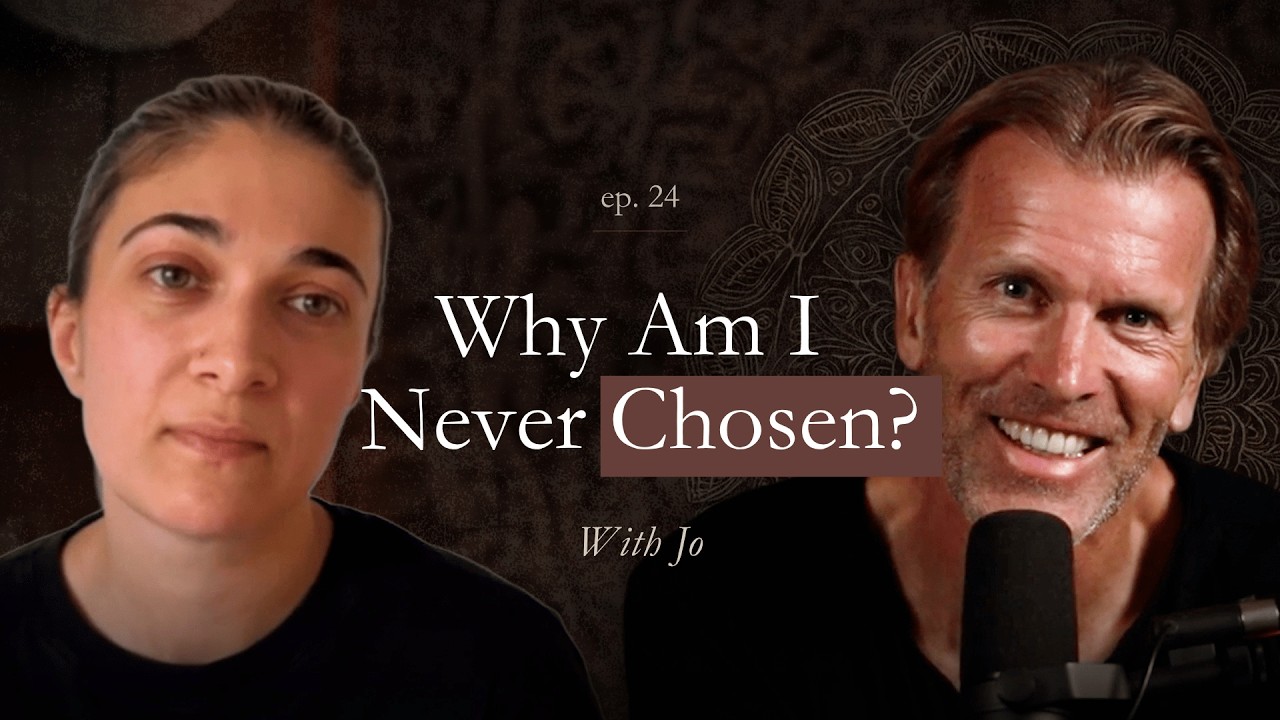
Peter Crone explores how the stories we tell ourselves—our internal dialogue—become self-fulfilling prophecies that determine how we show up in relationships and life. When a woman believing she wasn't special wondered why she was single, Crone reframed her narrative: what if she were the most important person on the planet? This shift in self-concept doesn't change objective truth, but it fundamentally alters frequency, energy, body language, and consequently, results. The mechanism is direct: thought patterns produce feeling patterns, which produce action patterns, which produce outcome patterns. This is not visualization or affirmation—it's the mechanics of how consciousness shapes experience.

Read · 6 sections

What is the prison of dialogue we live in?

Crone describes most people as living "within prisons of dialogue"—recurring thought patterns so habitual they become invisible. These internal narratives are not facts; they are stories we've internalized, often from early conditioning, trauma, or repeated experience. The woman in Crone's example carried a story: "I'm not very special." This narrative became a lens through which she interpreted her circumstances. When she remained single, rather than questioning the story, she used it to explain her loneliness. The story and the circumstance reinforced each other, creating a closed loop.

The critical insight is that the story is "no more true" than its opposite. Crone emphasizes that whether you believe "I'm the most important person on the planet" or "I'm not very special," neither statement is objectively verifiable. Both are interpretations, frameworks, ways of organizing experience. Yet they produce entirely different internal environments and external outcomes.

How does narrative shape frequency and energy?

Crone uses the language of frequency and energy—concepts rooted in embodied psychology and neuroscience, though often dismissed as merely metaphorical. When you genuinely believe you're not special, that belief doesn't stay abstract. It cascades through your nervous system. Your body language changes; you physically contract or "cower" as Crone notes. Your eyes have a different quality. The way you hold yourself in space shifts. This is not conscious posturing; it's a direct transmission from belief to physiology.

Someone who carries the narrative "I am the most important person on the planet" holds themselves differently. Their frequency—the energetic signature they emit—becomes a precursor to attraction. Men (in this example) don't fall in love with a belief statement; they respond to the energetic reality that a different self-concept produces. Confidence, ease, presence—these are not personality traits; they are the bodily expressions of a coherent, affirming internal narrative.

What is the mechanism linking thought to results?

Crone distills the mechanism with precision: "You think differently, you feel differently, you act differently, and consequently you get different results." This is not magical thinking. It's a causal chain grounded in how the nervous system works.

  • Thought: A narrative, belief, or interpretation—"I'm not special" vs. "I'm important."
  • Feel: That thought triggers an emotional state—resignation, shame, or alternatively, dignity, calm assurance.
  • Act: Your emotional state produces behavior. If you feel unworthy, you might avoid eye contact, speak softly, deflect compliments. If you feel worthy, you lean in, speak clearly, receive appreciation.
  • Results: Your behavior shapes how others respond to you and what opportunities you notice and pursue.

The woman who didn't feel special acted from that state. She may have unconsciously broadcast unavailability or low self-regard, signaling to potential partners that she didn't believe in her own value. Why would they? Her nervous system was the first to reject her. Shifting the narrative to "I am the most important person on the planet" reverses the chain. She acts from a place of self-regard, which becomes visible in posture, speech, choice of who to engage with—and consequently, in who wants to engage with her.

Why doesn't narrative change require external validation?

Crone's insight cuts against a common objection: "But I'm not actually the most important person on the planet. That's narcissistic. That's false." His response is implicit but clear: the narrative's truthfulness is not the source of its power. Both "I'm special" and "I'm not special" are equally untrue in an objective sense. No one is objectively more important than anyone else; importance is relational and contextual. But subjectively, from the inside of your own life, the belief that you matter—that your experience, your presence, your existence has weight—is the belief that produces a different frequency.

This is why Crone doesn't offer platitudes or self-help affirmations. He's not saying repeat "I am worthy" in the mirror. He's identifying that the stories we're already living in are arbitrary. We've accepted them as true without examination. The work is to recognize the story as a choice, not a fact, and to choose differently. For the woman, the shift wasn't from "I'm unworthy" to "I'm worthy"—it was recognizing that the entire frame was optional. Stepping into the arena with a different narrative doesn't require permission from the universe or a sudden influx of self-esteem. It requires a shift in what you're willing to believe about yourself, even if (and especially if) that belief feels unfamiliar.

How does this apply beyond romantic relationships?

Crone frames the woman's situation around relationships, but the mechanism applies everywhere. In professional settings, the person who believes "I'm not good enough for that role" approaches interviews and projects from a place of proving their worth—a losing posture. The person who believes "I belong here" approaches the same situation from self-assurance, which changes the quality of their preparation, presence, and communication. The narrative isn't more true in one case; it's just more functional.

The same applies to health, creativity, financial decision-making, how you parent, how you handle conflict. Every domain of life is first filtered through the stories you believe about yourself. Change the story, and you change not just your mood but the entire topology of what you're capable of accessing.

Where to go from here

The invitation Crone extends—"What's the prison of words you're stuck within that you're ready to let go?"—is the actual work. It requires identifying the recurring narratives you inhabit. Not the positive affirmations you wish were true, but the ones you actually live from. The story about your specialness or lack thereof. The story about whether you're lovable, competent, safe, deserving. These stories are usually so normalized they feel like facts. Recognizing them as stories—as chosen (or inherited and unchosen) interpretations—opens the possibility of choosing differently. The proof is not in the theory but in the feedback loop: think differently, and within days or weeks, the results will tell you whether the new narrative is working.
Comments

Loading the conversation…

Transcript

[0:00] well what if I told you you were the

[0:01] most important person on the planet and

[0:04] I mean you look at her eyes like you

[0:05] know just the idea of stepping into that

[0:08] Arena no more true than the one that

[0:10] she's not very special but boy does it

[0:12] give entirely different experience of

[0:14] herself and for her it was sort of

[0:16] around the arena of relationships like

[0:18] you know for her to be not that special

[0:20] and then she wondered why she's single

[0:21] it's like well hello but if you're the

[0:23] most important person in the planet just

[0:25] by virtue of the shift in your own

[0:26] frequency and your own energy that would

[0:28] then be the precursor to men being being

[0:30] attracted to her versus like

[0:32] energetically just the way she holds

[0:34] herself her body you know it's a little

[0:35] bit like she's cowering and you know all

[0:38] of that is an extension of our own

[0:40] dialogue you think differently you feel

[0:42] differently you act differently and

[0:44] consequently you get different results I

[0:45] mean it just it works every time

Peter Crone
ArtistPeter Crone

The Mind Architect who helps individuals unlock their potential by addressing subconscious beliefs through innovative coaching, workshops, and transformative teaching.

View profileWebsite
Explore Topics
Self-worthInternal-dialogueThought-patternsRelationshipsConsciousness

Got Questions?

Frequently Asked Questions

Yes, but not through magic. A genuine shift in self-narrative changes your physiology, body language, and energy—how you hold yourself in space. These visible and energetic changes alter how others perceive and respond to you. The attraction follows from the behavioral and energetic shift, not from the belief alone.
Look at recurring patterns in your life—especially areas where you feel stuck. If you're repeatedly single, unsuccessful in a domain, or isolated, ask yourself what narrative you're living from. Usually, it's something you've accepted as true without examination, like 'I'm not special' or 'I'm not good enough.'
Affirmations are words you repeat to override negative beliefs. Narrative change is recognizing the story you're actually living from and consciously choosing a different one. It's not about forcing positivity; it's about recognizing that both the limiting story and the empowering story are equally true (or untrue)—and choosing the one that produces better results.
Your story change will immediately change how you show up—your energy, presence, and actions. Those changes then alter how others respond to you and what opportunities you notice and pursue. Results follow from changed behavior, which follows from changed thinking.
Not in Crone's framing. The narrative isn't objectively true—no one is objectively more important. But subjectively, from inside your own life, believing you matter changes your frequency and how you move through the world. It's functional, not factual.
The thought-to-feeling-to-action chain is immediate. Your physiology and energy shift as soon as you genuinely adopt a new narrative. External results—how others respond—usually follow within days or weeks, as your changed behavior and presence register with the people around you.

Continue Reading

More from Peter

View All
The Fear of Not Being Chosen: Why Self-Love Begins With Acceptance
Inspire

The Fear of Not Being Chosen: Why Self-Love Begins With Acceptance

A conversation with Peter Crone and Jo explores how rejection and shame shape our relationships, and why freedom comes from within.…

1 min read
Identity Wounds & Self-Imposed Healing: Why Fixing Yourself Deepens Suffering
Inspire

Identity Wounds & Self-Imposed Healing: Why Fixing Yourself Deepens Suffering

Explore why every addiction masks an identity wound, and how the pursuit of healing perpetuates the belief that something is broken in you.…

1 min read
Govinda Jaya: How Sacred Sound Awakens the Heart
Inspire

Govinda Jaya: How Sacred Sound Awakens the Heart

Radhika Das channels the liberating power of mantra through a luminous kirtan performance at Medicine Festival, invoking divine names to pur…

1 min read
Om Namah Shivaya Chant: Ecstatic Trance Meditation
Inspire

Om Namah Shivaya Chant: Ecstatic Trance Meditation

Jai Uttal guides listeners into an ecstatic chant trance with Om Namah Shivaya, the Sanskrit invocation of Shiva consciousness. A 91-second …

1 min read

Keep exploring

Continue your journey

More wisdom and gatherings from across the BrightStar directory.

More Articles

Browse the full library of teachings, interviews, and guides.

Back to all articles →

Teachers & Artists

Explore the lineages, musicians, and guides of the conscious world.

Explore artists →

Find an Event

Kirtan, retreats, sound baths, breathwork, festivals — happening soon.

Browse events →