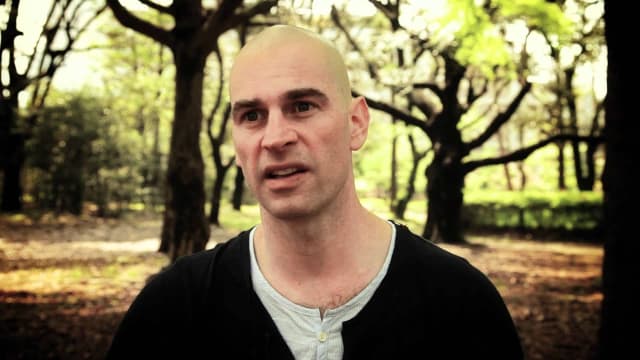
Holotropic breathwork is a breath-and-music practice that Stan Grof developed in the 1970s to produce the kind of psychotherapeutic opening he had been seeing in patients who used plant medicines, without taking psychedelics. Its full form is a twelve-hour workshop built around three-hour breathing sessions, each divided between a breather and a sitter. In a ten-minute Yoga Journal video from December 2018, contributor Sky Cowans tries a one-hour adaptation called neurodynamic breathwork, developed by Michael Stone, a certified facilitator who trained under Grof. The video is a useful first look at what the practice asks of you: a deliberate hyperventilating breath, a loosening of the thinking mind, and a willingness to let the body decide what happens next. What follows explains the ideas behind the method, how the session is structured, and what a first hour can actually feel like.
Wheredidholotropicbreathworkcomefrom?
The method has a research origin, not a yoga-studio one. The video's description identifies Grof as a pioneer in psychedelic research for psychotherapeutic use, and says he built holotropic breathwork to reach similar benefits to those he was witnessing with plant medicines, but through breath instead of substances. He began seeing powerful results with patients using the technique, and the approach took shape through the 1970s.
The governing idea is simple to state and radical in practice. As the Yoga Journal video frames it, the practice rests on "the fundamental principle that we have all of the answers inside of us." The method uses breath and music to quiet what the video calls the ego or conscious mind, so that the inner wisdom and guidance everyone carries becomes accessible. Most of us, the narration suggests, have very little access to that material in ordinary waking life. Holotropic work is an attempt to open the door.
That is also why the pranayama label, which the description uses, only tells part of the story. Classical breath practices usually hand you a pattern to hold. Holotropic breathwork hands you a pattern to start from and then deliberately steps back.
Whydoesthefullworkshopruntwelvehours?
The video is explicit that the real thing is not a quick experiment. True holotropic breathwork is taught in a twelve-hour structure with three-hour breathing sessions. Sky was getting a single one-hour slice of that, which the narration describes as a shortened version of the three-hour session that Stone developed and calls neurodynamic breathwork.
Stone's stated purpose for the shortened form is access. In the video's words, the aim is to let people experience the benefits of the breathwork "in a more accessible way," whether in person or online, and to make it something participants can practice on their own. The description reinforces this: neurodynamic breathwork was built so that people could practice the technique independently after the workshop. The compression is a trade. You give up the long arc of a three-hour descent in exchange for a format that fits into a single lunch hour, or a living room.
Whatarethetworoles,thebreatherandthesitter?
Every session divides people into two roles, and the video treats the second as just as important as the first. The breather does the breathing. The sitter sits beside them, holds space, and takes care of them. The sitter's job is not to coach the breathing or to interpret what is happening. It is to be present.
The video makes a point about how unusual that presence can be. For many people, it says, "it's really the first time that they've ever been in one place for three hours and just been present for another human being." That line deserves a pause. A large part of the work is simply being witnessed without being fixed, advised or hurried. The sitter's steadiness is the container the breather's experience moves inside.
Howdoesthebreathingitselfwork?
The structure is deliberately two-part. First comes a specific technique, designed so the breather takes in as much oxygen as possible. The video says that this is what allows certain physiological changes to happen. Sky's version began with a gentle, open-mouth breath: deep inhales and exhales that gradually grew faster and deeper. She was told to stay with that technique for the first ten minutes or so.
After that, the instruction changes completely. Follow your inner guidance, even in how you breathe. The video notes that everyone's breathing looks a little different because it is individual. Participants are encouraged to move if they want to move, to make sounds if their body wants to make sounds, and to let emotions and physical releases come when they arrive. The working principle, in the narration's phrasing, is to "allow and surrender to whatever wants to come up from your inner being," then recognize it and welcome it.
That last instruction is the hinge of the whole practice. The breath is not a task to be completed. It is a doorway you walk through and then stop managing.
Whyisitdescribedasafemininemodality?
Near the middle of the video, the narration offers a line that is easy to skip and worth noticing. The practice, it says, is "a very feminine modality actually," because it is not about pushing through something with masculine force. Most of the athletic and self-improvement breathwork people encounter asks for effort, endurance and a goal to achieve. Holotropic breathwork asks for surrender, and it places a premium on letting the body lead.
Whether or not one accepts the gendered framing, the contrast points to something real. The method's success depends less on how hard you push the breath than on how completely you stop steering it.
WhatdidSkyactuallyfeelinthefirsthour?
Sky's account, given in her own words in the video, is the most useful thing the video offers, because it shows the arc rather than promising a result. Early on, the breathing brought up something she didn't expect. "I started experiencing emotion and physical sensations," she recounts, beginning with uncontrollable laughter that "felt like it was boiling up from deep inside of me." The video places that laughter around the 4:54 mark.
Then came the hands. Around the 5:25 mark she describes them as overwhelmed with energy to the point where she could not control them: first frozen and numb for a long stretch, then gradually releasing into fluid movement as she followed the instruction to do whatever felt right. At one point she raised them with palms wide open and described feeling surrounded by energy.
"My balloon of combined emotions slowly morphed into a very clear feeling of overwhelming gratitude for life." (Sky Cowans, Yoga Journal video, December 2018)
That shift, around the 5:57 mark, is the moment the video is most worth watching for. She describes swelling with emotion until she felt like a balloon about to pop, with no single feeling dominating, and then watching the mixture resolve into gratitude. Her heart space felt wide open. After that, around 6:26, she describes a trance-like state in which she was alert but her mind dissolved, "as if I were dreaming about empty space."
Coming back, she describes the session closing with slow return to a normal breath rhythm. Her first words afterward, at about 7:17, were "oh my gosh, that was crazy," followed by a sense of peace. Notably, she also reflects that it is rare to laugh with that kind of freedom in ordinary life.
Whatshouldafirst-timerkeepinmind?
The video is an honest introduction, not a manual, and it leaves some things out. It does not walk through screening, contraindications or how to handle intense physical responses, and the narration's descriptions of physiological change are not elaborated into medical claims. If you are curious, the sensible reading is that this is an intense, body-led practice that rewards a skilled, present sitter and a clear sense of your own limits. Treat the video as a map of what the territory looks like, not a substitute for training.
It is also worth noting how the practice is framed by its teacher. Stone's version is presented as a way of "exercise for your psyche and for your inner being," in the words Sky uses to describe what she heard from him, which gives the experience a practical, almost athletic tone without losing its inward focus.
Wheretogofromhere
Watch the full ten-minute Yoga Journal video, titled "Intro to Holotropic Breathwork | YJ Tried It," and pay attention to the moments where the breath shifts from instruction to surrender. The video was published on 9 December 2018 and has been viewed close to 887,000 times, which suggests how many people are curious about this method.
If the idea appeals to you, read up on Stan Grof's psychedelic research background so you understand the context the method came from. Look for a certified facilitator before attempting anything beyond the video, and ask directly how they structure the sitter and breather roles and how they handle people who have strong reactions. The video's description points to Michael Stone's in-person training and online sessions as a starting point for those who want to go further.
Holotropic breathwork is a breath-and-music practice developed by Stan Grof in the 1970s to produce psychotherapeutic benefits similar to those he saw in patients using plant medicines, without psychedelics. The full workshop is twelve hours with three-hour breathing sessions. Participants breathe in a deliberately accelerated pattern and then follow their own inner guidance.
Neurodynamic breathwork is a one-hour shortened version of holotropic breathwork that Michael Stone, a certified facilitator who trained under Grof, developed to make the practice more accessible. It can be done in person or online and is designed so participants can practice on their own. The full holotropic format involves a longer, three-hour breathing session within a twelve-hour workshop.
Stan Grof, a pioneer in psychedelic research for psychotherapeutic use, developed holotropic breathwork in the 1970s. He wanted to achieve benefits similar to those he was witnessing with plant medicines, but without using psychedelics, and began seeing powerful results with patients using the breathing technique.
Participants begin with a gentle, open-mouth breath that deepens and speeds up, staying with the technique for roughly the first ten minutes. After that they are told to follow their inner guidance, moving, making sounds or releasing emotion as it arises. In the Yoga Journal video, Sky Cowans describes uncontrollable laughter, tingling and numb hands, overwhelming gratitude, and a trance-like state.
The sitter sits beside the breather, holds space, and takes care of them while the breather does the breathing. The sitter does not coach or interpret the experience, but offers steady presence. The video notes that for many people it is the first time they have been present with another person for three hours.
The neurodynamic version was designed so participants could practice the technique on their own after learning it. The Yoga Journal video does not give step-by-step instructions for solo practice, and it does not cover screening or contraindications, so training with a certified facilitator first is the sensible route.
No. Grof developed holotropic breathwork specifically to achieve psychotherapeutic benefits similar to those seen with plant medicines without using psychedelics. The method relies on breath, music and the participant's inner guidance.