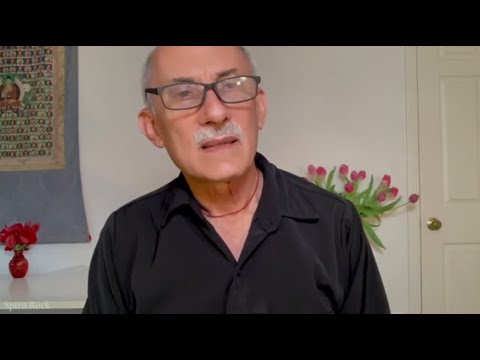
Jack Kornfield teaches that the victim mindset—a self-protective contraction centered on personal harm and grievance—dissolves when we shift from identifying with a small, separate self to recognizing ourselves as spacious awareness witnessing all of life. This shift from self-centeredness to interconnectedness naturally generates resilience, compassion, and wise action that responds to circumstances rather than reacts from injury. The practice involves releasing the tight psychological boundary between self and other, allowing us to recognize that what appears as a separate "me" and "them" is actually a unified field of being appearing in many forms.
The victim mindset is a particular form of consciousness in which a person organizes their experience around the story of having been wronged, harmed, or treated unjustly. This is not to say that harm does not happen—it does—but the victim mindset is a way of relating to harm that makes it the central organizing principle of identity. When someone operates from victimhood, their sense of self becomes bound up with the injury. The self contracts around the wound, and that contraction becomes habitual. Kornfield points to a deeper human capacity for resilience that becomes accessible when we understand the mechanics of how the small self maintains its grip through grievance narratives.
The small self, in contemplative psychology, is the boundary-defined ego that experiences itself as separate from everything else. It is inherently defensive because it perceives a world of "others" that might harm it. This defensive posture, when chronic, becomes the victim mindset—a way of interpreting events that confirms the belief that "I am vulnerable, I have been wronged, and the world is not safe for me." This narrative, while sometimes rooted in real events, becomes self-perpetuating because the mind continues to filter experience through the lens of victimhood.
Kornfield describes a radically different state of awareness: the witnessing consciousness that is "spacious and open and trustworthy." This is not a mental construct or an intellectual belief, but an actual accessible state of awareness that practitioners can cultivate through meditation and contemplative practice. In this state, awareness itself becomes the primary reference point rather than the contents of awareness. Instead of "I am being harmed" (identification with the victim narrative), there is simply the witnessing of harm arising and passing away in awareness, like clouds moving through a sky.
The witness is not cold or detached in a dissociative way. Rather, it is a quality of clear seeing that includes everything—pain, injustice, grief—but is not collapsed into or identified with any single perspective. When you are the witness, you are still aware of what happened and what is painful, but you are not fused with the story of yourself as victim. This creates what Kornfield calls a "trustworthy" state precisely because it is not reactive. The small self, bound in victimhood, is perpetually reactive—defending itself, seeking validation that it was wronged, creating narratives that protect its view of itself as injured.
One of Kornfield's key insights is that compassion is not something we generate through effort or willpower when we abandon the small self and recognize witness consciousness. Rather, compassion arises naturally. He explains: "what comes in it then is not self-centeredness, but connectedness, compassion, and a natural way of responding." This is crucial. Compassion is not a moral obligation or a practice we undertake to become "better people." It emerges organically when the psychological boundary between self and other dissolves.
When we operate from the small, separate self, even our attempts at kindness can be contaminated by the boundary consciousness: "I am doing good to you, the other." There remains a subject-object split. But when that split relaxes through witnessing practice, a different relationship becomes possible. You recognize that the apparent other is not actually other—it is the same awareness appearing in a different form. Kornfield articulates this directly: "It's not them and me. It's us. It's us. We are appearing in all these different forms, but it's just us. It's family."
This is not merely poetic language; it points to a verifiable shift in consciousness. When someone deeply recognizes that separation is an appearance rather than a fundamental truth, the natural response is not charity extended from a position of privilege, but recognition of kinship. The person in pain is not "other"; the person who harmed is not fundamentally different. They are all aspects of the one interconnected fabric of being. From this recognition, compassion flows as a natural response to suffering, anywhere it appears.
Kornfield points to "a kind of resiliency in us as human beings which you can see and also becomes trustworthy when we let go of the small sense of self." This resilience is distinct from the tough, hard kind of resilience that resists harm by steeling itself. Rather, it is a resilience that comes from flexibility, spaciousness, and the capacity to hold difficulty without contracting around it.
When you remain identified with the victim self, your resilience is always compromised because your identity is bound up with the wound. You must protect the wound to protect yourself. This generates a brittle kind of endurance. But when you shift to witnessing consciousness, difficulties can move through you like weather patterns moving through the sky. This is not denial or suppression—the difficulty is fully acknowledged and felt—but it is not allowed to constrict the sense of self. The self itself becomes less a fixed entity under threat and more a natural unfolding response to circumstances.
This quality of resilience is also "trustworthy" because it is not dependent on external circumstances being favorable. The victim mindset is always waiting for the world to change so that the injury will be acknowledged or redressed. But witness consciousness does not require permission from circumstances. It is available now, in the midst of difficulty, because it is your actual nature as awareness itself, not something that circumstances can take away.
Kornfield mentions "inner knowing, the one who knows, to whatever the circumstance." This points to something distinct from both reactive emotional response and the rigid application of rules or concepts. When you are rooted in witness consciousness, there is a quality of direct knowing that guides appropriate action. The victim mindset, by contrast, often generates reactive, defensive actions that may perpetuate harm or suffering. The victim seeks justice through blame, vindication through proving their story, and safety through control.
Inner knowing that arises from witness consciousness is responsive rather than reactive. It has access to the actual nature of the situation—not as it fits into the story of victimhood, but as it actually is. And it generates a way of acting that takes into account the interconnectedness of all parties. This does not mean passivity or accepting harm. Rather, it means action that comes from clarity and compassion rather than fear and self-protection. A person grounded in witness consciousness might leave a harmful situation, set boundaries, or speak truth, but these actions would come from wisdom and caring rather than from the desperate need to prove they were wronged.
While Kornfield does not lay out a step-by-step technique in this brief talk, the path is embedded in Buddhist contemplative practice, which he has taught for decades. The foundational practice is meditation—specifically, the cultivation of mindfulness and the observation of one's own experience without identification. In meditation, you sit and watch thoughts, emotions, and sensations arise and pass. You notice the victim narrative arising: "They did this to me, and it was unfair." And rather than engaging with the story, you simply witness it. You notice the contraction in the body that accompanies the narrative. You notice the impulse to justify, defend, or blame. All of this is witnessed without judgment.
Over time, with sustained practice, the identification with the victim narrative loosens. You begin to experience yourself as the awareness in which these narratives appear, rather than as the character in the narrative. This is not an intellectual realization, but an actual shift in where consciousness is centered. The small self does not disappear—it continues to function as a practical sense of agency and continuity—but it is no longer the only reference point. Witness consciousness becomes available as an actual experience.
Kornfield's teaching draws on the Vipassana or insight meditation tradition, which he learned directly from his teachers in Thai, Indian, and Burmese monasteries. The practice involves developing concentration (the ability to settle awareness), clarity (seeing what is actually happening), and equanimity (the capacity to remain balanced in the face of all experience). These three qualities together create the conditions for the victim mindset to naturally dissolve, not through suppression or denial, but through direct seeing.
If you resonate with Kornfield's teaching, the immediate invitation is to explore meditation practice, beginning with simple mindfulness of breath or body. Sit for even five or ten minutes daily and practice being the witness of your experience rather than the character in the story. Notice when the victim narrative arises. Instead of acting on it or judging yourself for having it, simply witness it—see how it generates a contraction, how it feels in the body, how it filters perception. With time and patience, you will begin to taste the spacious, witnessing awareness that Kornfield describes. This is not a belief to adopt but a capacity to discover. Kornfield's courses on mindfulness meditation, forgiveness, and living beautifully offer structured guidance for this journey. The teaching is simple but profound: the victim mindset dissolves not through fighting it, but by shifting the ground of consciousness from which you witness all of life.