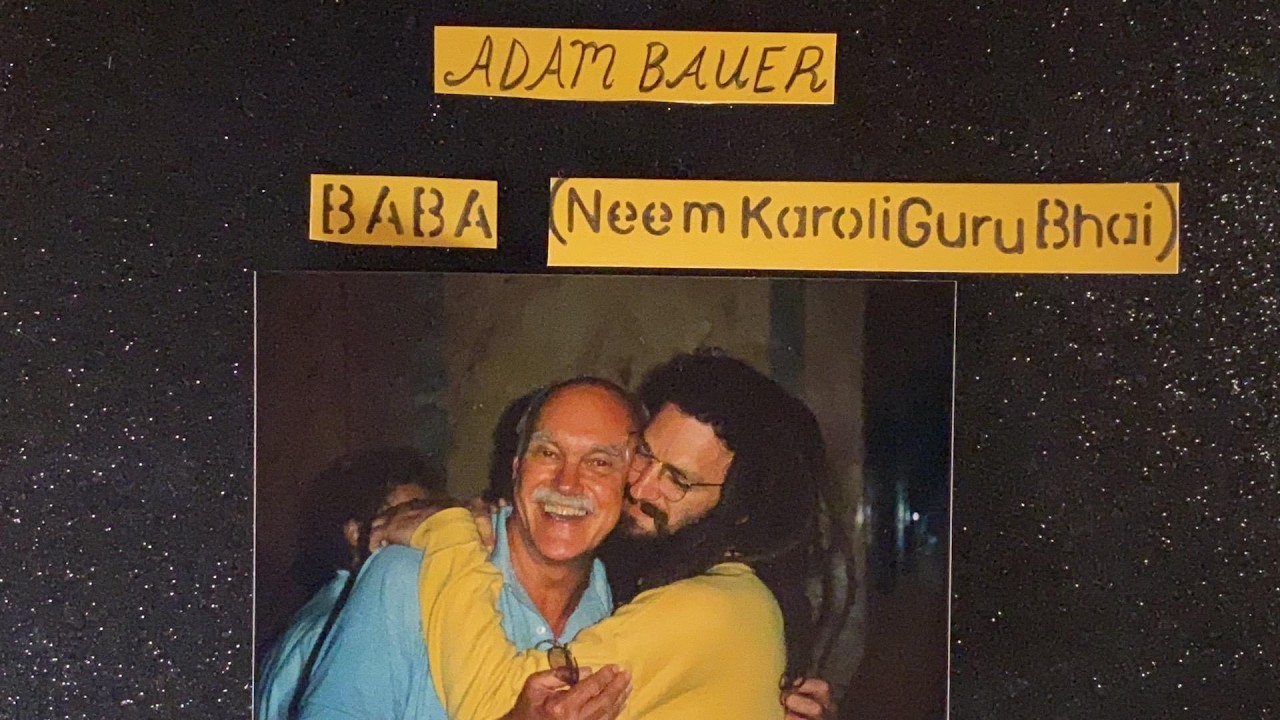
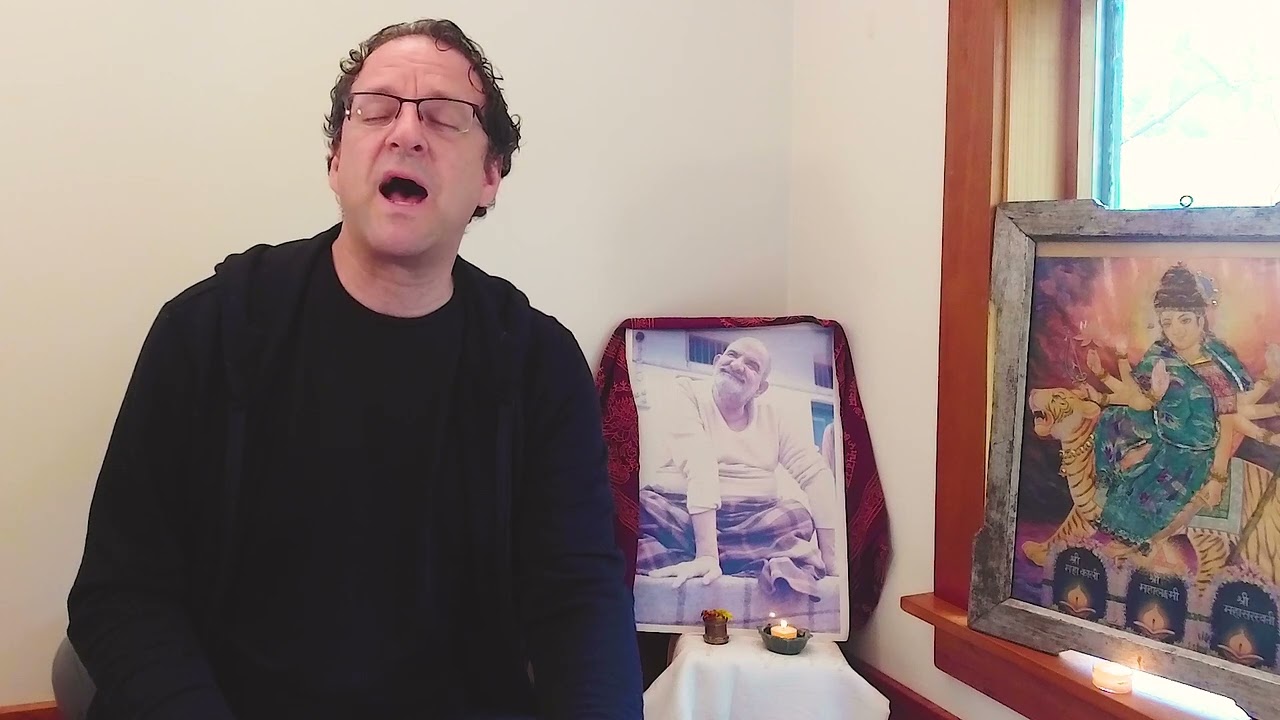
The sun is dropping behind the hills of Western Massachusetts, the light turning amber and then copper, that liminal hour when day loses its authority. A single voice rises into the gloaming—unmiked, unprocessed, just a human being and a melody that has been sung for centuries. This is Adam Bauer, recording the Hanuman Chalisa in one take, and what might appear simple from the outside is, for anyone who understands the craft of vocal music, a profound statement about what singing can be when everything else falls away.
The Hanuman Chalisa, a forty-verse devotional hymn rooted in Hindu tradition, is an address to Hanuman, the monkey deity who embodies unwavering faith, courage, and devoted service. In the hands of a kirtan artist like Bauer—someone steeped in both the spiritual and musical lineages of this practice—the Chalisa becomes more than a religious text. It becomes a transmission, a direct current of intention moving from one voice into the listening world. The inspiration for this particular recording came from an unexpected source: his friend Japna Tulsi, who was working in India on a documentary film called Moved by Grace, which centers on the life and teachings of Neem Karoli Baba, a twentieth-century Indian saint whose presence continues to move seekers across continents. That connection—between a contemporary kirtan artist and a documentation project honoring a spiritual lineage—reveals something essential about how devotional music functions in the modern world: it travels through relationship, through personal invitation, through the direct lineage between one person's practice and another's.
Adam Bauer operates across multiple registers of musical and spiritual practice. On one end of that spectrum, he creates intricate studio productions—layered, orchestrated, refined through the full toolkit of contemporary recording. On the other end, he leads community kirtan events, participatory devotional experiences where a room full of people gather to sing call-and-response melodies, their voices blending into something larger than individual contribution. Both forms reflect equal commitment to craft.
The Hanuman Chalisa recording represents a third space: the solo performance stripped to essentials. No overdubs. No production design. Just one human voice, one microphone, and the sound of the world around him—the wind, perhaps, the ambient resonance of that golden hour in New England. This isn't the absence of craft. It's craft redirected entirely toward presence itself.
In an era when studio technology can layer, process, and perfect every note, the rawness of a one-take vocal recording carries a different kind of authority. There is no hiding in a single take. Each breath becomes audible. The slight variations in timing, the organic rise and fall of the voice, the moments where the melody dips or soars—all remain exactly as they were sung. This stands in sharp contrast to Bauer's other work, which reflects deep engagement with arrangement, sound design, and production craft. But the Hanuman Chalisa recording represents a different expression of the same commitment: the craft of showing up, of trusting that simplicity carries the message.
The presence of Moved by Grace in the origin story of this recording matters deeply. Neem Karoli Baba, known to his students as Maharaj-ji, was a twentieth-century Hindu saint whose teachings were rooted in presence and grace rather than formal doctrine. He left no written organization, no formal teachings, no institutional legacy. Instead, his influence moved directly from his own consciousness into that of his students, and from them outward into the world. For his followers, both in India and increasingly in the West, his physical absence does not diminish his presence—it redirects it.
This is the precise context in which Moved by Grace exists: as an act of tending to a lineage, of making visible and audible the life and legacy of a saint whose teaching was rooted in the invisible, in grace, in the direct transmission of consciousness from one being to another. By working on such a documentary, Japna Tulsi participates in that transmission herself. And when she inspired her friend Adam Bauer to record the Hanuman Chalisa—when she created that bridge between a contemporary kirtan artist and a documentation of a spiritual lineage—she was engaging in the same essential work. She was creating the conditions for transmission to continue, for lineage to move forward not as museum piece but as living practice, carried in the voice of someone genuinely devoted to it.
To sing the Hanuman Chalisa is to join voices with millions across centuries. When Bauer sings it, he does so in explicit connection with a documentary about a saint, carrying forward a conversation about what devotion means in the contemporary moment. This isn't a scholar singing history. It's a practitioner offering his voice to a lineage that continues to move through the world.
Kirtan, the broader musical form that Bauer practices, is a call-and-response devotional singing tradition that originated in India and has become a vibrant part of global spiritual culture. In a traditional kirtan event, the leader (the kirtan artist) offers a melodic phrase—usually the name of a deity, a sacred mantra, or a devotional hymn—and the sangha (community) repeats it back. The leader responds with a new phrase, a new musical turn. The community follows. A wave of collective singing builds, and in that building, individual consciousness begins to dissolve into something vaster than itself.
What distinguishes kirtan from other forms of devotional music is this participatory structure. It isn't about aesthetic consumption, about sitting back and enjoying a performance. It's about active engagement, about co-creating the sound-space with others, about using voice and breath and melody as a gateway into direct experience of the sacred. People who participate in kirtan report experiences of profound connection, of ego boundaries softening, of touching something larger than the individual self.
Even in Bauer's solo recording of the Hanuman Chalisa, that participatory impulse remains present. The simplicity of the arrangement, the transparency of the vocal production, the single-take rawness—all of these create space for the listener to enter the practice. The music becomes an invitation rather than a finished product, a gesture that says: bring your own breath, your own intention, your own devotion to this listening. You are not an audience; you are part of the sangha.
In Zen Buddhism and other contemplative traditions, there is a principle related to presence: the value of showing up fully, without the safety net of multiple attempts, edits, or do-overs. In music, this is sometimes called "the red light discipline"—the awareness that everything matters because there is no second chance, no revision possible after the moment has passed. The musician must be entirely present.
For a contemporary kirtan artist like Bauer, who clearly has access to all the tools of modern recording, the choice to record in a single take reflects a deliberate spiritual-artistic stance. It suggests a trust in the moment, in the melody, in one's own voice—not because perfection is achieved but because presence is the entire point. The slight imperfections that inevitably appear in a one-take recording (a breath slightly off, a note not quite centered, a moment of vulnerability) become features, not flaws. They are proof of humanity, of genuine showing-up, of real sound in real time.
This choice also distinguishes itself from the polished artificiality that dominates so much contemporary music. In a world where audio can be surgically separated from source, where pitch can be corrected and timing quantized and performances assembled from dozens of takes, a one-take recording stands as an act of artistic courage. It says: this is what I sound like. This is what a human voice sounds like singing into the world. This is real.
What makes Bauer's recording particularly interesting is how it holds together multiple contexts without resolving them into contradiction. It is ancient devotional music—the Chalisa has been sung for centuries in India and throughout diaspora communities. It is deeply rooted in Hindu theology and spiritual practice. And yet it is also the work of a contemporary American kirtan artist, recorded in rural Massachusetts, available on Spotify and Apple Music and his independent website. It is simultaneously tradition and innovation, lineage and individual interpretation, solemn devotion and accessible art.
This balance is not accidental. It reflects a larger truth about how spiritual practice functions in the global, contemporary moment. The old forms do not continue by being preserved in amber, kept pure and unchanged. They continue by being sung, practiced, lived by people who care deeply about both the form itself and the moment in which they are offering it. They continue through relationship—through one person's practice touching another's, through a friend suggesting a melody, through documentation work inspiring a recording session.
The fact that Bauer explicitly connects this recording to his friend's work documenting Neem Karoli Baba underscores this point. He is not claiming to be a Hindu saint or an ancient master. He is not pretending the recording is something it is not. He is simply offering his voice, his presence, his commitment to a melody and a practice that matters to him, in conscious connection with others who are also tending to these lineages. That is itself an act of authenticity and integrity.
The Hanuman Chalisa is available directly from Bauer's website at iamadambauer.com, which allows people to support his work as an independent artist. It is also distributed to all major streaming platforms—Spotify, Apple Music, YouTube Music—making it accessible regardless of where someone may be listening from or what their relationship to spiritual music might be.
For those new to devotional music, this recording offers an accessible entry point: a single human voice, a melody that is both ancient and living, about seven minutes of attention. For those already engaged in kirtan practice or familiar with Neem Karoli Baba's lineage, it's an offering from one practitioner to the larger sangha—a reminder that the heart of this music remains simplicity, presence, and genuine devotion, regardless of how many layers of production or community might surround it in other contexts. The Hanuman Chalisa in one take is, finally, an act of generosity: the artist giving something of himself, asking nothing but presence, trusting that the ancient melody and the contemporary voice will meet the listener exactly where they are.