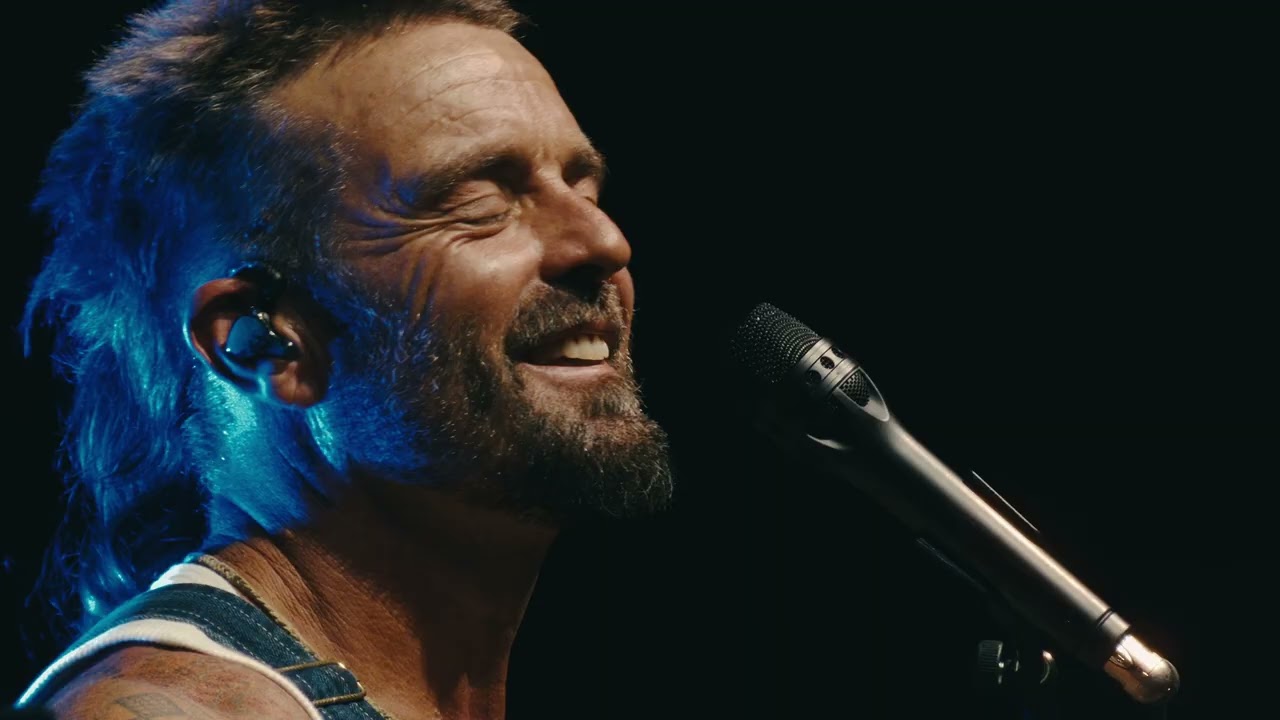
Xavier Rudd's "Moments," the closing track from his 2024 EP Freedom Sessions, is a meditation on how the fleeting moments of our lives—filled with anxiety, blessing, loss, and joy—accumulate to shape who we become. The song emphasizes that handling these moments with truth and purpose, and finding others to share our grief, are essential to building solid foundations. Through vivid imagery of shared experience—swimming in the ocean, memories of Sri Lanka, the call to prayer in foreign towns—Rudd frames growth not as a solitary achievement but as something achieved through mutual presence and emotional honesty.
In the artist's own framing, Moments is "the perfect way to hand the last of this music over" from an EP celebrating freedom. Rudd observes that "our lives are made up of moments that fly by so fast but shape so much." This is not a throwaway observation—it's the philosophical core of the song. What Rudd calls "handling moments with truth and purpose" appears in the lyrics as a refusal to numb or escape. Early in the song, the narrator apologizes for moments in which he "let you down," admits to being "all swept up and anxious and spinning out." Rather than minimize or rationalize these experiences, he confronts them directly, using them as a foundation for connection rather than shame.
The phrase "wrapped up in this love will be our best defense" suggests that honest acknowledgment of difficulty—and the presence of another person through it—creates the actual ground of resilience. This is not resilience built on stoicism or positive thinking, but on "excavating cavities," on looking at the empty or painful spaces within ourselves and having someone witness them. Rudd's emphasis on "truth" implies that growth requires accurate, unfiltered perception of our inner state, and that the purpose we build on such moments must be relational, not imposed from outside.
The song repeats the phrase "sometimes we will move on and we need / we need someone to share our grief." This is not incidental—it is structurally central to the track. The refrain suggests that grief is not something to overcome in isolation, but something that requires witness. The presence of "you"—a consistent addressee throughout the song—makes growth possible. "Hold your hand and I will hold your hand" is the resolution of the entire arc: mutual, reciprocal presence in the face of sorrow.
The specific moments Rudd invokes are sensory and embodied: "run into the ocean with you by my side, laughing as the salt begins to sting your eyes," "we would surf all day until the sun went down," memories of "Sri Lanka in the blazing sun." These are not abstract feelings but lived, shared experiences. The incongruity—laughing while salt stings the eyes—captures a truth about grief and joy that are often inseparable. The song does not claim that grief disappears or is "healed" through connection. Rather, connection makes it bearable. In these moments, the narrator "grows," not because the pain is gone, but because it is no longer solitary.
The lyrics shift from present anxiety to vivid memories, particularly of "memories of Sri Lanka in the blazing sun" and "hearing that Muslim prayer ringing through the town." These memories function as both refuge and proof. They demonstrate that the relationship has survived multiple contexts, geographies, and states of being. The invocation of a religious soundscape—a Muslim prayer—also suggests that the spiritual or transcendent dimension of life is not something private or individualized. It is woven into the fabric of shared places, shared time.
"Sense of new beginnings, mountains overcome"—the song moves from memory to acknowledgment of accomplishment. The mountains were "overcome" because "we have got each other." The past is not separate from the present; it is the proof that "together" is not a sentimental ideal but a lived, tested reality.
"Hold your hand and I will hold your hand" repeats twice at the close. The simplicity is the point. After all the complexity—anxiety, excavation, grief, growth, memory—Rudd arrives at an almost childlike gesture. Hand-holding is not metaphorical in the song; it is material, tactile, witnessed. It is what the song calls "handling our moments with truth and purpose." It requires presence. It is available. It needs no preparation or achievement.
This ending resonates with the EP's broader theme of freedom. Freedom, in Rudd's framing, is not the absence of difficulty, but "a simple state of being that we all should have the right to exist in." To exist freely is to exist without the demand to be alone, unburdened, or complete. It is the freedom to say "I'm anxious, I'm spinning out, I need you." And to hear back: "I will hold your hand."
Rudd released Freedom Sessions in March 2024, his first EP in 25 years. "Moments" is positioned as the final song, "the last of this music over." This placement matters. Rather than ending on a climactic statement or moment of transcendence, Rudd chooses to close with a song about the ordinary, shared gestures through which we move through life together. The choice suggests that freedom is not a destination or achievement, but a way of being with others moment by moment, hand to hand.
Listen to Freedom Sessions with attention to how each song explores different dimensions of freedom—personal, relational, spiritual, geographic. Pay attention to the moments in your own life that feel small but shape you. Consider who you need to hold hands with, and who needs you to be present to their grief. Rudd's work suggests that growth and freedom are not solitary achievements but shared practices, built on the accumulated truth of our moments together.