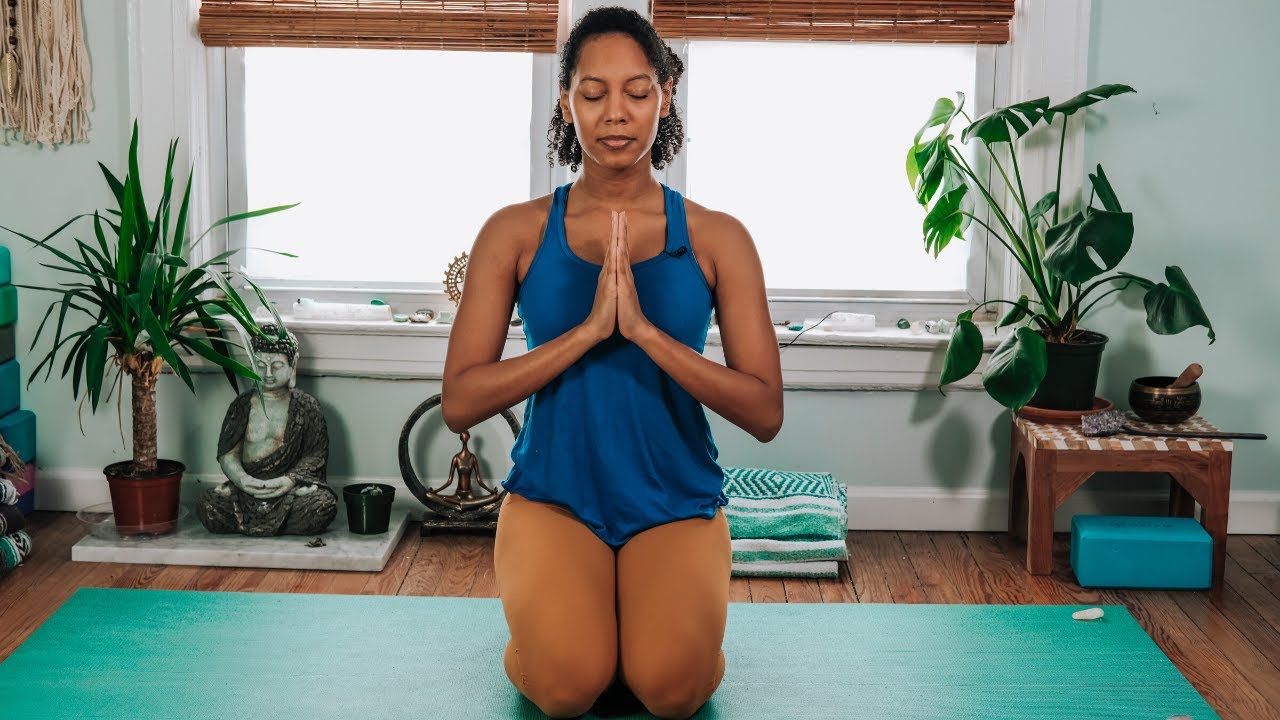
The video opens on a bare mat and a voice that does not hurry. Within the first few seconds the instructor has already offered a way out: feel free to modify or skip any pose that does not feel right today. That single line sets the tone for a six-minute practice that asks for very little equipment and very little ambition. It is built around one simple sequence, tabletop, a side-to-side gate pose on each side, child's pose, and a seated close, and it returns again and again to the same instruction: move with your breath, and stop when something feels wrong. Here is how the sequence is put together, and what the cues in the recording actually ask of the body.
The practice begins on hands and knees. The instructor asks you to tuck the toes and send the hips back toward the heels, with a choice built in: stay leaning forward, or lift all the way up to put more pressure over the feet. The stated purpose is modest and physical. "Just getting the blood flowing, awakening the root of the body," the instructor says at 0:25.
From there the sequence loosens into movement. You untuck the toes, shake them out, and then link breath to shape: inhale to drop the belly and lift the gaze, exhale to round through the spine and let the gaze fall. The video allows for something less scripted as well. You can keep sinking breath with movement, or let "some organic movement" carry you, which in practice means rocking side to side or circling the waist. The cue to find a neutral spine comes at 1:25, before the transition into the first side stretch.
The gate pose is the longest and most directional part of the video, and it is taught as a sequence of small, deliberate placements rather than a single shape. On the left side, the left leg straightens, the left toes tuck, and the heel presses into the floor. The body opens toward the left, the right foot moves to the outside edge of the right side of the mat, and the left foot plants with its toes pointed toward the left side of the mat.
From that base, the instructor asks you to inhale and reach the left hand up and over, tucking the tailbone as you go. The cue is specific about where the stretch should register: "getting that stretch through the lower body, the hips, the belly." On the exhale, the hand plants and you return to tabletop before the right side repeats the same logic in mirror image. The tailbone tuck appears in both directions, which is a useful thing to notice. It is one of the few cues the instructor repeats verbatim, and it is what keeps the reach from becoming a simple lean.
Two details are worth watching for on a first pass. The heel press at the start of each side is a reminder to keep the straightened leg active rather than locked and collapsed. And the transition back to tabletop on the exhale is part of the practice, not a pause between poses. Taking it slowly is the point.
After the second gate pose, the instructor sends the hips toward the heels and lowers the forehead or cheek to the mat for child's pose. This is where the video spends its most time on adjustment. The knees can go wide to create more room for the torso, belly, and chest. Books or blocks can go under the forehead. A pillow or bolster can sit between the hips and heels for extra height and support. Each option is offered as a way to make the pose available, not as a more advanced version.
The instruction here is less about the body and more about attention: "just taking this time to soften, soften into the pose, soften into the body, letting go of any tension, even if it's just for a moment." The video holds this stillness for a noticeable stretch, with the instructor allowing silence to do the work. For a practice this short, that choice matters. Child's pose is where a five-minute session slows down enough to feel like it has ended.
From there the sequence closes with a few gentle transitions. Palms can press together, with thumbs drawn toward the back of the neck or head. You then come up to a comfortable seat, whatever that looks like for you. The instructor says this can be done in a chair or seated cross-legged. Hands rest on the thighs, palms up, and the practice ends with a moment of gratitude and a breath that lifts the hands overhead before they return to the heart center.
The most quotable moment in the video comes near the end, after the seated rest. The instructor says:
"It is enough. You showed up. You filled your cup. Give yourself gratitude for showing up for yourself today. Know that this space is here for you any time that you need."
— the instructor, closing remarks in the video, around 5:06
The phrase "filling your cup" recurs across the channel's own framing. The video description describes online classes as a way to make "filling your cup each and every day a breeze," and says the first step to feeling good in body and mind is filling that cup. In a practice this short, the message reads less as a slogan and more as a reframe: a five-minute session counts, and showing up is itself the completed task.
The video's own safety language is worth reading before you begin. The channel description advises consulting a physician before starting any exercise program, and it asks viewers to work within their own limitations and "listen to your body at all times and never do anything that causes pain." That instruction matches the on-screen guidance almost word for word. If a pose pulls where it should not, or if a transition feels unstable, the video's own logic says to skip it rather than push through.
Practically, that means treating the gate pose as the place to be most careful. Its wide base and rotating reach ask more of the hips and lower back than tabletop or child's pose, and the instructor's repeated modification cues are there for exactly that reason.
The closing also mentions a members-only tier with longer classes. That is the channel's own offer, separate from this free practice, and nothing in the video requires it to get value from the five minutes on screen.
The best next step is the simplest: run the sequence once, with the video on, and let the cues set the pace. Use a folded blanket, a pillow, or a bolster under the forehead or hips in child's pose if the floor is hard. Stop at any point the instructor says to modify. Then try it a second time without the video, using the same order (tabletop, gate pose on each side, child's pose, seated close) to see what you remember. If you want longer or more varied sessions, the channel page is where its other offerings are listed, and you can judge them the same way you judge this one: by how the body feels when you are done.