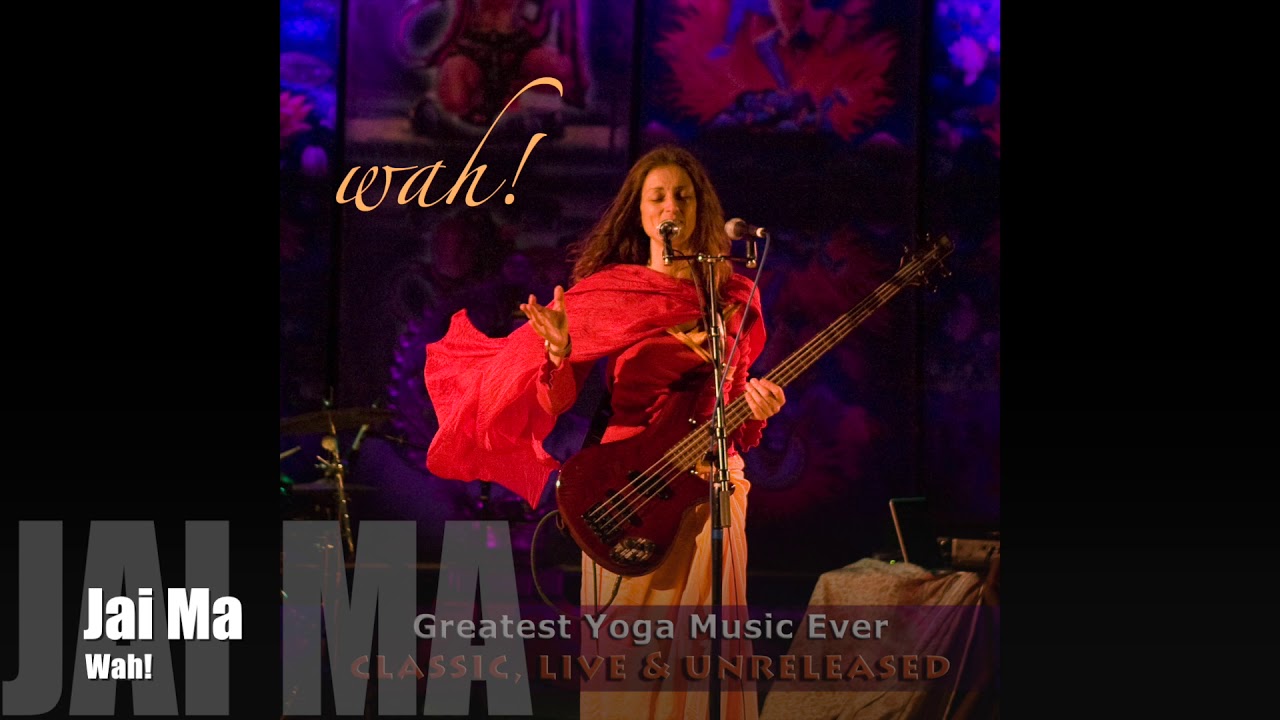
The first sound in "Friday Maa" is a single voiced syllable, unhurried, sitting on top of a pulse that refuses to hurry it along. Within a few seconds the groove gathers and a voice begins calling out short phrases that repeat, drop away, and return. The transcript for the official video is mostly tagged as music and singing, which is itself a clue: this is a devotional-leaning track built on repetition rather than narrative. Wah!, whose video description says a career of more than 25 years has made them a founder of the yoga music niche, uses the five minutes and forty-four seconds of this clip to tie a water myth to a refrain that is meant to be sung along with, not just listened to. What follows is an attempt to explain how that works, what the video itself says and does not say, and where the track sits in a long conversation between yoga practice and recorded sound.
The video's description opens with a short story rather than a lyric, and it is the best map available for reading the piece:
"Once upon a time, the Goddess purified her body, offered prayers, danced and sang to the Spirit of the River. The River responded with joy and power. Their communion was pure and the blessings spread far and wide."
(Video description, Wah! / Everything Wah!, 2026)
Three movements sit inside that paragraph, and they map neatly onto how a devotional song is usually structured. First comes preparation: the Goddess purifies her body. Then comes offering: prayers, dancing, singing. Last comes response and blessing: the river answers, and the effect spreads outward. The myth is not a plot so much as a sequence of actions that a listener can rehearse, which is why the refrain matters more than any verse.
Notably, the description does not name the goddess or the river. The video is titled "Friday Maa," and "Maa" is the word for mother, so the figure at the center is maternal in tone. But the text leaves the identity open, and the song never settles it. For a listener, that openness is a feature. It lets the story function as a template for a personal offering rather than a fixed set of characters.
The description makes a claim that is simple and worth taking seriously: "Many traditions honor water in this way, often with offerings and song. We, and our planet, are mostly water so these rituals can awaken purity in and around us."
That sentence does two things at once. It universalizes the ritual, pointing to many traditions rather than one, and it makes a bodily argument. Water is the medium of the body and of the planet, so an act directed at a river becomes an act directed at oneself. Purification in this frame is not only cleansing; it is attention. The Goddess purifies her body before she sings, which means the singing is the second half of a sequence, and the first half is preparation.
This is a useful way to listen. If you approach "Friday Maa" as background music for a shower or a commute, you hear the groove. If you approach it as the second half of a purification practice, you start listening for the moments when the voice invites a response, because the myth itself is built around exchange: the goddess sings, the river answers.
The transcript of the video is imperfect. Much of it is marked as [singing] or [music], and several lines are fragmentary. Read with that caveat, a set of phrases recurs with enough consistency to be worth noting. Early on, the voice reaches toward "tell me," and the phrase "my heart" surfaces in the first minute. Later, "turn on me" is repeated in a tight cluster, with "take it" and "more more" pressing against it. Near the end, the song settles into "keep the love alive" and "this beautiful vibe," with "keep the light" and "I'm there" sung into the same space.
Those repetitions do the work a mantra does. A short phrase repeated over a steady groove gives the listener a place to stand. In devotional and kirtan-influenced music generally, the refrain is what a group can sing back, and the call-and-response shape asks the listener to become the river, answering the singer. The video's structure, with a spoken or sung opening and a closing return to "keep the love alive," shows a deliberate frame: the song begins with a call and ends with the same wish made again.
One caution. The transcript cannot confirm exact wording in several places, and this article does not attempt to reconstruct lyrics beyond the phrases that repeat clearly. Anyone who wants the words should check the official lyric source rather than rely on automatic captions.
The credits are unusually specific, and they describe a workflow that is worth understanding. The description lists the production as "Composed and produced by Wah!" and the performance as "Arranged in Ableton Live; recorded in Logic Pro." Mixing and mastering were handled by Thomas Barquee. The film credits name Mark Sherman for cinematography, Wah! for the edit, Lindsy Baldwin as stylist, and Edward Edwards as project manager.
The split between Ableton Live and Logic Pro is a common one in contemporary production. Ableton is widely used for sketching and arranging loops, building a track's structure, and trying ideas quickly; Logic Pro is a full recording and editing environment that suits tracking vocals and instruments and assembling a session for mix. Describing the pairing as "arranged in Ableton, recorded in Logic" tells you that the song was shaped as a loop-based idea and then captured in a more traditional recording chain. For a devotional track, that matters: the repetition you hear is not accidental padding but an arrangement decision, made in the same tool that makes electronic music.
The track is also a record of a producer working across roles. A single performer who composes, produces, and edits the film is making choices about sound and image together, and the video's pacing reflects that. The long stretches of tagged music and singing are a visual argument: the song is meant to be sat with.
The description places Wah! in a particular lineage: "With a career spanning over 25 years, Wah! — a founder of the yoga music niche — continues to innovate, offering a vibrant soundtrack for the modern practitioner." That is a self-description, and it should be read as one. What it reveals is a view of yoga music as a niche with founders, which means a genre that has been built deliberately over time rather than appearing by accident.
The album "It's Friday Night" is the wider context. The video points listeners to the album and to a dedicated page on Wah!'s site, and the Friday theme runs through the whole project. The description also notes that livestreams "continue every Friday night at 530pm PT" on Facebook and Instagram, under the handle healingwah. A recurring weekly broadcast turns a record into a practice calendar. Listeners who want the ritual can return on schedule, and the myth of a weekly offering becomes a real habit.
It is worth being clear about the limits. The source material here is a music video and its description. It contains no interview, no direct quotes from Wah! beyond the self-description above, and no account of how the song was written. It does not name the goddess or the river, and it does not explain the specific tradition the myth draws on. The lyrics are only partly recoverable from the transcript.
Those gaps are not failures so much as honest boundaries. A five-minute video built around a refrain is designed to be entered, not explained. The most accurate way to engage with "Friday Maa" is to treat the myth as an invitation: prepare, offer, and then listen for the answer, the same way the river answers in the story.
Start with the video, then listen for the places where the voice calls and the groove answers. Read the description's myth again after the track, and notice how the three movements of preparation, offering, and response show up in the sound. If the refrain stays with you, the album "It's Friday Night" is the next step, and the Friday livestreams are where the song becomes a shared practice. For a track that is about returning to water, the most fitting follow-up is simply to come back on the next Friday.