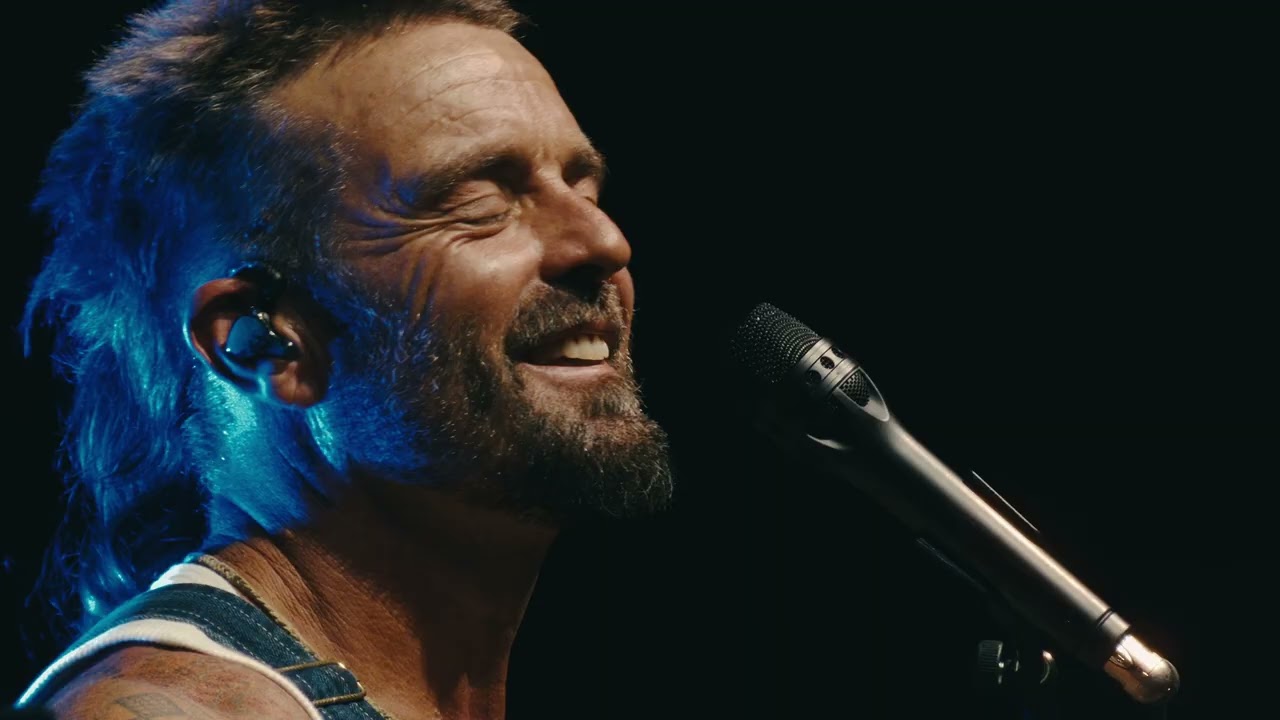
The refrain "follow the sun / direction of the birds / direction of love" isn't metaphorical instruction alone—it's an invitation to align with patterns older than modern consciousness. Rudd suggests that birds, wind, and celestial bodies operate without doubt or distraction. They follow what sustains them. The sun sets and rises with no anxiety about the outcome. The birds migrate with knowledge written into their cells.
For humans living in what Rudd names "this crazy society," following the sun means consciously choosing to orient ourselves toward what renews us—toward light, toward love, toward the simplest sustaining directions—rather than toward the noise that drowns us out. It's not about literal sun-chasing; it's about permission to stop fighting the current of life and instead ask: which way does my own heart actually want to go?
Rudd's lyric captures a specific moment many people know: "when you feel life coming down on you like a heavy way / when you feel this crazy society adding to the stress." This isn't flowery language. This is diagnosis. The "heaviness" isn't your fault; it's structural. A world built on speed, information overload, and disconnection from natural time creates weight in the nervous system and spirit.
His response is radical in its simplicity: "take a stroll to the nearest waters edge / remember your place." Not to escape permanently. Not to check out. But to remember something that the body and the mind are designed to forget in modern environments—that you are not the center. You are not responsible for everything. Your concerns are real, but they are also small within a much larger context.
This reframing has neurological and ecological truth. Water—rivers, oceans, lakes—naturally shift human attention. Standing at water's edge, especially while breathing consciously, downregulates the fight-flight-freeze response. The sound of water, the observation of movement, the presence of vastness: these reset the nervous system's threat detection. Rudd offers this not as spiritual luxury but as practical survival tool.
The line "many moons have risen and fallen / long long before you came" operates on two frequencies. On the surface, it's humble perspective—your problems are not eternal. But deeper, it's a reference to cyclical time itself. Moons rise and fall. Seasons rotate. Your current chaos is not permanent. This was the knowledge of cultures that built calendars by watching the sky, not clocks.
By invoking "many moons," Rudd asks listeners to feel their own smallness not as shame but as relief. The patterns will continue. The sun will return. You are held within something much older and larger than your individual crisis. This recognition doesn't solve the crisis; it changes the nervous system's relationship to it.
The repeated refrain—"what does your heart say / what does your heart say / what does your heart say"—is the heart of the invocation. In traditions from somatic therapy to indigenous wisdom, the heart is understood as a centre of intelligence separate from (and often wiser than) the thinking mind. The heart doesn't ruminate. It knows what it values, what it needs, what direction sustains it.
Asking the question repeatedly isn't meant to produce an intellectual answer. It's a technique of deepening attention. Each time the listener asks the question, they move closer to the body's own knowing. This is why Rudd repeats it—not for poetic resonance alone, but to create space for the answer to bubble up. In a live setting, this creates collective inquiry: dozens or hundreds of people suddenly turning attention inward simultaneously, asking the same question, creating a field of shared introspection.
Rudd's reflection on the 2022 recording reveals crucial context: "it was an interesting time in the world, coming out of COVID and coming together again to remember the importance of our basic freedoms and the power of community coming together as one." The song isn't sung into a void. It's performed in a packed room where hundreds of bodies breathe together, jump on the count of three, feel the same sonic and emotional resonance.
This matters because grounding and reconnection—while they involve solitude and personal breath—are never purely individual. The nervous system is social. We regulate in each other's presence. We remember what we're capable of by witnessing others. The jump on the count of three isn't a gimmick; it's a moment of synchronized movement that breaks ordinary patterns and creates what Rudd calls "a spark...in a room."
The song's opening and repeated return to breath—"breathe breathe in the air / set your intentions"—places respiration at the center of the practice. This isn't poetic. Breath is the one automatic function that can be brought under conscious control. When you consciously breathe, you signal to your nervous system that you are not in immediate danger (danger freezes breath). You also create distance between the stimulus (the heaviness, the noise) and your response to it.
By pairing breath with intention-setting ("set your intentions / dream with tomorrow"), Rudd creates a practice: inhale awareness of your own agency; exhale the world's demands on you. This is why the song returns to this instruction again and again. Not once is enough. The practice requires repetition, because the world's weight keeps landing, and breath is always available to reset.
To engage with "Follow the Sun" is not to adopt a new ideology but to remember something the body already knows: that it has resources beyond its thinking mind. That natural patterns (sun, moon, wind, water) operate with the wisdom that modern life asks you to ignore. That breath is always available. That your heart has something to say, and that saying it—finding what it says—is not luxury but necessity.
The practical invitations: breathe consciously when overwhelmed. Take a walk to water if you can. Notice one direction your heart is pulling you toward. Feel yourself as part of cycles much larger than your current difficulty. And when you feel stuck or heavy, ask the simple question: what does my heart say?—not as philosophy, but as practice.
]]>