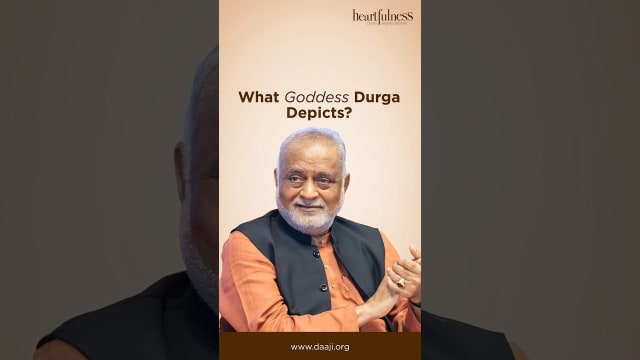
On the morning of 8 November 2026, at 7:30 a.m. Indian Standard Time, the Heartfulness channel will carry a live telecast billed as "Live Meditation With Daaji," broadcast from Kanha and timed to the Festival of Lights, the Diwali season that many households mark with lamps. It is a guided sitting rather than a talk built around an article or a slide deck, and it asks viewers to meet the festival through practice instead of spectacle. This piece is written from the event listing, the video's running details, and the publisher's own description of the teacher's work. We did not have a transcript, so it describes the occasion, the place, and the body of books behind the teacher, and it says nothing about what was said or felt during the session itself.
The listing is specific. The telecast is titled as a Heartfulness Meditation with Daaji, scheduled for 8 November 2026 at 7:30 a.m. IST, and it originates from Kanha. The recording now sitting on the channel runs one hour, twelve minutes and fifty-six seconds, which tells you this is a full sitting rather than a short opening segment. At the time these details were gathered, the recording had drawn 42,177 views.
Those numbers matter for one practical reason. A live meditation is a fixed appointment. Seven-thirty in Kanha is 2:00 a.m. in UTC, which means viewers in the Americas and Europe will be watching in the middle of the night or very early morning. Anyone planning to sit along should set an alarm for the local equivalent of 7:30 a.m. IST and treat the hour as they would a class or a retreat session: a reserved slot, not something to fit in between errands.
Diwali, the Festival of Lights, is one of the most widely observed festivals in India and among its diaspora. The lamps that give it its name are lit across homes, temples and streets, and in many traditions the festival is read as a marking of light over darkness. That is the general cultural frame. The listing itself does not spell out a doctrinal interpretation of the festival, and it would be a mistake to attribute one to the teacher without the session in front of us.
What the listing does establish is the pairing: a festival of light, and a meditation on the same day. For many people the holiday is organized around noise, gifts, and sweets. A seated practice at dawn offers a quieter way to observe the same occasion, one that asks nothing more than a few minutes of attention and a willingness to sit still. The telecast's framing invites viewers to bring the festival inward rather than leave it outside the window.
The broadcast is tied to Kanha, which the listing identifies as the Kanha Shanti Vanam Meditation Center. The description points viewers to heartfulness.org/kanha for more information about the center. That is the extent of what the material establishes about the location, and it is worth reading the center's own pages for anything beyond this. The practical point is simple: the sitting is not a studio performance. It is delivered from a meditation center, and the setting is part of what the channel is offering.
The listing calls the teacher Daaji and presents a set of books, each with ordering links. The titles are a useful map of the teacher's published work, even without the texts themselves in front of us:
- Holy Tirthankar, available through heartfulness.org and on Amazon India.
- Power of Paradox, listed with an Amazon India link.
- Spiritual Anatomy, with its own site and an Amazon USA edition whose web address carries the subtitle "Meditation, Chakras, Journey."
- The Heartfulness Way, which the listing describes as an Amazon bestseller.
- Designing Destiny, with a dedicated order page and an Amazon India edition.
- The Authentic Yoga, listed with Amazon India and Amazon USA links.
The titles alone suggest where the emphases lie: meditation and the body's subtle structure in Spiritual Anatomy, a heart-centered approach in The Heartfulness Way, and yoga framed as a serious subject in The Authentic Yoga. Those are inferences from the titles, not claims about the contents. Readers who want to know what the books actually argue should go to the books.
Nothing in the listing prescribes a method for the session, and the advice below is general practice rather than the teacher's instruction. But a few habits help a live sitting land well for someone new to it or returning after a gap.
Settle the logistics before the hour arrives. Open the stream early, check audio, and have a seat that lets your spine stay upright without strain. A cushion on the floor or a straight-backed chair both work. Dim the lights a little if the room allows. Decide in advance that you will not check messages during the sitting; the first ten minutes of a live meditation are usually the hardest, because the mind is still arriving.
Treat the broadcast as a shared sitting. Thousands of people may be taking the same seat at the same moment, and that is part of what a live telecast offers that a recording does not. If the timing is impossible, the recording is on the channel's page, but the listing makes clear that the appointment was the point.
The listing also points to the Heartfulness app and to a link for booking a free meditation session. Those are the natural next steps for someone who wants guidance beyond a single broadcast, and they are offered in the description as options, not requirements for watching.
A live telecast is ephemeral, but the recording stays on the channel and the description keeps its links alive. For viewers, that means the session can be returned to, compared against a later sitting, or simply watched again on a quiet day. The listing also invites subscribing to the channel, the Heartfulness Magazine, and the organization's wider online presence on Facebook, Instagram and X. None of that replaces sitting. But the infrastructure around a live event tends to be what determines whether a single hour becomes a habit.
If you plan to join, mark 8 November 2026 at 7:30 a.m. IST on your calendar and convert it to your own time zone. Visit heartfulness.org for the organization's broader information, and heartfulness.org/kanha for the center. If you want to read before you sit, begin with the titles that match your interest: The Heartfulness Way for an accessible entry point, Spiritual Anatomy for the subtler-body language, or The Authentic Yoga for a framing of yoga as a serious discipline. Then return to the recording after the telecast, and compare what you noticed in the room with what you notice on the page.