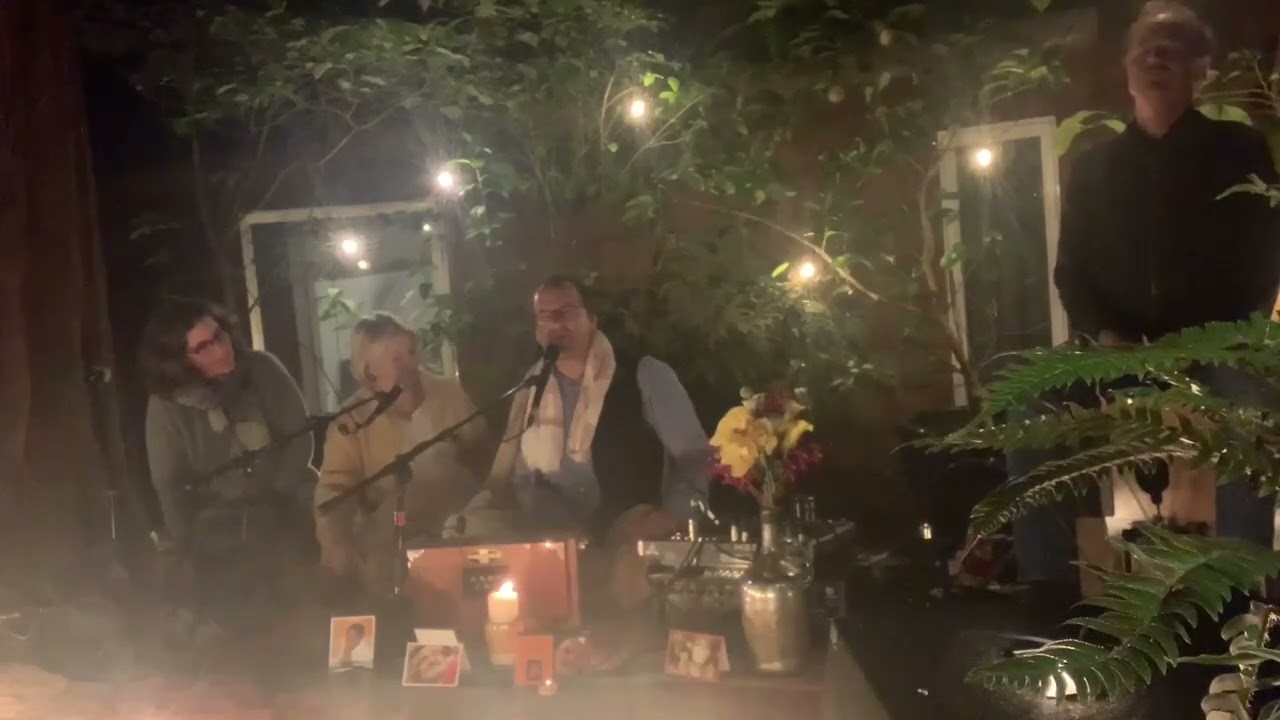
In the summer of 2020, as news cycles pulsed with crisis, Ben Leinbach—a musician known for the immersive, hypnotic pull of ambient world music and meditative soundscapes—released something altogether different. Faith, a four-minute song written in anger, carries profanity, sarcasm, and raw frustration about the state of the world. Yet it refuses to be merely cynical. Instead, Leinbach shaped his despair into something cathartic: a defiant blend of angst and playfulness, cynicism and optimism, anger and an underlying appeal to "default to love." It's the rare moment when an artist with a strong spiritual practice breaks their own aesthetic to honor what's authentically alive in them—rage included.
Leinbach's origin story for Faith is direct: he "read one too many grim headlines in the news and was driven to write a venting song." The specificity matters. This isn't a philosophical rejection of his meditative practice or a long-considered evolution. It's a moment—a breaking point. For many artists, especially those with an established brand built on transcendence or peace, there's an implicit pressure to respond to the world's darkness with equanimity. To meditate. To breathe. To transcend. Writing an angry song about the news can feel like a failure of that practice—as if years of spiritual work should have inoculated you against these feelings.
But Leinbach's impulse suggests otherwise. Sometimes authenticity means breaking your own formula. Sometimes it means admitting that no amount of meditation can make you feel okay about grim headlines—and that's not a failure. That's just honesty. It's the artist refusing to perform spiritual bypassing for the sake of maintaining a brand.
Here's where craft enters the picture. Leinbach's core decision: not to eliminate the anger, but to shape it. "I didn't want the song to be incessant complaining, so I added a good dose of sarcasm, dry humor, and hope," he explains. This is the work of a skilled musician and someone who understands emotional architecture. Sarcasm and dry humor aren't softeners that dilute anger—they're transmitters that make anger articulate. They create enough psychological distance that listeners can recognize themselves in the emotion without drowning in it.
Think of it this way: pure, unfiltered rage in art becomes claustrophobic. It exhausts. But sarcasm allows the listener to think with the anger rather than simply in it. Dark humor creates pockets of air within despair. This is why the best protest songs, the most powerful angry art, isn't usually the loudest or most unfiltered—it's the art that holds the rage but shapes it with enough craft that it can be heard. Leinbach's choice to infuse the song with sarcasm and humor doesn't water down the message. It makes the message land.
Leinbach describes his own creation with remarkable honesty about its contradictions: "The message is as tangled up as life itself. It's a blend of cynicism and optimism, full of angst yet playful, a cathartic release and an appeal to default to love." Most mainstream art demands a choice: Are you offering a hopeful anthem or a grievance? Are you cynical or optimistic? Faith-based or skeptical? We're trained to want clarity, resolution, a definitive answer.
But Leinbach refuses that binary. The song is truly tangled—cynical and optimistic, full of angst and playful. That resistance to simple resolution is its own kind of faith. It mirrors the actual condition most conscious people occupy in difficult times: frustrated, angry, aware of systemic problems, yet still searching for meaning and connection. The song doesn't pretend that belief in love is naive. It affirms that choosing love—"defaulting to love"—is a conscious decision made in full awareness of why it's necessary. That's not sentimentality. That's profound.
For an artist known primarily for generating what he describes as "ambient world music and hypnotic meditative jams," releasing an angry, sarcastic, profanity-laden song is a professional risk. It could confuse longtime listeners. It might feel like a departure from his spiritual authority or practice. There's a fear many established artists in the conscious or spiritual space carry: that showing anger will undermine credibility. That expressing cynicism will suggest the practice doesn't work.
But Leinbach's move reveals something vital: a genuine practice can hold anger, cynicism, and the messy tangled-up truth of being alive. It doesn't require that you transcend these feelings. It requires that you face them—that you don't meditate them away or deny them. This kind of integrity, where an artist brings their full self to their work, is rare. It says: "This is what I'm experiencing right now, and I trust my practice enough to honor it, not with false peace, but with honest expression." That's not a betrayal of meditation or spirituality. That's the deepest expression of it.
There's a crucial distinction embedded in Leinbach's approach. Catharsis—in the classical sense that Aristotle used to describe tragedy—is the emotional purification that comes through experiencing and releasing intense feeling through art. The experience transforms you. You're different after it. Complaint, by contrast, can be circular: the same grievance rehearsed again and again without transformation, catharsis, or release. It's a loop.
By insisting on sarcasm, humor, and an underlying appeal to love, Leinbach moves Faith decisively into cathartic territory. When a listener hears this song, they're not being offered an endless cycle of rage. They're offered a container for the rage—one that's shaped, crafted, and ultimately transformative. The music becomes a vehicle for moving through the feeling, not being stuck in it. That's why cathartic art can be both angry and liberating. It doesn't ask you to deny what you feel. It asks you to witness it, to feel it fully, and then—through the alchemical work of art—to be changed by it.
Embedded in Leinbach's choice to write and release this song is a larger question: In times of genuine crisis, is spiritual practice meant to help you transcend difficulty, or to help you stay grounded within it? To remain human within it?
The conventional answer, especially in certain spiritual circles, leans toward transcendence. Practice is meant to free you from reactivity, to help you see the larger picture, to cultivate equanimity. There's deep wisdom in that. But Leinbach's song suggests that sometimes the most spiritual response to a moment is not to meditate above it, but to metabolize it. To look at grim headlines, to feel the genuine rage they provoke, to channel that rage into language and sound and form. And somewhere in that process—not as denial, but as a conscious choice—to remember that love is still a possibility worth reaching for.
This doesn't diminish meditation or spiritual practice. It deepens it. It says: meditation isn't about transcending your humanity. It's about being fully human, with all the complexity that entails. It's about having enough equanimity and presence to sit with anger without being consumed by it, and to make conscious choices—like "defaulting to love"—from that centered place, not from denial.
For listeners seeking a moment of radical honesty from an established meditative artist, Faith offers precisely that. The track is available for purchase at benleinbachmusic.com, and the act of listening becomes its own kind of practice—not the kind that asks you to transcend, but the kind that asks you to witness.
Beyond the song itself, Leinbach's work here invites a broader personal reflection: What spaces do your own spiritual or creative practices leave for anger? For sarcasm? For cynicism about systems that deserve to be questioned? How might you honor genuine despair without being consumed by it? Can you "default to love" without denying the reality that prompted the song in the first place?
These aren't rhetorical questions. They're invitations. Leinbach's song suggests that the most powerful spiritual work sometimes looks like breaking your own rules—not out of loss of faith, but out of fidelity to the moment. The practice doesn't ask you to transcend. It asks you to witness. And in witnessing fully, with sarcasm and dark humor and an underlying appeal to love, you might discover that faith isn't about belief in a better future. It's about the choice to stay human, stay real, and trust that even cynicism, even rage, can be an appeal to the very thing we most need: connection, compassion, and the courage to love in the face of difficulty.