Turiya is the fourth state of consciousness in Vedantic philosophy—the substratum of waking, dreaming, and deep sleep where awareness itself becomes the object of investigation. Rather than a state you "achieve," turiya is the unchanging witness consciousness that precedes and supports all experience. Stories of enlightened practitioners reveal that recognizing turiya is not escaping life but realizing the ever-present ground of being that remains untouched by the flux of mental and sensory activity.
What Is Turiya in the Vedantic Framework?
In classical Vedanta and the Mandukya Upanishad, consciousness is typically described as moving through three primary states: waking (jagrat), dreaming (svapna), and deep sleep (susupti). But beyond these lies turiya—literally "the fourth"—a state so fundamental that it is not merely another state alongside the others, but the unchanging ground of all three.
Turiya is not achieved through effort or acquired through practice in the conventional sense. Instead, it is the ever-present witnessing awareness that observes the coming and going of waking, dream, and sleep states without itself being affected by any of them. It is pure consciousness, free from content, yet simultaneously the substratum upon which all content—thoughts, sensations, emotions—arises.
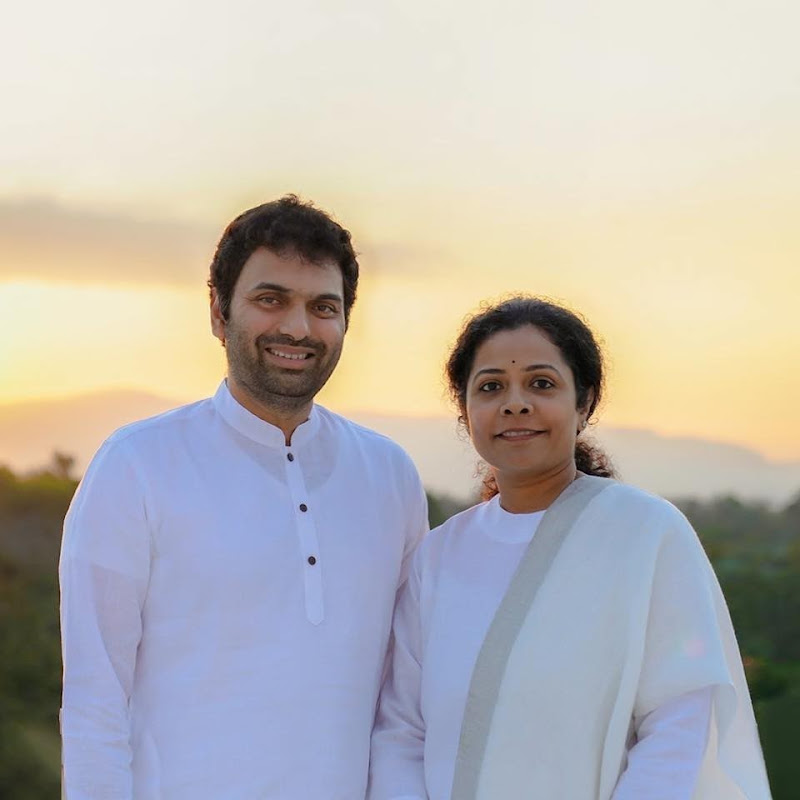
In the Oneness movement's teaching framework, as represented by teachers like Sri Preethaji and Sri Krishnaji, this metaphysical understanding translates into lived recognition. The emphasis is not on escaping the world or the body, but on awakening to the underlying consciousness that has been present all along, witnessing every moment of experience.
How Do Enlightened States Differ From Ordinary Consciousness?
An enlightened state in turiya is distinguished not by unusual experiences or extraordinary phenomena, but by a radical shift in identity and perception. In ordinary consciousness, the mind-body organism is experienced as the primary "I." Thoughts, emotions, and sensations are taken as defining who we are. The witness—the awareness behind all of this—remains unrecognized.
When turiya is recognized or stabilized in consciousness, this reversal occurs. The body-mind is still present and functional, but the sense of "I" shifts to that which is observing the body-mind. This doesn't mean becoming dissociated or withdrawn. Rather, enlightened persons remain engaged with life, relationships, and responsibilities—but from a fundamentally different vantage point.
Stories of enlightened practitioners often reveal a common thread: continued engagement with the world, but without the existential urgency and reactivity that characterizes ordinary consciousness. Actions still occur; thoughts still arise. But there is no longer the compulsive identification with these processes, no longer the sense that "I" am fundamentally threatened or incomplete.
What Do Stories of Turiya Enlightenment Reveal About the Nature of Awakening?
Sacred texts and contemporary spiritual traditions are filled with accounts of realized beings who continued to function in the world after recognizing turiya consciousness. These stories serve several purposes: they demonstrate that enlightenment is not theoretical but verifiable in lived experience; they provide maps for seekers about what recognition actually looks like; and they dispel common myths about what enlightenment requires or prevents.
A realized individual may still experience pain in the body, face challenges in relationships, encounter financial difficulties, or navigate illness. What shifts is not the occurrence of these events, but the fundamental ground of identity from which they are met. The unchanging witness—turiya itself—remains untouched by all of this turbulence.
In the teaching lineage of the Oneness Movement, stories often illustrate this principle: a person's external life may be nearly indistinguishable from before their awakening, yet their inner experience is fundamentally transformed. This points to a crucial insight—enlightenment in turiya is not about transforming the world or even the body-mind, but about realigning one's sense of "I" to what has always been observing.
Can Turiya Be Accessed While Living an Ordinary Life?
One of the most liberating aspects of the turiya teaching is that it suggests enlightened consciousness is not confined to monasteries, meditation retreats, or specific life circumstances. The witness consciousness—turiya—is equally present whether one is in silence or in the midst of family responsibilities, career demands, or community involvement.
The question then becomes not "How do I escape life to find enlightenment?" but rather "Can I recognize the awareness that is already here, observing all of this?" This reframing opens the possibility of awakening for householders, workers, parents, and anyone else whose circumstances don't permit monastic withdrawal.
Stories from contemporary realized teachers often show ordinary people—people with jobs, families, relationships, and everyday concerns—who have nevertheless recognized turiya and integrated this realization into their lives. This suggests that the barrier to enlightenment is not circumstance but rather the unexamined assumption that the body-mind is what we fundamentally are.
What Is the Role of the Witness in Enlightened States?
Central to understanding turiya enlightenment is the concept of the witness—the consciousness that observes without being affected by what it observes. In ordinary consciousness, this witness is typically unconscious; it operates in the background unnoticed. The meditator, the thinker, the feeler are aware of their thoughts and feelings, but not of the awareness itself that makes this observation possible.
Enlightenment in turiya involves the reversal of this arrangement. The awareness that has been in the background becomes the focus, the primary identity. The body-mind doesn't disappear, but it is now held within a vastly larger sense of self—the witnessing consciousness that is the ground of all being.
Stories of enlightened beings often reflect this shift. They speak from a place of witnessing rather than identification. A realized teacher might say, "The body experienced pain," rather than "I suffered," or "Thoughts arose about the situation," rather than "I was thinking." This is not mere semantic play—it reflects a fundamental reorientation of identity that has profound implications for how one relates to all experience.
How Does Turiya Enlightenment Transform One's Relationship to Daily Experience?
While turiya consciousness remains unchanged, the individual who recognizes turiya typically experiences a profound shift in how daily experience is held. The ongoing drama of preference and aversion—liking what is pleasant, disliking what is unpleasant—may continue at a functional level, but it no longer recruits the deepest sense of self into struggle.
Stories from enlightened practitioners reveal that life continues with its ups and downs, yet there is a quality of groundedness and non-reactivity that characterizes their engagement. They respond to circumstances, but from a place of clarity and wisdom rather than from the compulsive reactivity of the conditioned mind.
This has concrete implications: relationships often deepen because there is less defensive reactivity; work becomes more effective because it is guided by clarity rather than fear or ambition; suffering may still arise in the body or mind, but it is not compounded by the belief that there is something fundamentally wrong with the self.
What Misconceptions Obscure the Recognition of Turiya?
Several common misconceptions prevent recognition of turiya consciousness. One is the belief that enlightenment is an extraordinary state that will feel dramatically different from normal consciousness. In truth, turiya is so ordinary—so fundamental—that the shift in recognition can be easily overlooked. It is not a new feeling but the recognition of what has always been present.
Another misconception is that enlightenment requires the elimination of thoughts, emotions, or sensations. Stories of enlightened beings show that these continue to arise, often quite naturally and responsively. What changes is not their presence but the relationship to them—they are no longer taken as disturbances to be eliminated, but as natural movements within consciousness.
A third misconception is that enlightenment requires special conditions—years of meditation, renunciation of the world, or a specific lineage affiliation. While spiritual practices can support recognition, turiya consciousness itself is not dependent on these conditions. The witness that observes both the meditator and the non-meditator is equally untouched by either state.
Where to Go From Here
If the teaching of turiya resonates with you, the next step is not necessarily to add more practices to your life, but to begin examining your actual experience. Notice the thoughts, emotions, and sensations that arise throughout your day. Notice the awareness that is aware of these. This simple investigation—turning attention toward the witness itself rather than always focusing on the content of experience—can gradually clarify the recognition of turiya.
Engage with teachings and stories of realized beings not as distant ideals, but as pointers to what is already available in your own consciousness. The unchanging awareness that observes your waking state is the same awareness that observes your dreams and persists even in deep sleep. This turiya is not elsewhere or elsewhen. It is here, now, as the very ground of this moment's awareness.
Consider also the role of direct transmission in spiritual recognition. Many traditions suggest that proximity to a realized teacher—someone who has stabilized in the recognition of turiya—can accelerate or clarify this same recognition in the student. Whether through teaching, presence, or grace, such transmission appears in stories across many lineages and remains a living possibility for sincere seekers.