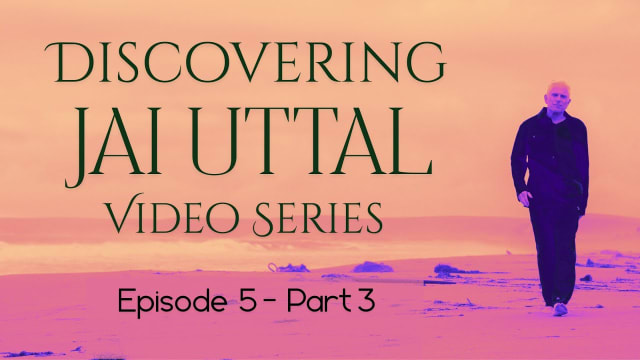
The first thing the transcript gives you of Dub Mantra Sangha is a bracket: [Music]. Then another, and another, a long run of instrument and silence, and then a voice reaching for a name. "Ganesha" surfaces in the captions the way a stone surfaces in a well, briefly and with a splash of echo. The upload runs a little over an hour, and most of what its automatic captions can catch is texture rather than words. That is a useful place to start, because the album itself is built on the idea that a mantra is less a text to be read than a sound to be repeated until it changes the room. Released under a 2015 date and posted to YouTube in 2021, the full-length record takes eleven sacred chants and sets them inside the language of dub, the Jamaican-born studio art of echo, space, and repetition, with a roster of guest singers and players drawn from several traditions.
In Buddhist usage, sangha is the community of practitioners, the gathered people who keep a practice alive together. Putting the word in the title of a record that is also a sequence of collaborations makes a quiet claim: the album is less a solo statement than a circle. Each track in the listing carries a featured name beside it. Elohim features Mykal Rose and Shimshai Music. Ganesha features Suzanne Sterling and Jai Uttal. Gayatri features Donna De Lory and Jai Uttal again. Kalike features Karnamrita Dasi, Durga features Jaya Lakshmi, Aloha features Sophia Mae Lin, Sri Ram features Everything Wah, Body & Mind features Silvia Nakkach, Amaterasu features Aco Takenaka, Lotus features Sheela Bringi and Masood Ali Khan, and Moola Mantra features Dave Stringer Music.
Read as a list, those credits are a map of who gets to speak in the record. A mantra, in its oldest sense, is passed from voice to voice, and the album handles that transmission literally: the chant changes hands every few minutes. The sangha in the title is therefore not decoration. It describes the working method.
Dub began as a way of working with recordings after the fact. Producers took a finished performance, pulled pieces out, dropped the bass forward, sent the vocal into delay and reverb, and let the silences between hits do as much work as the hits. The surviving principle is repetition with mutation. A phrase comes back, but each return has been pushed through a different room.
That is also what a mantra does. A short Sanskrit phrase is sung again and again, and each repetition lands in a slightly different state of the singer and the listener. Dub and mantra share a faith in return: you do not learn the phrase once, you learn it by coming back to it. Put them together and the studio becomes a kind of altar. The echo tail after a name is not wasted sound; it is the part of the chant that keeps going after the voice has stopped, which is close to what many practitioners say the mantra is for.
Dub also teaches patience with space. A dub track often sounds empty for long stretches, and the emptiness is a deliberate frame for the next event. Sacred music in many traditions works the same way, with drone and pause doing structural work. A harmonium held under a chant, a bass line that sits back, a reverberant gap before the next name: these are the places where a mantra record lets a listener settle.
The sequence repays close attention. It opens with Elohim, a Hebrew word for God, before moving into a run of Indic names: Ganesha, Gayatri, Kalike, Durga, Sri Ram. Then it turns outward again. Aloha is a Hawaiian greeting. Body & Mind is the only title written entirely in English. Amaterasu, the Japanese sun deity, arrives in the middle of the record, followed by Lotus, a flower that carries meaning across several Asian traditions, and the album closes on Moola Mantra.
The word moola means root, and placing a root mantra last gives the record a shape. The listener spends the hour moving outward through names and then comes back to the root. The final track, Moola Mantra, runs from roughly 53 minutes to the end of the upload, close to seven minutes of material to let the record land. Whether that was the intended architecture, the material does not say. What the tracklist does show is a deliberate crossing of traditions, with the sacred and the everyday names set in one line.
The clearest lyric in the transcript is a verse that comes through near the end of the upload, in the closing stretch of the record. As captured by the video's automatic transcript, it reads:
"May the wicked become good, may the good obtain peace, may the peaceful be freed from bonds, may the freed set others free."
The verse moves in a circle. It begins with a wish for the wicked, moves to the good, then to the peaceful and the freed, and ends by handing liberation outward to others. That structure, a chain of aspirations in which each state becomes the next person's responsibility, fits the album's sangha logic exactly. It reads like a closing dedication, the kind of line a community speaks together when a practice ends. The transcript does not identify who sings it, and the captions are too fragmentary to settle the question of which track it belongs to. It is best heard as part of the record's final movement rather than as a lyric attached to a single name.
Honesty about the source matters here. The material available for this piece is the tracklist, the credits, the upload's runtime, and a sparse automatic transcript dominated by bracketed [Music] and [Applause] markers. That is enough to describe the album's architecture, its guest roster, and the one verse that surfaces clearly. It is not enough to judge the vocal performances, the mix, or how each dub treatment sounds in context. Those judgments belong to the listener, and the best way to make them is to sit through the full hour with the tracklist in view and let the names arrive in order.
The view count on the upload, 7,501, suggests a small, attentive audience rather than a mass one. For a record of this kind, that is probably the right size. A mantra album is not meant to be consumed in one pass. It is meant to be returned to, which is the one thing dub and mantra have always agreed on.
- Listen to the full upload start to finish, then listen again to only the track transitions, from Elohim to Ganesha and from Durga to Aloha, to hear how the guest voices change the room.
- Follow the featured artists by name. Several of the collaborators, including Jai Uttal, Donna De Lory, and Sheela Bringi, have their own catalogs, and hearing them alone helps clarify what they bring to a shared record.
- Check the artist's official site at jossjaffe.com and the social handle @jossjaffe for credits, release notes, or any statement about the project's intent, since this piece relies only on the upload and its description.
- Try the closing verse as a practice. Say the four lines slowly, one aspiration per breath, and notice where the chain of wishes asks you to pass something along.