BrightStar

Browse All Events

Discover conscious gatherings

events

Yoga
Meditation
Breathwork
Qigong
Tai Chi
Sacred Music
World Music
Medicine Music
Sound Healing
Ecstatic Dance
Popular Destinations
BaliSedonaLos AngelesCosta RicaNew YorkSan FranciscoAustinMiamiJoshua TreeTulum
View All CategoriesView All Destinations

Explore All Features

Powerful tools to grow your events

Platform Features

Smart Dynamic Pricing
Ticket Categories
Assigned Seating
Abandoned Cart Recovery
Visitor Recovery
Donations & Sliding Scale
Affiliate Engine
Ticket Scanner
Coupon Codes
Custom Questions
Ticket Sharing
Upsells & Add-ons
Analytics & Reporting
Email Sequences
Waitlist / Notify / Remind
People & Places
Artists & TeachersEvent OrganizersVenues & StudiosKnowledge BaseGlossaryInspiration
View All FeaturesAbout Us
PricingBlog
Language
Saved events
Browse All Events

events

YogaMeditationBreathworkQigongTai ChiSacred MusicWorld MusicMedicine Music

Popular Destinations

BaliSedonaLos AngelesCosta RicaNew YorkSan Francisco

People & Places

Artists & TeachersEvent OrganizersVenues & StudiosKnowledge BaseGlossaryInspiration

Platform Features

Smart Dynamic PricingTicket CategoriesAssigned SeatingAbandoned Cart RecoveryVisitor RecoveryDonations & Sliding ScaleAffiliate EngineTicket ScannerCoupon CodesCustom QuestionsTicket SharingUpsells & Add-onsAnalytics & ReportingEmail SequencesWaitlist / Notify / Remind
View All FeaturesAbout Us
PricingBlog
Log inFind EventsHost Events
  • Browse All Events
  • For Seekers
  • Yoga
  • Meditation
  • Breathwork
  • Qigong
  • Tai Chi
  • Sacred Music
  • World Music
  • Medicine Music
  • Sound Healing
  • Ecstatic Dance
  • Retreats
  • Workshops
  • All Categories →
  • Bali
  • Sedona
  • Los Angeles
  • Costa Rica
  • Tulum
  • Byron Bay
  • San Francisco
  • Austin
  • New York
  • San Diego
  • Denver
  • Seattle
  • Portland
  • Miami
  • All Cities →
  • Join the Movement
  • Why we list
  • Sell Globally
  • For Creators
  • For Teams
  • For Writers
  • For Teachers
  • For Kirtan Artists
  • For Studios
  • For Festivals
  • For Retreat Centers
  • For Nonprofits
  • Brand Ambassador
  • Free Ticketing
  • Elevate
  • Amplify
  • 500K+ Buyer Network
  • Abandoned Cart Recovery
  • Smart Dynamic Pricing
  • Ticket Categories
  • Recurring Events
  • Assigned Seating
  • Affiliate Engine
  • Waitlist / Notify
  • Ticket Scanner
  • Embed Widget
  • Event Syndication
  • Message Center
  • Integrations
  • Reports
  • All Features →
  • About
  • The Ecosystem
  • Blog
  • Glossary
  • Inspiration
  • Help Center
  • Contact
  • API Docs
  • Brand Assets
  • Careers
  • Press
  • Terms of Service
  • Privacy Policy

Events

  • Browse All Events
  • For Seekers
  • Yoga
  • Meditation
  • Breathwork
  • Qigong
  • Tai Chi
  • Sacred Music
  • World Music
  • Medicine Music
  • Sound Healing
  • Ecstatic Dance
  • Retreats
  • Workshops
  • All Categories →

Destinations

  • Bali
  • Sedona
  • Los Angeles
  • Costa Rica
  • Tulum
  • Byron Bay
  • San Francisco
  • Austin
  • New York
  • San Diego
  • Denver
  • Seattle
  • Portland
  • Miami
  • All Cities →

For Creators

  • Join the Movement
  • Why we list
  • Sell Globally
  • For Creators
  • For Teams
  • For Writers
  • For Teachers
  • For Kirtan Artists
  • For Studios
  • For Festivals
  • For Retreat Centers
  • For Nonprofits
  • Brand Ambassador
  • Free Ticketing
  • Elevate
  • Amplify

Features

  • 500K+ Buyer Network
  • Abandoned Cart Recovery
  • Smart Dynamic Pricing
  • Ticket Categories
  • Recurring Events
  • Assigned Seating
  • Affiliate Engine
  • Waitlist / Notify
  • Ticket Scanner
  • Embed Widget
  • Event Syndication
  • Message Center
  • Integrations
  • Reports
  • All Features →

Company

  • About
  • The Ecosystem
  • Blog
  • Glossary
  • Inspiration
  • Help Center
  • Contact
  • API Docs
  • Brand Assets
  • Careers
  • Press
  • Terms of Service
  • Privacy Policy
BrightStar
Get the app
Download on theApp StoreGet it onGoogle Play
© 2026 BrightStar. All rights reserved.
Inspiration

Dropping Resistance in Meditation: Relaxing Around What Is

Adyashanti
Adyashanti
Oct 8, 2026
9 min read
Watch · 8

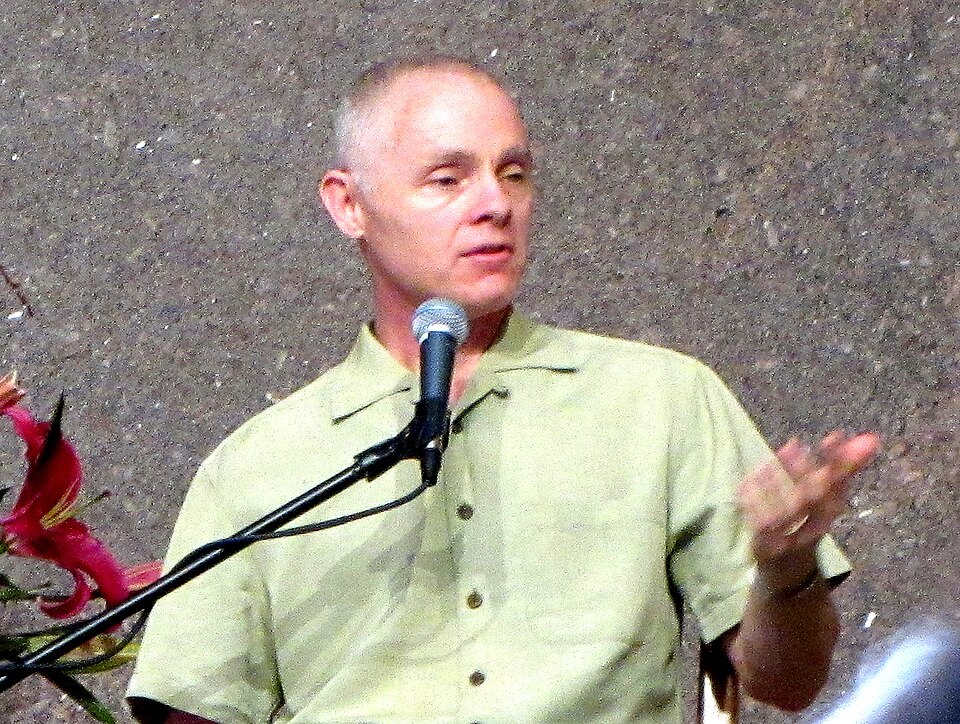
You sit down. The chair is ordinary, the room is quiet, and within a minute your shoulders have crept toward your ears and your jaw has set like a clamp on a hinge. Nothing is wrong. You have simply been holding on, and most of us never notice it until someone points it out. That small, almost invisible act of holding is the subject of a short excerpt from Adyashanti, drawn from a November 13, 2019 broadcast called "Meditative Self-Inquiry." In roughly six and a half minutes he makes a case that meditation is less about getting the mind to behave than about dropping the resistance we bring to whatever is already happening, and that this resistance lives as much in the body as in thought. The practice he describes starts with the physical, moves into the psychological, and asks the meditator to relax the grip on experience rather than fight it.

Read · 6 sections

What does it mean to drop resistance to "what is"?

Adyashanti opens by describing meditation as an art more than a science, "the art of turning attention back to its source" (0:05). The difficulty, he says, is that the mind is often noisy at the start. Feelings arise, the body feels uncomfortable, and there is a restlessness that many people encounter as they first learn to sit. There is also, he notes, "some element of resistance inside actually to turning towards the source" (0:49). The meditator is not simply watching the mind; part of them is pushing against the very act of watching.

His instruction for working with this is to leave the content of experience alone. Thoughts, feelings and sensations are allowed to arise and pass away without being indulged and without being fought. He is precise about the distinction. Leaving something alone does not mean suppressing it, and he warns that real meditation is not repression, though he acknowledges that people often mistake one for the other. As he puts it in the excerpt, "Basically it means to just accept it as it is. Just drop your resistance to what is" (2:29).

The phrase that carries the most weight may be the qualifier that follows. Accepting what is, he says, "doesn't mean you have to like your experience or be happy that there's thoughts or whatever." The aim is not a pleasant inner state. It is the willingness to let everything be as it is, and that includes letting go of the search for a different experience, which he identifies as something that "keeps you in the surface domain of consciousness" (2:40 to 3:00 in the excerpt).

Why does the mind get louder when you first sit down?

Many people who start meditating are surprised, even alarmed, that their thinking seems to intensify once they try to be still. Adyashanti treats this as predictable rather than as failure. When attention is pulled back from the stream of experience, it is being asked to leave the familiar territory it knows best. The mind responds by generating more material, "more thoughts will proliferate for a while" (1:05), because thinking is how attention usually stays anchored to the known. The increase in noise is a sign that the turning-back has begun, not that it has gone wrong.

He also points to a subtle trap in the way we relate to thoughts. A thought, he says, does not need to resist another thought, and "only a thought has an idea that it needs to resist a thought" (1:46). The attempt to beat down a mental chatter is itself more mental chatter. Once you see that, the instruction to leave thoughts alone becomes less a rule and more a relief. You do not have to win an argument with your own mind in order to sit.

Adyashanti is candid that this takes practice. What most of us have practiced, he says, is being "completely absorbed in the content of experience," and he names the endless internal narration, the way "the mind is always talking to itself about nearly everything," along with the images it produces. Undoing that habit is gradual. Attention has to learn, over time, to let go of the content it has been clinging to.

Why start with the body instead of the mind?

This is where the excerpt turns distinctly somatic. Adyashanti recommends beginning with body relaxation, and he describes it in concrete terms: sit down, take a moment, and start with the most obvious level, the physical feeling of the body. Then release the tension you find there.

"It's often surprising how much unnecessary tension your body is holding, even when you're sitting in a chair. There's something about noticing the tension and not resisting it, just relaxing around it—then the body can start to relax." (Adyashanti, excerpt from the November 13, 2019 broadcast "Meditative Self-Inquiry," around 4:37)

The word "unnecessary" matters. Adyashanti is not asking you to engineer a posture or force a state. He is pointing to tension that is not doing any work at all, held in the shoulders, the belly, the face, and the way we unconsciously brace before we even begin. The method is the same as with thoughts: notice the tension, do not resist it, relax around it. Because the tension is not being fought, it tends to loosen on its own, and the attention that was lodged in the body can then relax too.

There is a reason this approach is practical rather than merely pleasant. The body is always here. It is the most immediate form of experience, and it offers a place to rest attention that does not require solving anything. A meditator who is stuck in a loop of thinking can often find a way out by simply feeling the weight of the body in the chair, which gives attention a concrete object that is not the story.

How is the mind's story connected to tension in the body?

The second layer Adyashanti describes is less obvious. Beyond physical tension there is what he calls "a more subtle kind of tension," one that runs through the whole psychology: the mind struggling with itself, sometimes overtly and sometimes very subtly, judging itself or tracking whatever the current moment's narrative happens to be (5:07).

His claim here is the most interesting one in the excerpt. The narrative in the mind, he says, "is not disconnected in any way to your body." When you are caught up in the inner story, there is always an accompanying tension throughout the whole body-mind (5:41). Thinking and bodily holding are not two separate phenomena that happen to coincide. They are the same contraction seen from two sides. A worried thought has a clench that goes with it; an argument with oneself has a set jaw.

That connection gives the practice its logic. If the story and the body are linked, then loosening your grip on the story will tend to release tension in the body, and releasing physical tension will make it easier to loosen the story. Adyashanti describes this as the way "as you begin to relax your grasp on the inner narrative, you'll also feel a kind of more subtle tension relaxing" (6:05). The two moves reinforce each other.

How do you practice this without repressing?

The most common misreading of this teaching would be to treat relaxation as a kind of tuning-out, a way of sedating the mind so that it stops producing unwanted material. Adyashanti is careful to rule this out. Real meditation, in his account, is not suppression. Repression pushes experience down, and that pushing is itself a form of resistance, which is exactly what he is asking the meditator to set down.

In practice, that means you let the thought, feeling or sensation be present without feeding it and without trying to banish it. If a sensation is uncomfortable, you let it be uncomfortable. If a thought is judging you, you let the judgment be there and notice the body that goes with it. The release is not in the content changing. It is in the way you hold the content. "It's literally relaxing a sort of inner tension around experience," he says near the close of the excerpt (6:20).

Because the instruction is so simple, it is easy to hear it as effortless. Adyashanti himself says otherwise. For most people it "will require some practice," and the work is patient and repetitive. The gains tend to be small and cumulative: a shoulder that drops a little further each time, a thought that is noticed a half-second sooner, a moment in which the story is seen as a story.

Where to go from here

If you want to try what Adyashanti describes, the excerpt suggests a simple place to begin. Sit in a chair, and before you do anything else, scan the body from the obvious places outward. Find the tension that is not doing any useful work. Rather than fixing it, notice it, let it be, and see whether the surrounding body begins to soften. Then, when the mind gets busy, which it will, check whether you are resisting the busyness. If you are, drop the resistance and let the thoughts arise and pass without joining them or pushing them away.

For the full context of the teaching, the complete talk is the best next step. This excerpt is drawn from a November 13, 2019 broadcast titled "Meditative Self-Inquiry," and Adyashanti's own channel notes that the full-length version of the talk is available through its YouTube membership. Reading or listening to the longer treatment will give you more of the surrounding material on self-inquiry, which this clip only touches on at its edges. Approach it the way the excerpt approaches meditation itself: patiently, without expecting a particular result, and with the same willingness to let what is be exactly as it is.

Comments

Loading the conversation…

Transcript

[0:05] Meditation is the art and it is an art

[0:08] more than a science.

[0:10] It's the it's the art of turning

[0:12] attention back to its source.

[0:19] And as we do that, of course, the

[0:21] challenge of that is that initially

[0:25] often mind can be pretty noisy. You

[0:28] might have noisy feelings. Your body

[0:31] might not be comfortable. So you have

[0:33] sensations. A lot of people when they

[0:34] start to learn to meditate, there's a

[0:37] certain kind of restlessness. And

[0:38] there's all this this phenomena going

[0:41] around which you are conscious of which

[0:43] you are aware of

[0:46] and there's even some element of

[0:49] resistance inside actually to turning

[0:54] towards the source. So sometimes when

[0:57] people begin to do this, it's not

[0:59] uncommon for their mind to get even more

[1:01] active,

[1:03] right?

[1:05] And more thoughts will proliferate for a

[1:07] while, right? As as it it's because it's

[1:09] a way of pulling attention

[1:13] back into the known domain, the known

[1:16] domain, the what you experience, right?

[1:22] So the reason in meditation what many

[1:26] many different techniques but one of the

[1:27] things that most of them have in common

[1:31] is that you're you are encouraged to

[1:34] basically leave I call it leaving the

[1:37] content of experience alone. So you're

[1:40] just leaving thoughts alone. You're not

[1:42] indulging in them purposely thinking,

[1:45] but you're also not resisting your

[1:46] thoughts because only a thought has an

[1:50] idea that it needs to resist a thought.

[1:53] Right?

[1:54] So, we're really just leaving leaving

[1:57] the content of experience alone. Letting

[2:00] thoughts arise and pass away. Letting

[2:03] feelings arise and pass away. Letting

[2:06] sensations arise, pass away. We're not

[2:09] trying to suppress anything in real

[2:11] meditation.

[2:13] Although often people are repressing.

[2:16] Um but that's not really to meditate

[2:20] correctly

[2:22] or just leaving the content of

[2:24] experience alone.

[2:26] Just leaving it to itself.

[2:29] And as you begin to leave it alone. Now

[2:31] what does it mean to leave it alone?

[2:33] Basically it means to just accept it as

[2:36] it is.

[2:40] Just drop your resistance

[2:44] to what is.

[2:47] It doesn't mean you have to like your

[2:48] experience or be happy that there's

[2:51] thoughts or whatever. It just means

[2:54] to just allow everything to be just as

[2:57] it is.

[2:59] which means letting go of the resistance

[3:03] to what is or even letting go of looking

[3:07] for a different experience, right?

[3:10] Because that'll keep you in the surface

[3:12] domain of consciousness.

[3:15] So as we begin to start to let

[3:17] everything alone and for most people

[3:19] that will require some practice because

[3:22] what we're practiced at generally is

[3:26] being completely absorbed in the content

[3:30] of experience whether it's the next

[3:32] thought mostly

[3:35] and the endless narration in the mind

[3:38] the way the mind is always talking to

[3:39] itself about nearly everything

[3:43] and the images that get produced and all

[3:46] the rest.

[3:50] So it might take a little bit of

[3:53] practice

[3:55] so your attention starts to let go of

[3:58] the content of focusing on it.

[4:04] And it's literally

[4:06] it's almost like a

[4:10] well it helps to to begin with a kind of

[4:13] body relaxation. It's it's literally

[4:16] just start to kind of sit down and

[4:18] you're just releasing the tension.

[4:26] And when you sit down and take just a

[4:29] moment and you you you just start with

[4:31] the the most obvious, the physical

[4:33] level, the the feeling of your body, and

[4:37] it's often surprising how much tension

[4:39] your body is holding, unnecessary

[4:42] tension, even when you're sitting in a

[4:44] chair. And so there's something about

[4:47] noticing the tension

[4:52] and not resisting it, just relaxing

[4:54] around it. And then the body can start

[4:57] to relax and the attention

[5:01] in the body can relax.

[5:05] And then there's a more subtle kind of

[5:07] tension. A tension almost through

[5:10] through the one's whole psychology

[5:13] in the mind in the feelings.

[5:17] The way the the mind is can be sometimes

[5:20] very overtly sometimes very subtly

[5:23] struggling with itself. That's a kind of

[5:25] tension or judging itself or

[5:29] whatever the current moment of the

[5:31] narrative is. But you notice if you're

[5:33] really paying attention that the

[5:35] narrative in the mind is not

[5:37] disconnected in any way to your body.

[5:41] That in other words, when you're

[5:42] involved in the narration of the mind,

[5:44] there's always an accompanying tension

[5:47] throughout the whole body mind.

[5:52] And so as you begin to relax your grasp

[5:55] on the inner narrative,

[5:58] you'll also feel a kind of more subtle

[6:01] tension relaxing. Right?

[6:05] So this is in this is almost a somatic

[6:08] sense of what it actually means to begin

[6:12] to allow the content of our experience

[6:15] to be just the way it is or to relax.

[6:18] It's literally relaxing a sort of inner

[6:22] tension

[6:24] around experience.

Adyashanti
ArtistAdyashanti

American spiritual teacher in the Zen and non-dual traditions, sanctioned by his Zen teacher Arvis Justi to teach in 1996. His teaching is unusually direct: pointing past method, i…

View profileWebsite
Explore Topics
Dropping-resistanceSomatic-meditationBody-relaxationAdyashantiMeditation

Got Questions?

Frequently Asked Questions

In this excerpt, Adyashanti describes dropping resistance as accepting experience as it is, including thoughts, feelings and sensations, without pushing against them. He is clear that this does not require liking the experience or being happy about it. It also means letting go of the search for a different experience.
Adyashanti explains that when attention is pulled back from the familiar content of experience, the mind may respond by producing more thoughts for a while. This is a way of keeping attention in the known domain. He treats the increase as a normal part of turning attention back to its source.
Adyashanti recommends starting with the most obvious physical level: sit down, take a moment, and notice where the body is holding tension. Rather than forcing it to release, notice the tension without resisting it and relax around it, and the body can begin to relax on its own.
No, according to Adyashanti's excerpt, real meditation is not suppression. He notes that people often do repress, but that this is not the same as leaving the content of experience alone. The practice is to let thoughts, feelings and sensations arise and pass away without indulging them or resisting them.
Adyashanti says the inner narrative of the mind is not disconnected from the body. When you are caught in the narration, there is always an accompanying tension throughout the body-mind. As you relax your grip on the story, that subtler tension tends to relax as well.
In the excerpt, he says that only a thought has the idea that it needs to resist another thought. Trying to push down a mental chatter is itself more mental activity, so the instruction is to leave thoughts alone rather than fight them. This removes the sense of having to win an argument with the mind in order to meditate.

Continue Reading

More from Adyashanti

View All
Why Awakening Should Never Get a Period at the End
Inspire

Why Awakening Should Never Get a Period at the End

In a short video answering an emailed reflection, Adyashanti explains why a qualified yes keeps awakening open and why "I got it" becomes th…

1 min read
Layers of Efforting: Why Seeking Freedom Deepens the Trap
Inspire

Layers of Efforting: Why Seeking Freedom Deepens the Trap

A spiritual teacher explores how the belief in layers of emotional work creates more layers, and why trusting your own internal compass matt…

1 min read
Why Spiritual Seeking Can Keep You From Finding It
Inspire

Why Spiritual Seeking Can Keep You From Finding It

Eckhart Tolle argues that the spiritual search can hide the deep I, which is already present in the now. He reads the Buddha's tree, the 6:3…

1 min read
Namo Namo: The Devotional Song Sung Back to a Teacher
Inspire

Namo Namo: The Devotional Song Sung Back to a Teacher

A three-minute devotional song, written by Sutara and Omkara and shared with a sangha room in June 2026, turns a teacher's teaching into a c…

1 min read

Keep exploring

Continue your journey

More wisdom and gatherings from across the BrightStar directory.

More Articles

Browse the full library of teachings, interviews, and guides.

Back to all articles →

Teachers & Artists

Explore the lineages, musicians, and guides of the conscious world.

Explore artists →

Find an Event

Kirtan, retreats, sound baths, breathwork, festivals — happening soon.

Browse events →