BrightStar

Browse All Events

Discover conscious gatherings

events

Yoga
Meditation
Breathwork
Qigong
Tai Chi
Sacred Music
World Music
Medicine Music
Sound Healing
Ecstatic Dance
Popular Destinations
BaliSedonaLos AngelesCosta RicaNew YorkSan FranciscoAustinMiamiJoshua TreeTulum
View All CategoriesView All Destinations

Explore All Features

Powerful tools to grow your events

Platform Features

Smart Dynamic Pricing
Ticket Categories
Assigned Seating
Abandoned Cart Recovery
Visitor Recovery
Donations & Sliding Scale
Affiliate Engine
Ticket Scanner
Coupon Codes
Custom Questions
Ticket Sharing
Upsells & Add-ons
Analytics & Reporting
Email Sequences
Waitlist / Notify / Remind
People & Places
Artists & TeachersEvent OrganizersVenues & StudiosKnowledge BaseGlossaryInspiration
View All FeaturesAbout Us
PricingBlog
Language
Saved events
Browse All Events

events

YogaMeditationBreathworkQigongTai ChiSacred MusicWorld MusicMedicine Music

Popular Destinations

BaliSedonaLos AngelesCosta RicaNew YorkSan Francisco

People & Places

Artists & TeachersEvent OrganizersVenues & StudiosKnowledge BaseGlossaryInspiration

Platform Features

Smart Dynamic PricingTicket CategoriesAssigned SeatingAbandoned Cart RecoveryVisitor RecoveryDonations & Sliding ScaleAffiliate EngineTicket ScannerCoupon CodesCustom QuestionsTicket SharingUpsells & Add-onsAnalytics & ReportingEmail SequencesWaitlist / Notify / Remind
View All FeaturesAbout Us
PricingBlog
Log inFind EventsHost Events
  • Browse All Events
  • For Seekers
  • Yoga
  • Meditation
  • Breathwork
  • Qigong
  • Tai Chi
  • Sacred Music
  • World Music
  • Medicine Music
  • Sound Healing
  • Ecstatic Dance
  • Retreats
  • Workshops
  • All Categories →
  • Bali
  • Sedona
  • Los Angeles
  • Costa Rica
  • Tulum
  • Byron Bay
  • San Francisco
  • Austin
  • New York
  • San Diego
  • Denver
  • Seattle
  • Portland
  • Miami
  • All Cities →
  • Join the Movement
  • Why we list
  • Sell Globally
  • For Creators
  • For Teams
  • For Writers
  • For Teachers
  • For Kirtan Artists
  • For Studios
  • For Festivals
  • For Retreat Centers
  • For Nonprofits
  • Brand Ambassador
  • Free Ticketing
  • Elevate
  • Amplify
  • 500K+ Buyer Network
  • Abandoned Cart Recovery
  • Smart Dynamic Pricing
  • Ticket Categories
  • Recurring Events
  • Assigned Seating
  • Affiliate Engine
  • Waitlist / Notify
  • Ticket Scanner
  • Embed Widget
  • Event Syndication
  • Message Center
  • Integrations
  • Reports
  • All Features →
  • About
  • The Ecosystem
  • Blog
  • Glossary
  • Inspiration
  • Help Center
  • Contact
  • API Docs
  • Brand Assets
  • Careers
  • Press
  • Terms of Service
  • Privacy Policy

Events

  • Browse All Events
  • For Seekers
  • Yoga
  • Meditation
  • Breathwork
  • Qigong
  • Tai Chi
  • Sacred Music
  • World Music
  • Medicine Music
  • Sound Healing
  • Ecstatic Dance
  • Retreats
  • Workshops
  • All Categories →

Destinations

  • Bali
  • Sedona
  • Los Angeles
  • Costa Rica
  • Tulum
  • Byron Bay
  • San Francisco
  • Austin
  • New York
  • San Diego
  • Denver
  • Seattle
  • Portland
  • Miami
  • All Cities →

For Creators

  • Join the Movement
  • Why we list
  • Sell Globally
  • For Creators
  • For Teams
  • For Writers
  • For Teachers
  • For Kirtan Artists
  • For Studios
  • For Festivals
  • For Retreat Centers
  • For Nonprofits
  • Brand Ambassador
  • Free Ticketing
  • Elevate
  • Amplify

Features

  • 500K+ Buyer Network
  • Abandoned Cart Recovery
  • Smart Dynamic Pricing
  • Ticket Categories
  • Recurring Events
  • Assigned Seating
  • Affiliate Engine
  • Waitlist / Notify
  • Ticket Scanner
  • Embed Widget
  • Event Syndication
  • Message Center
  • Integrations
  • Reports
  • All Features →

Company

  • About
  • The Ecosystem
  • Blog
  • Glossary
  • Inspiration
  • Help Center
  • Contact
  • API Docs
  • Brand Assets
  • Careers
  • Press
  • Terms of Service
  • Privacy Policy
BrightStar
Get the app
Download on theApp StoreGet it onGoogle Play
© 2026 BrightStar. All rights reserved.
Inspiration

Doing Less for More: Self-Compassion as Rest Strategy

Amy Pattee Colvin
Amy Pattee Colvin
Jan 6, 2026
9 min read

From Amy Pattee Colvin

Watch · 6

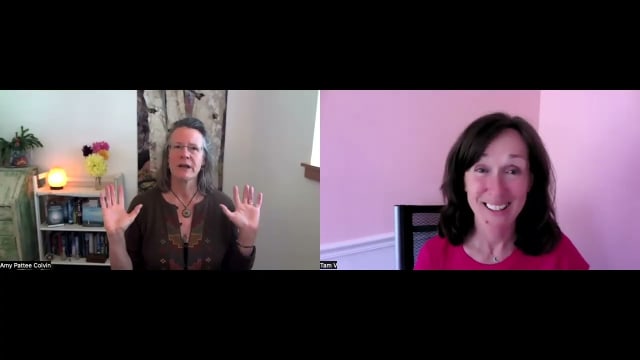
Two women sit down for a loose, unscripted talk about what happens when a driven person finally stops. Heather Scott, who works with people on self-care and their "own list of things to do," and Amy Pattee Colvin, who blends qigong and heart-based meditation with the compassion training she learned as a Stanford-certified facilitator, circle a single idea that Scott calls "less for more." Their argument is simple to state and harder to live: doing less can produce more clarity, more value, and more capacity, but only if the stillness is chosen with self-compassion rather than extracted from guilt. Along the way they offer a working definition of compassion built on three steps, awareness, emotional response, and action, and they argue that the third step is the one most people misread as "doing more."

Read · 6 sections

What does "less for more" actually mean in practice?

Scott starts with a travel story, and it is a good one. She describes a trip to Scotland that her companion had planned, a route packed with highlights that somehow never felt rushed. When people later ask her where she went, she says, "All over." The trip worked, in her telling, because of its balance. Some people on the tour complained about what they had missed. Scott's read is that those were not the right people for that kind of curation. "I've often said the most important, you know, the only thing I needed to know was when to have my luggage on the bus and I knew we'd be going amazing places that day," she says at about the 2:40 mark.

From that anecdote she draws the principle.

"So me saying less actually might give more value. Less in the daily regime might allow for more revelations or reflection." (Scott, around 3:21)
The claim is not that rest is a luxury to be earned after the real work. It is that a subtraction, done well, can be the most productive move available. Fewer commitments make room for the thing that the commitments were crowding out, which is usually perception.

Scott connects this to the constant input of modern life. Social feeds, round-the-clock news, and the ambient pull of devices keep the nervous system scanning, so that stillness, when it arrives, feels foreign. Her own test case was a spa day: four hours, no devices permitted inside the complex, and an intention to talk to no one and listen to no one. For the first fifteen minutes it felt wrong. She wondered whether she should be thinking about something, or meditating, or doing anything at all. Then, she says, "within a fairly short period of time, I recalibrated and got settled into the joy of nothingness, the joy of less, which really had a positive impact for more in me on that day." (Scott, around 4:40)

The "joy of nothingness" is a phrase worth sitting with. It names a state that most driven people have never allowed themselves long enough to recognize as pleasurable. The first quarter hour is the withdrawal period, the body and mind looking for their usual jobs. The conversation suggests that the reward comes on the far side of that discomfort, not in the first moment of quiet.

Why does slowing down feel like laziness?

Scott is candid that she is not immune. In the days just before the conversation, she had deliberately stepped back from her usual rhythm, and she caught herself repeatedly reaching for small tasks: a load of laundry, a errand, a "perfect time" to get ahead. She resisted each one, and the resistance itself was the lesson. She notes that the season helped, a cold and snowy stretch that made hibernation feel cooperative rather than indulgent. Still, she was surprised by the effort.

"It's surprising to me that it takes so much effort to just gear down." (Scott, around 6:20)

The effort, in her account, is mostly mental. The inner voice has opinions: you could just do this, what about that, you should. Scott describes catching herself in the act of being kind to herself, and noticing the double standard. If a friend told her they were planning to gear down between Christmas and New Year's, she would support them without hesitation. The dilemma only appeared when the person was herself. That gap, between the generosity she extends to others and the scrutiny she applies inward, is where the guilt of resting tends to live.

Here the conversation pivots to self-compassion as the mechanism that makes rest possible. Scott's framing is that she could only step into genuine self-care because she first extended self-compassion. Rest without that foundation tends to collapse into self-criticism, or into a restless half-rest where the mind is still working the to-do list. Rest with it becomes a form of care that looks, from the outside, like doing nothing.

What is the three-part definition of compassion they use?

This is where Colvin brings in the training she studied. The definition she uses comes from Compassion Cultivation Training, a program built at Stanford, and she says it is among the most useful things she took from that work. She introduces it with a plain statement: compassion has three parts. The first is awareness of distress or suffering in some form. Colvin points out that Scott's wish to gear down must have had a driver behind it, some sense that the usual pace was costing something. Awareness does not have to be dramatic. It is noticing.

The second step is being emotionally moved by that awareness. Colvin is realistic here: no one can register every instance of distress around them at once, so attention locks onto something in particular, and the feeling that follows is where empathy begins. The third step is the one she calls the gold.

"The third step, and this is the gold, is taking action. And so in your case, it was gearing down. And so often people perceive taking action with doing more." (Colvin, around 8:58)

That final observation is the hinge of the whole talk. Most people hear "take action" and picture a list, a fix, a second project. Colvin's model says that the action responding to suffering can be subtraction. If the distress is depletion, the compassionate act may be to stop. Once the three steps are understood this way, rest is not a break from compassion. It is compassion's most direct expression toward oneself.

How does self-trust come into it?

Scott raises a practical worry that many readers will recognize. After three solid days of geared-down living, she asked herself whether she still remembered how to gear back up. Productive activity had a habit of returning in a jumpy, anxious form, and she had to reassure herself that she did know how to activate when needed, and that she did not need to activate right then. That reassurance is a kind of self-trust, the belief that stopping does not mean losing the capacity to start again.

Colvin links this to boundaries. Practicing self-compassion, she suggests, lets a person say, calmly, "I'm going to gear down now," even when peers or obligations push in the other direction. The boundary is easier to hold when it comes from care rather than from a defensive need to justify time off. The conversation offers an everyday example: a friend says they feel terrible about the week, and you would respond with warmth. Turn that same warmth on yourself, and the to-do list stops being the only authority in the room.

Colvin also speaks from experience. She describes a history of people-pleasing, of giving and giving, and of working through a period of situational depression by learning to sit with herself. At one point on a retreat she resisted an exercise, and a guide pointed out that she now had new tools that could move her through the discomfort faster. The point, in the conversation, is that self-compassion is a skill developed through repeated, uncomfortable practice, not a mood that arrives on its own.

Where does this leave someone who feels stuck in overdrive?

The useful takeaway is not a rule to rest more. It is a set of distinctions. Stillness is not automatically unproductive, and busyness is not automatically responsible. Awareness, feeling, and action form a sequence, and the action can be stopping. The discomfort of the first fifteen minutes of quiet is information about how habitual the pace has become. And the inner critic that questions every pause is worth noticing as a voice, not obeying as an authority.

Colvin and Scott are not offering a program of perfect calm. They are describing the moment of choosing to gear down, the self-doubt that follows, and the compassion that carries a person through it. For anyone who has ever felt lazy for resting, the conversation reframes the question. The better question is not whether you have earned the pause. It is what your own suffering is asking you to do, and whether you are willing to let the answer be less.

Where to go from here

If the three-part model resonates, start small. Notice one moment this week when something in you is asking for relief, which is step one. Let that noticing move you, even briefly, which is step two. Then choose one act of subtraction, a cancelled commitment, a device left in another room, an afternoon with nothing on it, and treat it as the third step rather than as a failure of productivity. Watch what happens in the first fifteen minutes, and then watch what happens after.

Colvin's own books and training materials are the natural next stop for readers who want a longer, more structured practice. Her book Cultivating Compassion is the place to go for the full compassion framework, and her video lessons on mindset, movement, and open-heartedness extend the qigong and somatic approach she describes in this conversation. Heather Scott's comments on self-care and self-compassion give the talk a practical, everyday edge. Taken together, they make a case that the most effective thing a driven person can do this year may be to stop, and to trust that they will know how to start again.
Comments

Loading the conversation…

Transcript

[0:07] [Music] Hey there, I'm Amy Pattee Colvin and I  love thinking about and talking about and sharing  

[0:14] ideas around energy flow in the body. I frame it  as qigong and compassion for self, for others. And  

[0:25] I'm here with my friend Heather who will introduce  herself in a minute. and we're just having a  

[0:30] series of spontaneous conversations that we wanted  to share with you. My name is Heather Scott and I  

[0:38] have an area of interest that I feel compliments  Amy and that is that I care very much about people  

[0:45] taking care of themselves in important ways so  that when they're nurtured they can go out into  

[0:52] the world and feel fantastic and make an impact.  And so we're having these conversations because we  

[0:58] have different topics that we've discussed before  and we're going to explore them here. Great. Well,  

[1:04] let's go ahead and dive into today's conversation.  Fantastic. Have I shared with you my concept where  

[1:12] I was chatting with a friend and we talked  about how you do less for more? A little bit,  

[1:18] but tell me more. Yeah. So the it came to my mind  when you were sharing about how the first video  

[1:26] was really basic. Yeah. Back to the basics. Very  simple, very straightforward. Nothing. No. Like  

[1:35] sha like it wasn't let's do a back bend. Like it  was let's stand and breathe and get present to the  

[1:43] stillness or whatever it was. And I just think  that this feels like the year for less for more  

[1:53] because and I'm going to use an example from uh  the Scotland trip that I was on with you. It was a  

[2:00] beautiful trip in that I felt so grateful that you  had gone and picked all these highlights for me.  

[2:08] So, I just got to say, "Hey, Amy, can you share  your itinerary with me because I'm thinking about  

[2:15] Scotland and I'd like to know what areas we're  going to or whatever it was." And you had I mean,  

[2:22] when people say, "Where did you go in Scotland?"  I'm like, "All over." Like, really covered it.  

[2:28] But there was such a nice balance. And and it's  sometimes that less is more. So, there were some  

[2:36] people who were like, "Well, you know, we didn't  get here or we're not going there or whatever."  

[2:41] And honestly, I don't think those are your  people because because you curated something  

[2:48] so lovely. I when I'm when describing that trip,  I've often said the most important, you know,  

[2:54] the only thing I needed to know was when to have  my luggage on the bus and I knew we'd be going  

[3:00] amazing places that day. So I think that there's a  trend and maybe maybe I'm speaking it because this  

[3:10] is what I want is that less for more. So me saying  less actually might give more value. Less in the  

[3:21] daily regime might allow for more revelations  or reflection. And I really love that. Well,  

[3:34] and I also think that with today's society  where we have perpetual stimulus coming in,  

[3:43] whether it be, you know, social media,  whether it be 247 news, so on and so forth,  

[3:49] that we've become so [Music] tuned into having  our spidey senses going that we forget what it's  

[3:59] like to just be settled and be still. And that I I  may have shared with you that was one of the most  

[4:04] amazing things about going to a spa last weekend  where I had 4 hours of just hanging out with me  

[4:12] and no devices were allowed into the complex at  all and how for the first 15 minutes it's like oh  

[4:20] this feels really weird because I didn't want to  talk to anybody. My intention was to go and not  

[4:25] talk to anybody and not listen to anybody but I'm  like okay what do I what do I do? What do I do? Am  

[4:34] should I be thinking about something? It's like,  well, no. Should I be meditating? Well, maybe.  

[4:40] But, you know, within within a fairly short period  of time, I recalibrated and got settled into the  

[4:48] joy of nothingness, the joy of less, which really  had a positive impact for more in me on that day.  

[5:00] And I think moving into this new year. Yes.  And I would share that I have experienced  

[5:07] in the last week or so um the need to apply a  number of moments of self-compassion because I  

[5:16] have completely geared down. I've had a few little  interactions. Um I I met with a friend for dinner  

[5:25] on New Year's Eve. like, you know, here and there  I'm connecting to people. Um, but I've done very  

[5:35] little this past week intentionally and and to the  point of discomfort for myself a few times where  

[5:43] I'm like, maybe maybe I'll just throw in a load  of laundry or maybe I'll just such and such. No,  

[5:50] I kept stepping back from the shoods and the well,  you know, this is a perfect time to get ahead  

[5:57] on such and such. No, I've really embraced the  stillness of the season and the hibernating bit  

[6:05] and it's been cooperative because it's been very  cold and snowy here. And I think for me that is  

[6:13] just so I don't know like I said earlier like it's  not like a parade or you know a huge backbend but  

[6:20] it's it's actually so nurturing for me and it's  such a good voice for me and it's surprising to  

[6:28] me a number of bits about that. It's surprising to  me that it takes so much effort to just gear down  

[6:37] it. It takes effort to not listen to my brain  who has a lot of opinions on well, you know,  

[6:44] you could just do this or what about this or you  should and D. No, it's been so um I've thought  

[6:51] about this conversation in anticipation a few  times. I'm like, "Oh, look, I'm doing it again.  

[6:58] I'm applying like a a kind, caring attitude toward  myself because if somebody else told me the story  

[7:07] of, well, I don't have that much on and I think I  might gear down between Christmas and New Year's,  

[7:12] it's like the perfect time to do that. And so,  why would that even be a dilemma? I would fully  

[7:19] support anybody else who was doing it. Well, and  to me that's a real illustration of self-care.  

[7:27] And and the only way from my perspective, the only  way you allowed yourself to step into that place  

[7:34] of self-care where you geared down is because you  have self-compassion. So, agree. Let me talk about  

[7:41] uh the idea of compassion just for a second. And  I know you've heard this many times, but but for  

[7:47] anybody who is new to the idea of compassion, the  the definition that I like to use came through a  

[7:57] program called compassion cultivation training.  And when I studied at Stanford University to be  

[8:03] a facilitator for this training program because  it was built at Stanford, this is one of the best  

[8:09] takeaways for me from that program. And it's  the idea that compassion has three parts. And  

[8:15] the first part is awareness or dis of distress or  suffering in some way. So your desire to just gear  

[8:25] down. There must have been some sort of driver  behind that. And we can talk about that in just  

[8:29] a little bit. But awareness of of something. And  then the second step is being emotionally moved by  

[8:39] that awareness. So the reality is we can't be  aware of distress and suffering around us all  

[8:45] the time, but we lock into something. And then  when we're emotionally moved by whatever it is  

[8:52] that we've locked into, that's where the empathy  begins to come in. And that's the second step of  

[8:58] compassion. But the third step, and this is the  gold, is taking action. And so in your case, it  

[9:05] was gearing down. And and so often people perceive  taking action with doing more. So this really ties  

[9:15] in with your concept of doing less for more. And  I mean what a beautiful form of self-compassion,  

[9:24] a beautiful form of self-care that really  turns into when it's the right season to do it.  

[9:31] And there's an aspect of selfrust that has to play  into that too because that was what the dialogue  

[9:40] was. The internal dialogue is well I actually had  one moment where I was like I've geared down for  

[9:46] three solid days now. Do I remember how to gear  back up? Cuz you know there's often things that I  

[9:52] need to be productive on or take care of. And once  I once I get into that fully geared down mode,  

[9:59] I think I get a little jumpy of I do remember  how to activate. Okay. Yes, I do. Okay. I don't  

[10:05] need to activate right now. Defining compassion  this way, it's not like, oh, it's self-pity. Oh,  

[10:13] I need a little pat on the back. It's it's  like, no, I want to be a healthy, thriving,  

[10:20] successful, dynamic, vibrant human being. And  the only way I can do that is when I take care  

[10:26] of myself first. Yes. And and one of the things  that I love about practicing self-compassion,  

[10:34] practicing compassion in general, and I've I've  heard this from students over and over and over  

[10:40] again as I've taught compassion training to them,  is that having self-compassion allows you to set  

[10:48] boundaries. And going back to that less for more,  going back to that gearing down, you had enough  

[10:55] selfrust to be able to set the boundary of I'm  going to gear down now. And even if your peers  

[11:04] or your loved ones were like, "What are you  doing? You've got laundry to do. You've got  

[11:11] shopping to do. You've got financial stuff to take  care of. You can still go, I'll do that next week.

[11:22] So, one of the questions that I prepared and  you've kind of spoken to it, but I'm going to  

[11:26] ask anyway just to see if there's more is why  do you think that self-compassion is important?

[11:36] Because if we don't have self-compassion, we turn  into a giant pile of goo. It is not sustainable.  

[11:44] And I lived that. I live I mean I grew up as a  classic people pleaser and I gave and gave and  

[11:50] gave and gave and what that turned into for me was  situational depression and the only way that I got  

[11:58] out of situational depression was through having  the courage to sit with myself. I'd received  

[12:03] some guidance from a meditation instructor to  do a certain thing which required me to sit  

[12:09] with myself. And I remember at one point, you  know, during that particular weekend retreat,  

[12:18] um, you know, she said, "Do you have any  questions?" I go, "Well, you know, yeah,  

[12:22] I I don't want to do this." And she's like, "Well,  why not?" And I said, "Because I feel like I'm at  

[12:29] the edge of the deepest situational depression  yet, and I don't want to do it again. I don't  

[12:34] want to go there." And she goes, "Look, you have  new tools. You have this new tool that you've just  

[12:40] been given. And if you use it while you sit with  yourself, you will move through that depression  

[12:48] faster. You will move through it and become  stronger. And going back to your notion of trust,  

[12:56] you have to trust that it's worthwhile. And so  to me that you know self-compassion is essential  

[13:08] because without it if you enjoy engaging with  others and if you enjoy being a person of  

[13:15] service you're going to fry out and you're not  going to be able to support anybody including  

[13:23] yourself. And as you said earlier, you know,  I mean, it's so much easier for most people,  

[13:31] for many people to treat their loved ones better  than they treat themselves. If you had a loved  

[13:37] one who was having a bad day, you'd go, "Oh, man.  I'm really sorry you're having a bad day. Yeah,  

[13:42] it makes sense to relax. It makes sense to do  whatever I need to do to take care of yourself."  

[13:46] If you yourself are having a bad day and yet  you've got a to-do list this long, you go,  

[13:50] "Ah, I don't care that I'm having a bad day. I  have to push forward anyway." I mean, how many  

[13:55] of us do that, right? We all do at one point in  time or another. But I think that society-wise,  

[14:02] there's a lot of positive reinforcement for  pushing through despite not having the energy.  

[14:07] When you were sharing just a moment ago about the  situational where you finally sat with yourself,  

[14:13] what I was present to was the fact that you  brought self-compassion to yourself in that moment  

[14:18] because you became aware of it even if you didn't  feel comfortable with it. You were emotionally  

[14:25] involved because you didn't want that other  experience and then you took action. Right. Right.  

[14:31] Okay. So, yeah. I also um I'm kind of curious  when you have so much experience with this, what  

[14:44] would you say and you've touched on it already,  but just to sort of put it in the this this and  

[14:50] this form. Um what are say the top three or four  direct benefits of practicing self-compassion?  

[15:01] That's a great question. You touched on  sustainability. We're human. We have to  

[15:06] drink water in order to keep going kind of thing.  So, right. Um, so certainly self-compassion in  

[15:15] order to rem remain a healthy vital human being.  I think self-compassion is integral to that.  

[15:22] I also think that um self-compassion contributes  to a sense of connection with spirit and through  

[15:33] that through that also a connection to intuition.  So if if you are spiritually inclined and you  

[15:43] have an idea of you know the spirit that lives  within you whether you call it the higher self,  

[15:48] the divine self, the God self, the Jesus self,  having self-compassion helps you connect more  

[15:55] deeply with that because self-compassion  also allows you to have the courage to sit  

[16:01] with yourself. Now if you are not spiritually  inclined you could re reframe that as the spark  

[16:08] that makes you unique. Sitting with yourself in  this process of being self-compassionate helps  

[16:15] you connect to that spark that makes you unique.  And those things also allow you to connect with  

[16:22] your intuition which again I think and and early  on in our conversation um we were talking about

[16:34] how especially as as entrepreneurs, it's easy to  get locked into these days. Oh, this is what this  

[16:42] this professional thinks I should be doing.  This is what this coach thinks. This is what  

[16:46] this mentor thinks. And it's easy to leave the  intuition to the side. And I think that practicing  

[16:52] self-compassion has helped me connect more deeply  with my intuition so that I can make decisions  

[17:01] from there and not beat myself up about it and not  question them. I think maybe that's another thing  

[17:07] is that self-compassion over h I've really been  focusing on it like using that definition for the  

[17:15] last decade and I had been studying compassion  meditation for another 20 years before that but  

[17:20] in the last decade it is really when that that  definition settled in for me it allows me to  

[17:28] really deeply trust in what I'm doing and have  the confidence to say I like me and as a human  

[17:37] being I am going to make massive mistakes or even  small mistakes and even when I make those mistakes  

[17:45] what can I learn from it how can I move on I'm not  going to ruminate about it I'm just going to keep  

[17:50] going forward and I think that that that's a big  component as to why I was able to let situational  

[17:58] depression go is because I like me and I don't  have a sense of judgment around whatever it as  

[18:05] I do. I mean, I'm aware of it and I'm really  willing to honor when I've made mistakes,  

[18:11] but I use that as an opportunity for growth  rather than an opportunity to beat myself up.

[18:18] So there's a a freeing up of energy that could  potentially be locked in the rumination where when  

[18:26] you apply self-compassion, you're actually like  enlivening yourself because you're not stuck or,  

[18:35] you know, going over that or or, you know,  the the visual of hauling a bag of bricks or  

[18:40] whatever it is behind us. And I I think that when  I was growing up and through my experiences, I've  

[18:49] had times where I've taught that you have to go  back and like learn all the lessons. And you know,  

[18:59] there's this saying about when you're driving,  you mostly look through the front windshield  

[19:04] and you glance in the rearview mirror just to  check in, just to be aware. But it's not like  

[19:11] you drive forward while looking backward. And I'm  I've been really experimenting with is it okay for  

[19:21] me to just let it go? Is it? And and I think it's  it's quite a bit of self-compassion to just say,  

[19:32] you know, that happened and I get a chance to  choose what I look forward toward creating or look  

[19:41] forward to experiencing and what am I actually  going to choose in this moment? because I think  

[19:47] it's I think it's an old habit that many people  have to just to just carry that that brick around  

[19:55] and refer to it and and in my experience I've  talked to some people where they refer to the  

[20:01] brick as the reason that they can't move forward  and I I've watched that and you know and that that  

[20:09] kind of goes to everybody's at their own stage  and of course that's fine and uh but I really  

[20:15] love what you highlighted for the benefits  of compassion because connecting to self and  

[20:20] building self-rust and and honoring the fact that  we all need to have a sustainable way forward. Um,  

[20:32] you know, I appreciate you sharing about the  people pleasing because the people pleasing in  

[20:37] the short term is really easy because that person  needs that. You just give it to them. So there's  

[20:42] this there's this interim time where when you stop  saying yes to people, there's there's a lot of  

[20:48] discomfort because they're used to use saying yes,  not no. I I Yeah. And I actually I was teaching I  

[20:57] was teaching a six-w week compassion class oh last  fall and that exact same thing came up for one of  

[21:03] the students where her one of her family members  was so used to her saying yes and it was no longer  

[21:10] serving the student anymore to say yes that when  she had the courage to practice saying no or not  

[21:18] saying anything that changed the dynam dynamic  in that relationship And so it takes courage.  

[21:28] It does have self-compassion. And you know, I  also want I didn't highlight it specifically,  

[21:33] but to me underlying self-compassion is  self-awareness and self- appreciation. So  

[21:43] you have to have a level of self-awareness.  And then once you're aware of self, then you  

[21:50] need to be able to appreciate that self. you've  become aware of. And sometimes you have to have  

[21:58] self-compassion to be able to appreciate self.  But I really think they kind of flow together. But  

[22:05] it's really hard to practice self-compassion  if you have no self-awareness. [Music]

Amy Pattee Colvin
ArtistAmy Pattee Colvin

Amy Pattee Colvin is a somatic educator who blends qigong, neuroscience and Stanford-certified compassion training to help driven people settle an overactive mind and restore vital…

View profileWebsite
Explore Topics
Doing-less-for-moreSelf-compassionRest-and-recoveryCompassion-cultivation-trainingBurnout

Got Questions?

Frequently Asked Questions

Heather Scott uses the phrase to describe how subtracting commitments can add value, clarity, and reflection to a life. In the conversation she points to a curated Scotland trip with fewer, better-chosen stops as an example, arguing that less scheduling can create room for revelation.
In the conversation, Scott describes how the inner voice keeps offering tasks and opinions when she tries to gear down. She notices that she would fully support a friend resting, yet questions herself when she is the one doing it. Self-compassion is presented as the way to close that gap.
Amy Pattee Colvin explains the model as awareness of distress or suffering, being emotionally moved by that awareness, and taking action. She calls the action step the most important, and notes that action in response to suffering is not always doing more; it can be gearing down.
The speakers suggest treating rest as a compassionate response to depletion rather than a reward earned by productivity. Practicing self-compassion makes it easier to set a boundary like 'I'm going to gear down now' without needing to justify it.
Scott describes a jumpy feeling after several days of geared-down rest, along with a worry about whether she still remembers how to gear back up. Her reassurance to herself was that she does know how to activate, and that she simply does not need to in that moment.
Colvin describes herself as someone who helps people move from a life of force to one of flow, drawing on 30-plus years of somatic experience, qigong, and heart-based meditation, and on her Stanford-certified training as a CCT facilitator. Heather Scott introduces herself as someone who cares about people taking care of themselves so they can go into the world and make an impact.

Continue Reading

More from Amy Pattee Colvin

View All
Compassion as Action and Qigong for Lasting Stress Relief
Inspire

Compassion as Action and Qigong for Lasting Stress Relief

Compassion can be trained, and action is where the training starts. Here is how one teacher pairs a three-part compassion framework with qig…

9 min read
Self-Honesty and Self-Compassion: The Two Wings of Awakening
Inspire

Self-Honesty and Self-Compassion: The Two Wings of Awakening

Tara Brach's talk on the second arrow shows how self-judgment turns ordinary pain into a trance. Here is how seeing honestly and holding ten…

8 min read
Immune Support Affirmations: Words for Sensitive Souls
Inspire

Immune Support Affirmations: Words for Sensitive Souls

A close listen to Glenda Cedarleaf's immune support affirmation track: how its phrasing moves from body trust to boundaries, and why it clos…

9 min read
Nervous System Regulation: Orient, Touch, Breathe
Inspire

Nervous System Regulation: Orient, Touch, Breathe

Lynn Fraser's nine-minute practice works with three routes back to safety: orienting to the room, touch, and breath. Here is how each one wo…

9 min read

Keep exploring

Continue your journey

More wisdom and gatherings from across the BrightStar directory.

More Articles

Browse the full library of teachings, interviews, and guides.

Back to all articles →

Teachers & Artists

Explore the lineages, musicians, and guides of the conscious world.

Explore artists →

Find an Event

Kirtan, retreats, sound baths, breathwork, festivals — happening soon.

Browse events →