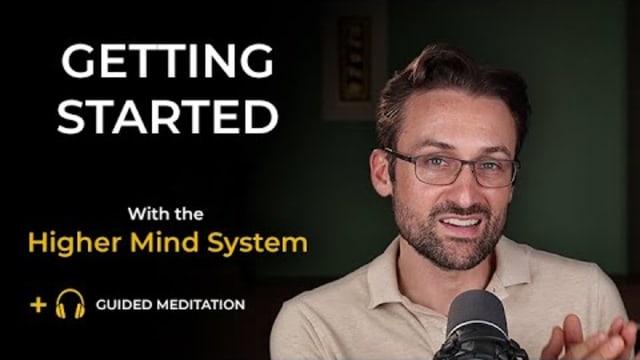
It is January, the calendar has just turned, and a familiar ritual is starting again: fresh notebooks, bold promises, a private vow to finally be the person we keep meaning to become. In a January 2025 YouTube video, meditation teacher and author Giovanni Dienstmann opens exactly there, with three questions most people will answer uncomfortably. Did you make as much progress on your goals last year as you wanted? Did you keep the promises you made to yourself? Are you consistently showing up as your best self? His argument is that the answer is usually no not because people lack desire, but because they lack a system to follow and to keep them accountable. From that premise he lays out three requirements for living a purposeful life, clarity, a plan, and consistency, and introduces the Higher Mind System, a seven-discipline framework he says he built from years of writing, coaching, and teaching self-discipline.
Dienstmann's diagnosis starts with a survey. He describes sending a questionnaire to readers and asking about their biggest obstacles to reaching their goals. The answers clustered around two problems: clarifying what they actually wanted, and maintaining self-discipline "in the midst of competing priorities, big life changes and ever-present distractions." Others named low motivation, procrastination, self-doubt, or simply not knowing what to do next. Building good habits and breaking bad ones came up constantly.
He is careful not to pretend the solution is painless. "Achieving meaningful goals is never easy," he says in the video, "and anyone who promises you otherwise is not being honest." But he argues the path can be "much clearer, more peaceful and more fruitful" with structure, which he describes as "a map." That word carries the whole talk. The problem he is addressing is less a failure of character than a failure of navigation: people set off without a chart, then blame themselves when they get lost.
At the thirty-thousand-foot level, Dienstmann says a person needs three things: clarity, a plan, and consistency. Each is distinct, and each fails in its own way.
Clarity, in his framing, has two layers. The first is knowing exactly what you want, which he says "brings a sense of meaning" and gives the mind direction. The second is knowing why you want it. A goal you are deeply connected to produces more motivation, engagement, and commitment, and he treats the "why" as the engine rather than decoration. Many people chase outcomes that were never really theirs, and clarity is the step that tests whether a goal survives contact with honest reflection.
The plan is the blueprint. Dienstmann describes it as the thing that "tells you exactly what to do next and how to do it," including how to structure each day, how to spend time, and how to shape your environment so positive action becomes the easier choice. He makes an emotional claim here that is worth noticing: when you have a plan, overwhelm gives way to confidence. You look at the next step and think, in his phrasing, "huh, I can do this."
Consistency is where most plans die. Dienstmann lists the obstacles he says reliably show up: distraction, procrastination, temptation, self-doubt, excuses, anxiety, lack of motivation, unhelpful self-talk, and negative emotion. Staying consistent, in his account, is not just about building habits. It is about knowing how to overcome the obstacles that "inevitably come up."
He describes the payoff in terms that are almost musical. When clarity, a thoughtful plan, and self-discipline skills all line up, you experience flow and positive momentum, a sense that "everything is in place" and you are moving toward what matters most. He asks viewers to picture that feeling and then to name which of the three they need most help with. The exercise is small but deliberate: write it down, make it concrete, and the framework becomes personal rather than abstract.
The framework is Dienstmann's own attempt to answer the question of how to do all three things at once. He calls it "an evolution and consolidation" of his previous work as an author, self-discipline coach, and meditation teacher. He says he has written three books on the topic and coached for thousands of hours, and that the system "brings together the best lessons" from personal development, mindfulness, psychology, and meditation, organized into what he describes as seven areas or disciplines.
He admits seven sounds like a lot. His answer is that it is a complete map, learned gradually, step by step. The disciplines he names in the excerpt are as follows.
- Aspire is about getting total clarity on what matters most, along with tapping into deeper sources of motivation. He calls it the foundation for a purposeful life.
- Plan covers organizing time, life, and relationships around aspirations: morning routines, sleep quality, task management, environment, and time. This is also where a personal road map of milestones, goals, steps, and habits is built.
- Act is the strategy for building positive habits, breaking negative ones, and responding to life in ways that affirm your goals and values, even under temptation. It includes making non-negotiable commitments.
- Reflect is the practice of reviewing what is happening so you can learn, go deeper, and course-correct, usually through journaling. "If we're not reflecting," he says, "we're not growing," and we repeat the same mistakes.
- Meditate is used mainly to build awareness and willpower, the two key aspects of what he calls the higher mind.
- Overcome, the sixth discipline, is a toolkit for the moments when you lack clarity, feel disappointed by slow progress, lose motivation, procrastinate, or make excuses.
The transcript excerpt ends before the seventh discipline is named, so this article does not describe it. The six above are what Dienstmann lays out in the portion available.
The Meditate discipline deserves its own look because Dienstmann frames it less as spiritual luxury and more as conditioning. Meditation, he says, gives you "greater clarity, focus and headspace." He puts it this way:
Meditation does is to the mind what physical exercise is to the body.
Giovanni Dienstmann, YouTube video "Achieving Your Goals in 2025," January 2025
He extends the logic: any change you want to make in yourself or your life will happen through the mind, so training the mind is central to living well and reaching goals. He acknowledges how obvious this sounds, and then describes how many people's minds are "distracted, negative, busy or unruly," which quietly drains well-being and progress. Meditation, in this model, is not separate from the goal work. It is the practice that makes the other disciplines possible, and depending on where a person is heading, it can also open a doorway to self-knowledge, spiritual growth, and higher states of consciousness.
Dienstmann's practical advice is to avoid treating the system as a single weekend overhaul. He describes the Higher Mind framework as something learned "little by little, step by step," and he ends the video by promising a follow-up in a few days that will walk through first steps. He also invites viewers to comment with questions, which he says he will answer in that next installment.
The useful takeaway, regardless of whether you adopt his seven-part structure, is the sequence he insists on. Start with the question of what you want and why. Build a plan that makes the next step obvious. Accept that obstacles are part of the terrain, and prepare for them in advance rather than being surprised. Then review honestly, because a goal that is never reflected on will keep repeating the same mistakes. For a January audience this is a sober message: the problem is rarely that you failed to want it enough. It is that you tried to do it without a map.
If the three questions at the top of the video landed uncomfortably, the most productive next step is small and specific. Write down one aspiration and the reason behind it, then identify which of the three requirements you most need help with: clarity, a plan, or consistency. Dienstmann asks for exactly that answer in his comments, and it is also the honest starting point for any goal this year. Watch the full video for the original framing, and keep an eye out for the follow-up he promised, where the first steps of the system are expected to be covered.