BrightStar

Browse All Events

Discover conscious gatherings

events

Yoga
Meditation
Breathwork
Qigong
Tai Chi
Sacred Music
World Music
Medicine Music
Sound Healing
Ecstatic Dance
Popular Destinations
BaliSedonaLos AngelesCosta RicaNew YorkSan FranciscoAustinMiamiJoshua TreeTulum
View All CategoriesView All Destinations

Explore All Features

Powerful tools to grow your events

Platform Features

Smart Dynamic Pricing
Ticket Categories
Assigned Seating
Abandoned Cart Recovery
Visitor Recovery
Donations & Sliding Scale
Affiliate Engine
Ticket Scanner
Coupon Codes
Custom Questions
Ticket Sharing
Upsells & Add-ons
Analytics & Reporting
Email Sequences
Waitlist / Notify / Remind
People & Places
Artists & TeachersEvent OrganizersVenues & StudiosKnowledge BaseGlossaryInspiration
View All FeaturesAbout Us
PricingBlog
Language
Saved events
Browse All Events

events

YogaMeditationBreathworkQigongTai ChiSacred MusicWorld MusicMedicine Music

Popular Destinations

BaliSedonaLos AngelesCosta RicaNew YorkSan Francisco

People & Places

Artists & TeachersEvent OrganizersVenues & StudiosKnowledge BaseGlossaryInspiration

Platform Features

Smart Dynamic PricingTicket CategoriesAssigned SeatingAbandoned Cart RecoveryVisitor RecoveryDonations & Sliding ScaleAffiliate EngineTicket ScannerCoupon CodesCustom QuestionsTicket SharingUpsells & Add-onsAnalytics & ReportingEmail SequencesWaitlist / Notify / Remind
View All FeaturesAbout Us
PricingBlog
Log inFind EventsHost Events
  • Browse All Events
  • For Seekers
  • Yoga
  • Meditation
  • Breathwork
  • Qigong
  • Tai Chi
  • Sacred Music
  • World Music
  • Medicine Music
  • Sound Healing
  • Ecstatic Dance
  • Retreats
  • Workshops
  • All Categories →
  • Bali
  • Sedona
  • Los Angeles
  • Costa Rica
  • Tulum
  • Byron Bay
  • San Francisco
  • Austin
  • New York
  • San Diego
  • Denver
  • Seattle
  • Portland
  • Miami
  • All Cities →
  • Join the Movement
  • Sell Globally
  • For Creators
  • For Teams
  • For Writers
  • For Teachers
  • For Kirtan Artists
  • For Studios
  • For Festivals
  • For Retreat Centers
  • For Nonprofits
  • Brand Ambassador
  • Case Studies
  • Free Ticketing
  • Elevate
  • Amplify
  • 500K+ Buyer Network
  • Abandoned Cart Recovery
  • Smart Dynamic Pricing
  • Ticket Categories
  • Recurring Events
  • Assigned Seating
  • Affiliate Engine
  • Waitlist / Notify
  • Ticket Scanner
  • Embed Widget
  • Event Syndication
  • Message Center
  • Integrations
  • Reports
  • All Features →
  • About
  • The Ecosystem
  • Blog
  • Glossary
  • Inspiration
  • Help Center
  • Contact
  • API Docs
  • Brand Assets
  • Careers
  • Press
  • Terms of Service
  • Privacy Policy

Events

  • Browse All Events
  • For Seekers
  • Yoga
  • Meditation
  • Breathwork
  • Qigong
  • Tai Chi
  • Sacred Music
  • World Music
  • Medicine Music
  • Sound Healing
  • Ecstatic Dance
  • Retreats
  • Workshops
  • All Categories →

Destinations

  • Bali
  • Sedona
  • Los Angeles
  • Costa Rica
  • Tulum
  • Byron Bay
  • San Francisco
  • Austin
  • New York
  • San Diego
  • Denver
  • Seattle
  • Portland
  • Miami
  • All Cities →

For Creators

  • Join the Movement
  • Sell Globally
  • For Creators
  • For Teams
  • For Writers
  • For Teachers
  • For Kirtan Artists
  • For Studios
  • For Festivals
  • For Retreat Centers
  • For Nonprofits
  • Brand Ambassador
  • Case Studies
  • Free Ticketing
  • Elevate
  • Amplify

Features

  • 500K+ Buyer Network
  • Abandoned Cart Recovery
  • Smart Dynamic Pricing
  • Ticket Categories
  • Recurring Events
  • Assigned Seating
  • Affiliate Engine
  • Waitlist / Notify
  • Ticket Scanner
  • Embed Widget
  • Event Syndication
  • Message Center
  • Integrations
  • Reports
  • All Features →

Company

  • About
  • The Ecosystem
  • Blog
  • Glossary
  • Inspiration
  • Help Center
  • Contact
  • API Docs
  • Brand Assets
  • Careers
  • Press
  • Terms of Service
  • Privacy Policy
BrightStar
© 2026 BrightStar. All rights reserved.
Inspiration

Claiming Comfort: The Politicsof Shaving Your Head

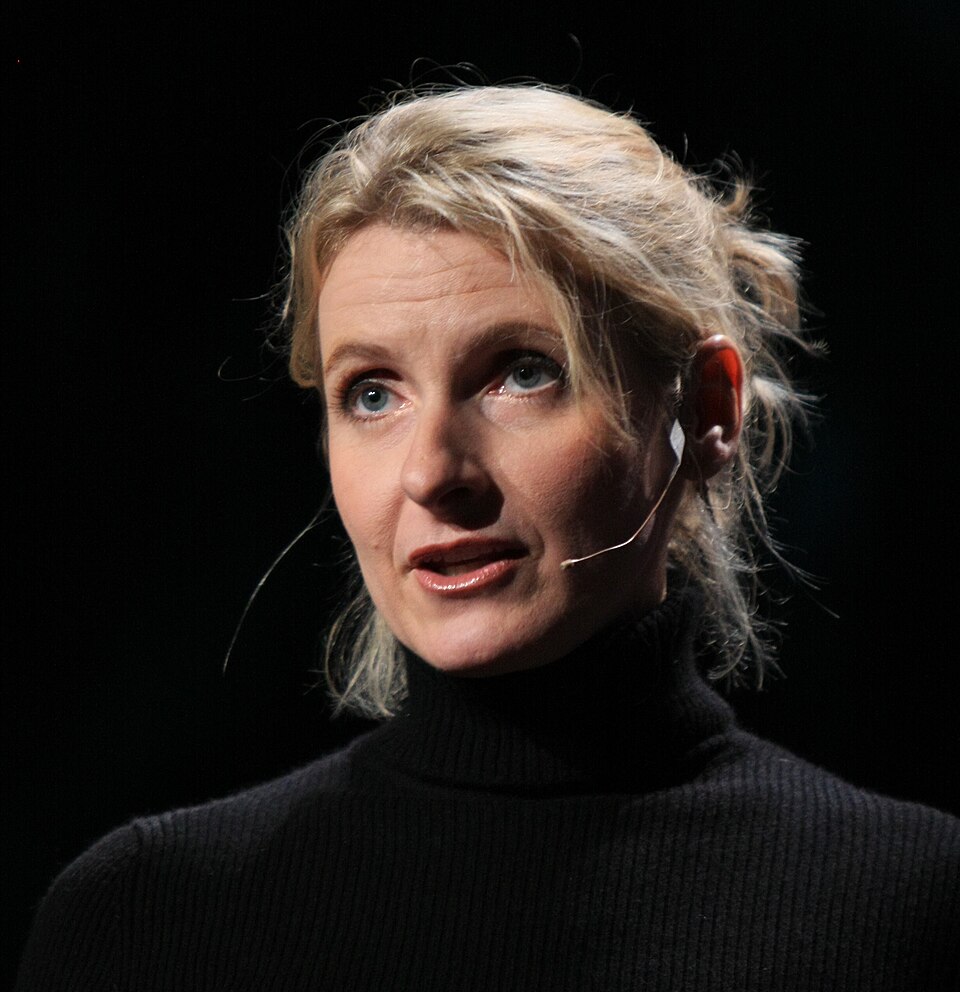
Elizabeth Gilbert
Elizabeth Gilbert
Sep 13, 2025
7 min read
Watch · 6

A woman sits in a room filled with professionals her own age at a media event in New York City. She glances around. The observation that strikes her is so systematic, so complete, that it feels impossible she hasn't noticed it before. The men—virtually all of them—sport buzzed heads or baldness. Their faces are unadorned, unretouched. Their clothes are chosen for comfort without apology. They move through the room in a state of unquestioned ease. The women sit differently. Every single one carries expensive hair—straightened, colored, trimmed with precision. Every face bears the carefully applied evidence of "very expensive faces." Their clothes, like their presentations, demand something: attention, maintenance, a particular kind of care. In that moment of pure observation, a realization moves through her with the force of anger. Why should ease belong only to them?

This is the scene that precedes a decision about hair, but it is not really about hair at all.

Read · 4 sections

Why Are Men Allowed to Be Comfortable?

What struck her in that New York room was the recognition of how deeply comfort has been gendered—not as choice, but as entitlement. Men at that table had claimed something that women were still seeking permission to have: the freedom to age visibly, to present simply, to prioritize ease over performance. The men's comfortable clothes weren't a statement; they were simply what men wear. Their natural hair, their unremarkable faces, the absence of anything to prove—these weren't radical choices. They were just allowed.

Elizabeth Gilbert had spent years thinking about shaving her head. She found the aesthetic striking on others, admired the clarity it seemed to represent. But possibility and permission are different currencies. As a public figure accustomed to a particular kind of visibility, she had absorbed a specific script—one she didn't even need to be told because it was simply the atmosphere she'd been breathing: she had to "look a certain way." She had to be "media ready." These weren't external demands shouted at her but absorbed through the sheer weight of existing as a woman required to be agreeable, likable, attractive. She articulated the mechanism with precision: "I'm a love addict. I'm trying to get people to love me, so I'm always trying to look pretty." That admission—that transparent connection between her appearance and the pursuit of approval—exposes the invisible architecture holding gendered performance in place.

The Arithmetic of Gendered Performance

It's not imposed by force but by a thousand tiny acts of internalization. By watching what women are praised for and blamed for. By understanding early that your face and body are currency in a market you did not choose to enter. By learning that comfort—the simple right to be at ease—was something men could have and women could only aspire to.

But something had shifted three years before that New York event. She had made a deliberate choice: celibacy and solitude. For three years, she had stepped outside the machinery of romantic pursuit, outside the endless calibration of her appearance for potential connection, outside the gaze that makes women hyper-aware of their own visibility. That kind of time—deliberately outside the mirror—can clarify things that proximity obscures. In that solitude, something became clear: "I just want to do this. I just want to do this."

Celibacy and solitude aren't typically discussed in terms of liberation from gendered performance, but they create space for a particular kind of honesty. When you remove the context in which appearance becomes currency—when you're not navigating desire, romantic possibility, or the particular exhaustion of being perpetually on display—what remains? What do you actually want for yourself?

What Claiming Comfort Actually Means

For her, after three years of living outside that framework, the answer was simple: the freedom to shave her head and claim the ease that came with it. Not as a gesture, not as a political statement performed for others, but as a simple reclamation of comfort for herself.

When the moment came at that New York event, it was not intellectual. It was rage. She looked around and saw the arithmetic clearly laid out: Why are men allowed to be comfortable? Why are men allowed to age naturally? Why are men just allowed to be at ease? And then, crucially, she did not wait for the answer or for permission. She did not wait for culture to shift, for beauty standards to evolve, for institutions to grant her what should never have been withheld. Instead, she made a choice that was simultaneously simple—a haircut—and enormous: "I can just claim that entitlement for myself. I'm not going to wait for the culture to change. I'm going to be as comfortable as a man."

This is what makes the decision radical. It is not an act of rebellion performed for an audience. It is an act of reclamation—claiming something that should never have required claiming in the first place. The shaved head is the visible symbol, but the real shift is in the assertion of a simple right: the right to ease, to natural presentation, to the kind of unthinking comfort that men move through the world assuming is theirs by default.

What's particularly striking in her analysis is the precision with which she identifies the cost of compliance. She doesn't speak in vague terms about "beauty standards." She speaks as someone who has paid the price in full—the straightening, the coloring, the trimming, the face work, the uncomfortable clothes. She knows exactly what these performances cost: not just in money but in attention, in labor, in the constant mental arithmetic of maintenance. She has lived inside that system long enough to recognize it completely, which may be why she was able to exit it without apology or explanation.

The act of shaving one's head—particularly as a woman, particularly as a public figure—carries meaning precisely because it rejects the visual language women are taught is required of them. It says: I do not have to be pretty for you. I do not have to be easy on your eyes. I have claimed the right that men take for granted simply to exist without performance, to move through the world without making apologies for what they look like.

This is not a story about vanity or self-care or a makeover narrative. It is a story about who gets to be comfortable in their own life and who has to earn that comfort through constant labor. It is about recognizing a pattern so normalized it's nearly invisible—the gendered division not just of beauty work but of ease itself—and deciding, unilaterally, that you will no longer participate in that arrangement.

The insight came not from rejection of beauty or femininity but from the clarity of observation. In that New York room, she saw what the system actually looks like when it's laid bare—the contrast between how men and women at the same table are permitted to exist. And she chose to claim something she'd been taught was not available to her: the right to comfort, the right to simplicity, the right to ease. Not as a woman performing liberation for others' consumption, but as a human being deciding that she would finally allow herself what she'd always believed others deserved.

Where to go from here

The question her decision raises for anyone watching is simple: What are you waiting permission to claim? What comfort, what ease, what simple right to exist without performance have you deferred until culture changes or circumstances align? What would it mean to claim it now, unilaterally, for yourself?


Comments

Loading the conversation…

Transcript

[0:00] And the hair,

[0:02] >> well, the hair was I've been dreaming

[0:06] about doing this for years. I think it's

[0:08] really cool when women have shaved

[0:09] heads. And um and I was always like, I

[0:12] can't do it. I'm a public figure. I've

[0:14] got to look a certain way. I've got to

[0:15] be media ready. Uh I have to and I also

[0:18] I'm a love addict. I'm trying to get

[0:19] people to love me, so I'm always trying

[0:20] to look pretty. Yeah. Right. And

[0:22] somewhere about 3 years into being

[0:25] celibate and being on my own, I was

[0:27] like, I just want to do this. like I

[0:30] just want to do this. And the final

[0:32] moment of it that made me do it was that

[0:34] I was at an event in New York City, um a

[0:36] media event with a lot of people around

[0:37] my age, our age, and I looked around the

[0:39] room and every single one of the men had

[0:42] buzzed hair or they were bald or they

[0:44] were graying, short short hair. They all

[0:46] had natural faces and they were all

[0:49] wearing comfortable clothes. And every

[0:51] single one of the women had some kind of

[0:53] pretty girl hair that I know how much it

[0:54] costs. I can price it out. Like I know

[0:56] how much it cost to get that

[0:57] straightened to get that bl cuz I used

[0:59] to do all that stuff.

[0:59] >> Colored

[1:00] >> colored trimmed. They all had very

[1:02] expensive hair.

[1:03] >> They had very expensive faces.

[1:05] >> Like I could see what they were doing to

[1:07] their faces. And I know cuz I did all

[1:08] that, too. And they were wearing very

[1:10] uncomfortable clothes. And I had this

[1:12] moment of rage where I looked around the

[1:13] room and I'm like, "Why are men allowed

[1:15] to be comfortable? Why are men allowed

[1:16] to age naturally? And why are men just

[1:18] allowed to be at ease?" And then I was

[1:19] like, well, I could just sit here

[1:21] complaining about unfair beauty

[1:22] standards, or I can just claim that

[1:24] entitlement for myself

[1:26] >> and just say, I'm not going to wait for

[1:27] the culture to change. I'm going to be

[1:29] as comfortable as a man.

[1:31] [Music]

Elizabeth Gilbert
ArtistElizabeth Gilbert

American author whose 2006 memoir Eat Pray Love — a year-long journey through Italy, India, and Indonesia in search of pleasure, devotion, and balance — became one of the most-read…

View profileWebsite
Explore Topics
Shaved-head-womenGender-beauty-standardsComfort-resistanceGendered-performanceAppearance-politics

Got Questions?

Frequently Asked Questions

She'd harbored the desire for years but felt constrained by her public image and her drive for approval. After three years of celibacy and solitude, she attended a media event where she observed men with natural hair and comfortable clothes while women maintained expensive appearances and wore restrictive garments—a contrast that sparked her decision to claim the ease men take for granted.
It means asserting the right to natural aging, simple presentation, and ease as your birthright—not something to earn through appearance work. For her, shaving her head represented choosing her own comfort over the perpetual labor of gendered performance.
Stepping outside the romantic marketplace removes appearance as currency. Her three years of intentional solitude allowed her to distinguish between what she actually wanted and what she believed she was supposed to want—a clarity that made the decision to shave feel simple and true.
Men wear what's comfortable and age visibly without apology, while women invest in expensive hair maintenance, face work, and uncomfortable clothing. This gendered labor division—who gets to be at ease—is so normalized it often goes unnoticed until directly observed.
Yes, when it represents deliberate rejection of the visual language society demands from women and asserts the right to comfort that men assume they deserve. What matters is the act of claiming it without waiting for permission.
Beauty maintenance operates within systems of gendered performance, doing work to maintain approval. Radical self-care means claiming what you believe you deserve—comfort, ease, natural presentation—and acting on it immediately rather than deferring until culture evolves.

Continue Reading

More from Elizabeth

View All
The Hidden Addiction: When Love Becomes a Substance
Inspire

The Hidden Addiction: When Love Becomes a Substance

A beloved author discovers she's been using people the way others use cocaine. In a new memoir, she reckons with the addiction nobody names.…

1 min read
Love Addiction Unmasked: When Devotion Becomes Disease
Inspire

Love Addiction Unmasked: When Devotion Becomes Disease

The author of 'Eat, Pray, Love' seemed to have it all figured out. Her brutally honest new memoir reveals she was struggling with love addic…

1 min read
Minimal Vocalization as Spiritual Practice: Power in Simplicity
Inspire

Minimal Vocalization as Spiritual Practice: Power in Simplicity

A brief live vocal interlude demonstrates how devotional sound—stripped to its essence—can invoke presence and transformation through pure r…

1 min read
Govinda Jaya: How Sacred Sound Awakens the Heart
Inspire

Govinda Jaya: How Sacred Sound Awakens the Heart

Radhika Das channels the liberating power of mantra through a luminous kirtan performance at Medicine Festival, invoking divine names to pur…

1 min read

Keep exploring

Continue your journey

More wisdom and gatherings from across the BrightStar directory.

More Articles

Browse the full library of teachings, interviews, and guides.

Back to all articles →

Teachers & Artists

Explore the lineages, musicians, and guides of the conscious world.

Explore artists →

Find an Event

Kirtan, retreats, sound baths, breathwork, festivals — happening soon.

Browse events →