BrightStar

Browse All Events

Discover conscious gatherings

events

Yoga
Meditation
Breathwork
Qigong
Tai Chi
Sacred Music
World Music
Medicine Music
Sound Healing
Ecstatic Dance
Popular Destinations
BaliSedonaLos AngelesCosta RicaNew YorkSan FranciscoAustinMiamiJoshua TreeTulum
View All CategoriesView All Destinations

Explore All Features

Powerful tools to grow your events

Platform Features

Smart Dynamic Pricing
Ticket Categories
Assigned Seating
Abandoned Cart Recovery
Visitor Recovery
Donations & Sliding Scale
Affiliate Engine
Ticket Scanner
Coupon Codes
Custom Questions
Ticket Sharing
Upsells & Add-ons
Analytics & Reporting
Email Sequences
Waitlist / Notify / Remind
People & Places
Artists & TeachersEvent OrganizersVenues & StudiosKnowledge BaseGlossaryInspiration
View All FeaturesAbout Us
PricingBlog
Language
Saved events
Browse All Events

events

YogaMeditationBreathworkQigongTai ChiSacred MusicWorld MusicMedicine Music

Popular Destinations

BaliSedonaLos AngelesCosta RicaNew YorkSan Francisco

People & Places

Artists & TeachersEvent OrganizersVenues & StudiosKnowledge BaseGlossaryInspiration

Platform Features

Smart Dynamic PricingTicket CategoriesAssigned SeatingAbandoned Cart RecoveryVisitor RecoveryDonations & Sliding ScaleAffiliate EngineTicket ScannerCoupon CodesCustom QuestionsTicket SharingUpsells & Add-onsAnalytics & ReportingEmail SequencesWaitlist / Notify / Remind
View All FeaturesAbout Us
PricingBlog
Log inFind EventsHost Events
  • Browse All Events
  • For Seekers
  • Yoga
  • Meditation
  • Breathwork
  • Qigong
  • Tai Chi
  • Sacred Music
  • World Music
  • Medicine Music
  • Sound Healing
  • Ecstatic Dance
  • Retreats
  • Workshops
  • All Categories →
  • Bali
  • Sedona
  • Los Angeles
  • Costa Rica
  • Tulum
  • Byron Bay
  • San Francisco
  • Austin
  • New York
  • San Diego
  • Denver
  • Seattle
  • Portland
  • Miami
  • All Cities →
  • Join the Movement
  • Sell Globally
  • For Creators
  • For Teams
  • For Writers
  • For Teachers
  • For Kirtan Artists
  • For Studios
  • For Festivals
  • For Retreat Centers
  • For Nonprofits
  • Brand Ambassador
  • Case Studies
  • Free Ticketing
  • Elevate
  • Amplify
  • 500K+ Buyer Network
  • Abandoned Cart Recovery
  • Smart Dynamic Pricing
  • Ticket Categories
  • Recurring Events
  • Assigned Seating
  • Affiliate Engine
  • Waitlist / Notify
  • Ticket Scanner
  • Embed Widget
  • Event Syndication
  • Message Center
  • Integrations
  • Reports
  • All Features →
  • About
  • The Ecosystem
  • Blog
  • Glossary
  • Inspiration
  • Help Center
  • Contact
  • API Docs
  • Brand Assets
  • Careers
  • Press
  • Terms of Service
  • Privacy Policy

Events

  • Browse All Events
  • For Seekers
  • Yoga
  • Meditation
  • Breathwork
  • Qigong
  • Tai Chi
  • Sacred Music
  • World Music
  • Medicine Music
  • Sound Healing
  • Ecstatic Dance
  • Retreats
  • Workshops
  • All Categories →

Destinations

  • Bali
  • Sedona
  • Los Angeles
  • Costa Rica
  • Tulum
  • Byron Bay
  • San Francisco
  • Austin
  • New York
  • San Diego
  • Denver
  • Seattle
  • Portland
  • Miami
  • All Cities →

For Creators

  • Join the Movement
  • Sell Globally
  • For Creators
  • For Teams
  • For Writers
  • For Teachers
  • For Kirtan Artists
  • For Studios
  • For Festivals
  • For Retreat Centers
  • For Nonprofits
  • Brand Ambassador
  • Case Studies
  • Free Ticketing
  • Elevate
  • Amplify

Features

  • 500K+ Buyer Network
  • Abandoned Cart Recovery
  • Smart Dynamic Pricing
  • Ticket Categories
  • Recurring Events
  • Assigned Seating
  • Affiliate Engine
  • Waitlist / Notify
  • Ticket Scanner
  • Embed Widget
  • Event Syndication
  • Message Center
  • Integrations
  • Reports
  • All Features →

Company

  • About
  • The Ecosystem
  • Blog
  • Glossary
  • Inspiration
  • Help Center
  • Contact
  • API Docs
  • Brand Assets
  • Careers
  • Press
  • Terms of Service
  • Privacy Policy
BrightStar
© 2026 BrightStar. All rights reserved.
Inspiration

Childhood Trauma and Addiction: Why It's Not a Choice

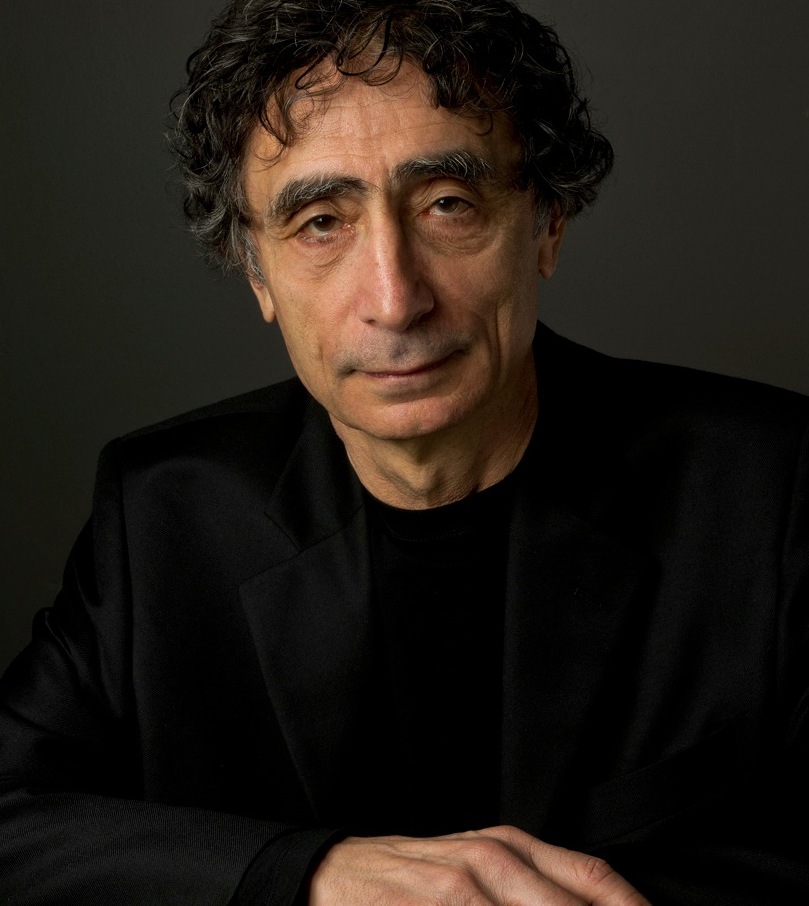
Gabor Mate
Gabor Mate
Jan 19, 2021
8 min read
Watch · 6

Addiction is not a brain disorder, a choice, or a substance problem—it is a learned survival strategy in response to childhood trauma. When children face a conflict between staying attached to caregivers and being authentic to themselves, they suppress their emotions and disconnect from their bodies. This creates a void that later behaviors—whether substance use, gambling, shopping, or work—attempt to fill temporarily while causing long-term damage. Recovery is not about willpower but about reconnecting with the body, emotions, and the sense of self that was lost during childhood adaptation.

Read · 7 sections

What Is Addiction Actually?

The conventional definition of addiction is narrow and substance-focused, but this misses the core mechanism. Addiction, as defined by its universal structure, is "any behavior a person enjoys, finds relief in, and therefore craves in the short term but suffers negative consequences in the long term and doesn't give up despite the negative consequences" (0:14s). Notice that this definition includes no reference to drugs, alcohol, or any specific substance.

This means addiction can manifest through cocaine, heroin, or fentanyl, but also through gambling, internet use, relationships, shopping, eating, work, extreme sports, or pornography. The addiction is not the substance or behavior itself—it is the pattern of using something external to manage internal pain while ignoring the mounting damage that follows.

The American Society for Addiction Medicine frames addiction as a primary brain disorder arising "largely due to genetic reasons" (0:69s). Others argue it is simply a choice—a moral failing. Both perspectives are incomplete. The legal system, in particular, has built punishment around the idea of choice: "if people are not choosing, what are we punishing them for?" (0:89s). But this misses the actual architecture of addiction, which is rooted much earlier, in how children learn to survive within their families.

The Two Fundamental Human Needs in Childhood

Human beings have two core survival needs beyond basic physical sustenance, both of which are established in infancy and childhood. The first is attachment.

Attachment is "the closeness and proximity with another human being for the sake of being looked after or for the sake of looking after the other" (0:115s). Like all mammals—and even birds—humans are creatures of attachment. We cannot survive without someone motivated to care for us. The human infant is "the most hopeless, the most dependent, the least mature of any creature in the universe at birth" (0:196s). This dependency continues "well into adolescence and beyond" (0:208s). Attachment is not negotiable; it is the condition for survival itself.

The second need is authenticity. Authenticity means "being connected to ourselves, just knowing what we feel and being able to act on it" (0:221s). This is not a luxury or a personality trait—it is a survival mechanism. Humans evolved in the wild for hundreds of thousands of years. "Just how long do you survive in the wild if you're not connected to your gut feelings? Not very long. If you start using your intellect instead of your gut feelings, you just don't survive" (0:251s). Gut feelings—the body's immediate, intuitive wisdom—kept our ancestors alive. Authenticity, therefore, is also a survival need.

The Tragic Conflict: When Authenticity Threatens Attachment

What happens when these two needs collide? In most families, they do. Consider a two-year-old who gets angry because she wants a cookie before dinner. Her parents, having grown up in homes with rage and alcoholism, are terrified of anger. They cannot tolerate their child's authentic expression. They send a message: "good little kids don't get angry" (0:288s).

But the child does not receive this as a behavioral instruction. She receives it as: "angry little kids don't get loved" (0:293s). Her parents become "sullen, they won't look at you, they talk to you in a harsh way. You're not getting loved, not experiencing love at that moment" (0:297s). So the child faces an impossible choice: stay attached (suppress the anger) or stay authentic (risk abandonment).

The child chooses attachment. She suppresses her anger, her sadness, her fear, her joy—whatever authentic feeling threatened connection. This happens repeatedly across years. "Guess what you're going to suppress the authenticity every time. And this is how we lose connection to ourselves and to our gut feelings" (0:306s).

This dynamic, which would be essential for survival in a natural setting, becomes a liability in modern life. In the wild, suppressing gut feelings kills you. In a conflicted family, suppressing authenticity keeps you alive. But as an adult, you carry forward this learned pattern: authentic self-expression feels like a threat to connection, so you stay disconnected from yourself. "Then we wonder who the hell we are and whose life is this and who's experiencing all this" (0:327s).

How Childhood Disconnection Creates Vulnerability to Addiction

Addiction emerges from this foundational disconnection. The mechanism is physiological as well as psychological. Endorphins—the body's internal opiate chemicals—play a crucial role in facilitating attachment. In animal studies, "if you take infant mice and you knock out their endorphin receptors so they don't have endorphin opiate activity in their brain, they won't cry for help and separate from their mothers, which wouldn't mean that they would die in the wild" (0:162s). Endorphins are literally how attachment happens in the body.

When a child experiences chronic stress and trauma, "these endorphin systems don't develop" (0:176s). Later, when that adult tries heroin, "it feels like a warm soft hug to them. They feel love and connection for the first time. That's why it's so powerful" (0:180s). The drug is not providing pleasure in the abstract sense—it is providing the biological sensation of being held, loved, and connected that should have been wired into the nervous system during childhood but was interrupted by trauma.

The same logic applies to behavioral addictions. Someone addicted to work, approval, or achievement is seeking the feeling of being valued, of mattering, of being held in someone's regard—feelings that were either absent or conditional during childhood. Someone addicted to relationships is seeking the intimacy that never felt safe enough to access. Someone addicted to food, shopping, or internet use is seeking the soothing, the sense of care, the temporary reprieve that should have been available in the body but is not.

Addiction is not a primary brain disorder or a choice. It is a solution to a problem. The addiction "does temporarily" soothe the pain of disconnection "while it creates even more problems in the long term" (0:360s).

What Trauma Actually Is

People often confuse the events that cause trauma with trauma itself. "People often think that trauma is what happens to you—so trauma is a divorce when you're small, your parents fighting, your mother's depression, your father's alcoholism, physical or sexual abuse, or some loss. Those aren't the traumas; those are traumatic. But the trauma is not what happens to you; the trauma is what happens inside you" (0:354s).

Trauma, then, is the interior effect of overwhelming events. It manifests as disconnection from emotions, disconnection from the body, difficulty being present, a negative view of the world, a negative view of self, and defensive postures toward others. These patterns "keep showing up in your life in the present" (0:342s), even decades later, shaping how you relate, what you seek, and how you suffer.

Why Recognition Alone Is Not Enough

Many people understand intellectually that their addiction stems from childhood pain. But intellectual understanding does not transform the pain. "It's one thing to recognize that all this originates in childhood pain. It's quite another to transform that pain" (0:354s). The difference lies in where the work happens.

The body holds the trauma. The emotions were suppressed into the body. The disconnect is a full-body-and-nervous-system phenomenon. So the healing cannot happen only in the mind. It requires "reconnecting with your body, primarily, and with your emotions that you lost" (0:338s). You have to find yourself again—the part of you that was alive, feeling, present, and whole before the conflict between attachment and authenticity forced you to split.

This is what recovery means: "to recover something means to find it again. What do people find when they recover? They find themselves. The loss of self is the essence of trauma" (0:338s). The goal of addiction treatment, mental health treatment, and any real healing is reconnection: "The real purpose of any healing is reconnection" (0:338s).

Where to Go From Here

If you recognize patterns of addiction or disconnection in your own life, consider three steps:

  • Identify what you're actually seeking. What feeling, state, or sensation does the addictive behavior provide? Safety? Love? Numbness? Vitality? The answer points to what was unmet in childhood.
  • Notice the body's signals. Start paying attention to what your gut feelings are telling you before your intellect overrides them. This is the beginning of restoring connection to authentic self.
  • Seek relationships and environments where authenticity can coexist with attachment. Healing happens in connection, not isolation. Find people and communities where you can be fully yourself and still be held, valued, and loved.

Recovery is not about willpower over addiction. It is about understanding the wound addiction is trying to heal, and healing the wound properly—through reconnection with your body, your emotions, and your true self.

Comments

Loading the conversation…

Transcript

[0:09] so an addiction is a complex  psychological physiological process  

[0:14] but which manifests in any behavior any behavior  that a person enjoys that a person enjoys  

[0:21] finds relief in and therefore craves in the short  term but suffers negative consequences in the long  

[0:27] term and doesn't give up despite the negative  consequences. So craving pleasure relief in  

[0:32] the short term negative consequences in the long  term inability to give it up. Now notice I said  

[0:38] nothing about substances. I said any behavior so  it could be related to cocaine crystal meth heroin  

[0:44] fentanyl marijuana nicotine alcohol whatever  could also be sex gambling internet relationships  

[0:52] shopping eating work extreme sports working out  pornography any number of human activities so  

[1:02] i said any behavior now the official definition  of addiction according the american society for  

[1:09] addiction medicine is that this is primary uh it's  a primary brain disorder it arises in the brain  

[1:17] largely due to genetic reasons this is how they  see it and i say that's just not true the other  

[1:25] popular idea about addiction is that it's a  choice that somebody makes that people choose  

[1:29] to be addicted which is what the legal system is  based on because if people are not choosing what  

[1:34] are we punishing them for and and although i think  the medical definition is closer to the truth  

[1:42] i don't see it as genetic it's a genetic  disorder and i don't see it as a primary  

[1:46] brain disorder so let me perhaps show  you why if that's okay a human being has  

[1:51] two fundamental needs apart from the  physical needs in infancy in childhood  

[1:55] one is for attachment now attachment is the  closeness and proximity with another human being  

[2:02] for the sake of being looked after or  for the sake of looking after the other  

[2:07] human beings as mammals and even birds are  creatures of attachment we have to connect  

[2:13] and attach because otherwise we don't survive if  there's nobody that's motivated to take care of us  

[2:18] to attach to us that way and if not motivated  to attach to others we just can't survive

[2:26] one of these things is that the endorphins  which um the embodies internal opiate chemicals  

[2:34] which heroin and all the other opiates  resemble they have to facilitate attachment  

[2:42] so if you take infant mice and you knock out  their endorphin receptors so they don't have  

[2:47] endorphin opiate activity in  their brain they won't cry for  

[2:50] help and separate from their mothers which  wouldn't mean that they would die in the wild  

[2:56] and which goes back to what happens in early  in childhood when their stress and trauma  

[3:00] these these endorphin systems don't develop and  then when people do heroin it feels like a warm  

[3:06] soft hug to them they feel love and connection  for the first time that's why it's so powerful

[3:12] but so we have this need for attachment we  thought which obviously the hearing infant  

[3:16] was the most hopeless the most dependent the least  mature of any creature in the universe at birth  

[3:22] uh cannot survive without the attachment and that  attachment relationship given that we have the  

[3:28] longest period of development of any creature  you know well into adolescence and and beyond

[3:36] attachment is not a negotiable need

[3:41] but we have another need which is authenticity  now authenticity auto self means being connected  

[3:46] to ourselves just knowing what we feel and being  able to act on it so that means our gut feelings  

[3:53] so let's look at how human beings evolved for  hundreds of thousands of years and for a hundred  

[3:58] thousand years or so of this species existing on  earth how did we live we didn't live in cities and  

[4:04] houses and so on we lived there out there in the  wild until very recently in human um existence now  

[4:11] just how long do you survive in the wild if you're  not connected to your gut feelings not very long  

[4:17] if you start using your intellect instead  of your gut feelings you just don't survive

[4:23] so that's a powerful survival need as  well so attachment is a survival need  

[4:27] authenticity is a survival need but what happens  if your authenticity threatens your attachment  

[4:33] relationships for example as a two-year-old  you get angry because you can get that cookie  

[4:38] before dinner but your parents can't handle anger  because they grew up in homes when there was rage  

[4:44] aholism and they're terrified that they're very  expression of anger so they give you the message  

[4:48] that good little kids don't get angry the  message you receive is not that good little  

[4:53] kids don't get angry but that angry little  kids don't get loved because your parents  

[4:57] are now sullen they won't look at you they talk  to you in a harsh way you're not getting loved  

[5:02] not experiencing love at that moment  no but you got to stay attached  

[5:06] guess what you're going to suppress  the authenticity every time  

[5:10] and this is how we lose connection to ourselves  and to our gut feelings so that strangely enough  

[5:15] that very dynamic which is essential for human  survival in a natural setting not becomes a threat  

[5:20] to our survival in his in this more modern setting  where to stay authentic is to threaten attachment  

[5:27] and so we give up our authenticity and then we  wonder who the hell we are and whose life is this  

[5:32] and who's experiencing all this and this life  doesn't you know and who am i really and so  

[5:38] that's where the reconnection has to happen that's  what the healing happens is with that reconnection  

[5:42] but it's because of that conflict the tragic  conflict in childhood between authenticity  

[5:49] and attachment that most of us face that we lose  ourselves and lose connection to our gut feelings  

[5:54] now this leads to the the question of trauma  because it's one thing to recognize that all this  

[6:00] originates in childhood pain it's quite another  to transform that pain and for that we have to  

[6:07] understand what trauma is so people often think  that trauma is what happens to you so trauma is  

[6:14] a divorce when you're small and your parents  fighting trauma is your mother's depression  

[6:19] trauma is your father's alcoholism trauma is your  parents argumentation trauma is physical or sexual  

[6:27] abuse or some loss those aren't the traumas those  are traumatic but the trauma is not what happens  

[6:34] to you the traumas of what happens inside you and  as a result of these traumatic events what happens  

[6:41] inside you is you get you get disconnected from  your emotions and you disconnect it from your body  

[6:47] and you have difficulty being in the present  moment and you develop a negative view of your  

[6:52] world and a negative view of yourself  and a defensive view of other people  

[6:57] and these perspectives keep showing up in  your life in the present so in other words  

[7:02] the addiction is not the primary problem it's  an attempt to solve a problem and then the real  

[7:06] question is how did the problem arise in other  words this is where my theory is that it's  

[7:12] always rooted in childhood trauma and that the  addiction is an attempt to deal with the effects  

[7:16] of childhood trauma which it does temporarily  while it creates even more problems in the long  

[7:21] term and so the issue is not just to recognize  what happened 10 15 30 however many years ago  

[7:28] but to actually recognize their manifestations  in the present moment and to transcend them and  

[7:34] already do that by reconnecting with yourself by  restoring the connection with your body primarily  

[7:39] and with your emotions that you lost and once  you do when you found these things again then  

[7:46] you have what we call recovery because  what does it mean to recover something  

[7:51] it means to find it again so what does  the people find when they recover they  

[7:56] find themselves and the loss of self is the  essence of trauma so the real purpose of of  

[8:03] addiction treatment mental health treatment  any kind of healing is reconnection

[9:10] you

Gabor Mate
ArtistGabor Mate

Hungarian-Canadian physician known for his work on trauma, addiction, stress, and child development. His teachings connect medical insight with deep psychological and spiritual und…

View profileWebsite
Explore Topics
Childhood-traumaAddiction-recoveryAttachment-authenticityNeurosciencePsychology

Got Questions?

Frequently Asked Questions

According to this framework, addiction is neither purely genetic nor a choice. It is a learned survival strategy rooted in childhood trauma and the suppression of authentic emotions. While brain chemistry is involved, the primary driver is unmet attachment and authenticity needs, not genetic predisposition.
Yes. Addiction can manifest through any behavior that provides short-term relief but long-term harm—gambling, relationships, work, eating, shopping, internet use, exercise, or approval-seeking. The substance or behavior is secondary; the pattern of seeking external soothing for internal pain is what defines addiction.
Heroin mimics endorphins, the body's internal opiates that facilitate attachment and feelings of being held or loved. When childhood trauma disrupts the development of these endorphin systems, heroin can create the sensation of connection and comfort for the first time, making it neurologically and emotionally overwhelming.
When children must suppress their authentic feelings to stay attached to caregivers, they disconnect from their bodies and emotions. This creates a void—a sense of missing self—that later addictive behaviors attempt to fill by providing the soothing, connection, or vitality that should have been available early in life.
Intellectual understanding is a start but not sufficient. Trauma is stored in the body and nervous system, so recovery requires reconnection with the body, emotions, and authentic self—not just cognitive insight. True healing happens through felt experience and relational connection, not analysis alone.
Traumatic events are external—divorce, abuse, loss. Trauma is the internal effect: disconnection from emotions and body, difficulty being present, negative self-view, and defensive relating patterns. These interior effects persist and shape behavior in the present, even if the original event is long past.
Recovery involves three elements: identifying what feeling or state the addiction provides (pointing to unmet childhood needs), reconnecting with your body's gut feelings and authentic signals, and finding relationships where you can be fully yourself while remaining safely attached.

Continue Reading

More from Gabor

View All
Reclaim Playfulness: Why We Sacrifice Joy for Success
Inspire

Reclaim Playfulness: Why We Sacrifice Joy for Success

Dr. Gabor Maté uses Winnie the Pooh to reveal how we sacrifice playfulness and presence for achievement, and how to reclaim the Enchanted Fo…

1 min read
How Childhood Trauma Shapes Adult Behavior and Worldview
Inspire

How Childhood Trauma Shapes Adult Behavior and Worldview

Childhood trauma, especially from harsh or psychopathic parents, creates unconscious defensive patterns that shape how people interpret real…

1 min read
Dark Night of the Soul: The Awareness Practice That Begins in Despair
Inspire

Dark Night of the Soul: The Awareness Practice That Begins in Despair

Most wisdom about the dark night comes from those who've emerged. This teaching is for being caught in it: a practice of witnessing that beg…

1 min read
Inner Refuge of Calm: Finding Stillness Within
Inspire

Inner Refuge of Calm: Finding Stillness Within

A guided meditation practice for discovering an inner refuge of calm beneath life's surface turbulence. Learn how to cultivate presence thro…

1 min read

Keep exploring

Continue your journey

More wisdom and gatherings from across the BrightStar directory.

More Articles

Browse the full library of teachings, interviews, and guides.

Back to all articles →

Teachers & Artists

Explore the lineages, musicians, and guides of the conscious world.

Explore artists →

Find an Event

Kirtan, retreats, sound baths, breathwork, festivals — happening soon.

Browse events →