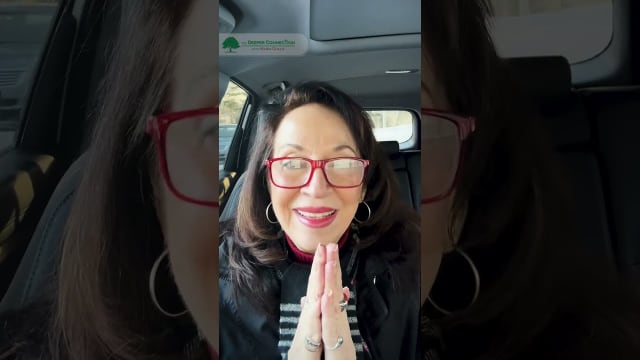
Centering Prayer is presented here as a way out of the noise. Maria Gullo's video, published on her channel The Deeper Connection in July 2018 and running just under three minutes, is titled "Transform Your Life Through Centering Prayer," and its framing is compact: contemplative prayer, and Centering Prayer in particular, is offered as a way to live in the peace of Christ, a peace the description says surpasses all circumstances. That is the whole of the claim the published material makes. The video itself is a brief, spoken introduction, and this article works from that framing rather than from a full transcript of the teaching.
The clearest statement available is the one in the video's own description, which reads: "There is a way to live outside of the chaos of the world. Contemplative Prayer and more specifically Centering Prayer is the way to live in the Peace of Christ, the peace that surpasses all circumstances."
"There is a way to live outside of the chaos of the world." (Maria Gullo, video description, The Deeper Connection, July 2, 2018)
Notice the structure of that sentence. It does not begin with a technique. It begins with a problem, the chaos of the world, and only then names a response. Centering Prayer is positioned as an answer to a condition most people recognize: a life pulled in many directions at once. The second claim is more specific. The peace being described is not the peace that arrives when conditions improve. It is "the peace that surpasses all circumstances," a phrase that places the source of calm outside the shifting details of a person's day.
The description uses two overlapping terms, "Contemplative Prayer" and, more narrowly, "Centering Prayer." Contemplative prayer is the broader category; Centering Prayer is the specific practice the video names in its title. The distinction is worth holding onto, because the title promises transformation through one particular practice, not through prayer in general. The description does not spell out the steps of that practice, and it would be a mistake to fill that gap from memory. What it does establish is the goal: a way of living rooted in peace rather than reactive to events.
Honestly, not a full method. The transcript supplied for this video is largely unreadable, a run of fragments and mixed-language noise with no sentences that can be reliably quoted or summarized. Any article claiming to know the video's instructions, examples, or stories would be inventing them. What survives is the orientation: prayer as a way to step out of the world's chaos and into a peace the teaching ties to Christ and to circumstances that cannot reach it.
For a reader who wants to go deeper, that orientation is a useful place to start. Ask what "chaos" means in your own week. Ask whether your sense of calm depends on conditions staying favorable. The video's claim is that contemplative prayer offers a different foundation. Testing that claim requires the practice itself, not an article about it.
Watch the video directly for the speaker's own wording, which is the only reliable source for how she frames the practice. Read the description alongside it, since that is where the central claim is stated in full. If you are new to contemplative prayer, look for a teacher or a established community that can show you the practice in person, because a short introduction can point the way but cannot replace instruction. The promise on the page is peace that surpasses circumstances. The work is in finding out whether that peace is available to you, and that is best approached as a practice rather than a read.