BrightStar

Browse All Events

Discover conscious gatherings

events

Yoga
Meditation
Breathwork
Qigong
Tai Chi
Sacred Music
World Music
Medicine Music
Sound Healing
Ecstatic Dance
Popular Destinations
BaliSedonaLos AngelesCosta RicaNew YorkSan FranciscoAustinMiamiJoshua TreeTulum
View All CategoriesView All Destinations

Explore All Features

Powerful tools to grow your events

Platform Features

Smart Dynamic Pricing
Ticket Categories
Assigned Seating
Abandoned Cart Recovery
Visitor Recovery
Donations & Sliding Scale
Affiliate Engine
Ticket Scanner
Coupon Codes
Custom Questions
Ticket Sharing
Upsells & Add-ons
Analytics & Reporting
Email Sequences
Waitlist / Notify / Remind
People & Places
Artists & TeachersEvent OrganizersVenues & StudiosKnowledge BaseGlossaryInspiration
View All FeaturesAbout Us
PricingBlog
Language
Saved events
Browse All Events

events

YogaMeditationBreathworkQigongTai ChiSacred MusicWorld MusicMedicine Music

Popular Destinations

BaliSedonaLos AngelesCosta RicaNew YorkSan Francisco

People & Places

Artists & TeachersEvent OrganizersVenues & StudiosKnowledge BaseGlossaryInspiration

Platform Features

Smart Dynamic PricingTicket CategoriesAssigned SeatingAbandoned Cart RecoveryVisitor RecoveryDonations & Sliding ScaleAffiliate EngineTicket ScannerCoupon CodesCustom QuestionsTicket SharingUpsells & Add-onsAnalytics & ReportingEmail SequencesWaitlist / Notify / Remind
View All FeaturesAbout Us
PricingBlog
Log inFind EventsHost Events
  • Browse All Events
  • For Seekers
  • Yoga
  • Meditation
  • Breathwork
  • Qigong
  • Tai Chi
  • Sacred Music
  • World Music
  • Medicine Music
  • Sound Healing
  • Ecstatic Dance
  • Retreats
  • Workshops
  • All Categories →
  • Bali
  • Sedona
  • Los Angeles
  • Costa Rica
  • Tulum
  • Byron Bay
  • San Francisco
  • Austin
  • New York
  • San Diego
  • Denver
  • Seattle
  • Portland
  • Miami
  • All Cities →
  • Join the Movement
  • Why we list
  • Sell Globally
  • For Creators
  • For Teams
  • For Writers
  • For Teachers
  • For Kirtan Artists
  • For Studios
  • For Festivals
  • For Retreat Centers
  • For Nonprofits
  • Brand Ambassador
  • Case Studies
  • Free Ticketing
  • Elevate
  • Amplify
  • 500K+ Buyer Network
  • Abandoned Cart Recovery
  • Smart Dynamic Pricing
  • Ticket Categories
  • Recurring Events
  • Assigned Seating
  • Affiliate Engine
  • Waitlist / Notify
  • Ticket Scanner
  • Embed Widget
  • Event Syndication
  • Message Center
  • Integrations
  • Reports
  • All Features →
  • About
  • The Ecosystem
  • Blog
  • Glossary
  • Inspiration
  • Help Center
  • Contact
  • API Docs
  • Brand Assets
  • Careers
  • Press
  • Terms of Service
  • Privacy Policy

Events

  • Browse All Events
  • For Seekers
  • Yoga
  • Meditation
  • Breathwork
  • Qigong
  • Tai Chi
  • Sacred Music
  • World Music
  • Medicine Music
  • Sound Healing
  • Ecstatic Dance
  • Retreats
  • Workshops
  • All Categories →

Destinations

  • Bali
  • Sedona
  • Los Angeles
  • Costa Rica
  • Tulum
  • Byron Bay
  • San Francisco
  • Austin
  • New York
  • San Diego
  • Denver
  • Seattle
  • Portland
  • Miami
  • All Cities →

For Creators

  • Join the Movement
  • Why we list
  • Sell Globally
  • For Creators
  • For Teams
  • For Writers
  • For Teachers
  • For Kirtan Artists
  • For Studios
  • For Festivals
  • For Retreat Centers
  • For Nonprofits
  • Brand Ambassador
  • Case Studies
  • Free Ticketing
  • Elevate
  • Amplify

Features

  • 500K+ Buyer Network
  • Abandoned Cart Recovery
  • Smart Dynamic Pricing
  • Ticket Categories
  • Recurring Events
  • Assigned Seating
  • Affiliate Engine
  • Waitlist / Notify
  • Ticket Scanner
  • Embed Widget
  • Event Syndication
  • Message Center
  • Integrations
  • Reports
  • All Features →

Company

  • About
  • The Ecosystem
  • Blog
  • Glossary
  • Inspiration
  • Help Center
  • Contact
  • API Docs
  • Brand Assets
  • Careers
  • Press
  • Terms of Service
  • Privacy Policy
BrightStar
© 2026 BrightStar. All rights reserved.
Inspiration

Buteyko Nose Unblocking: The Breath-Hold Method Explained

Patrick McKeown
Patrick McKeown
Nov 21, 2015
8 min read
Watch · 6

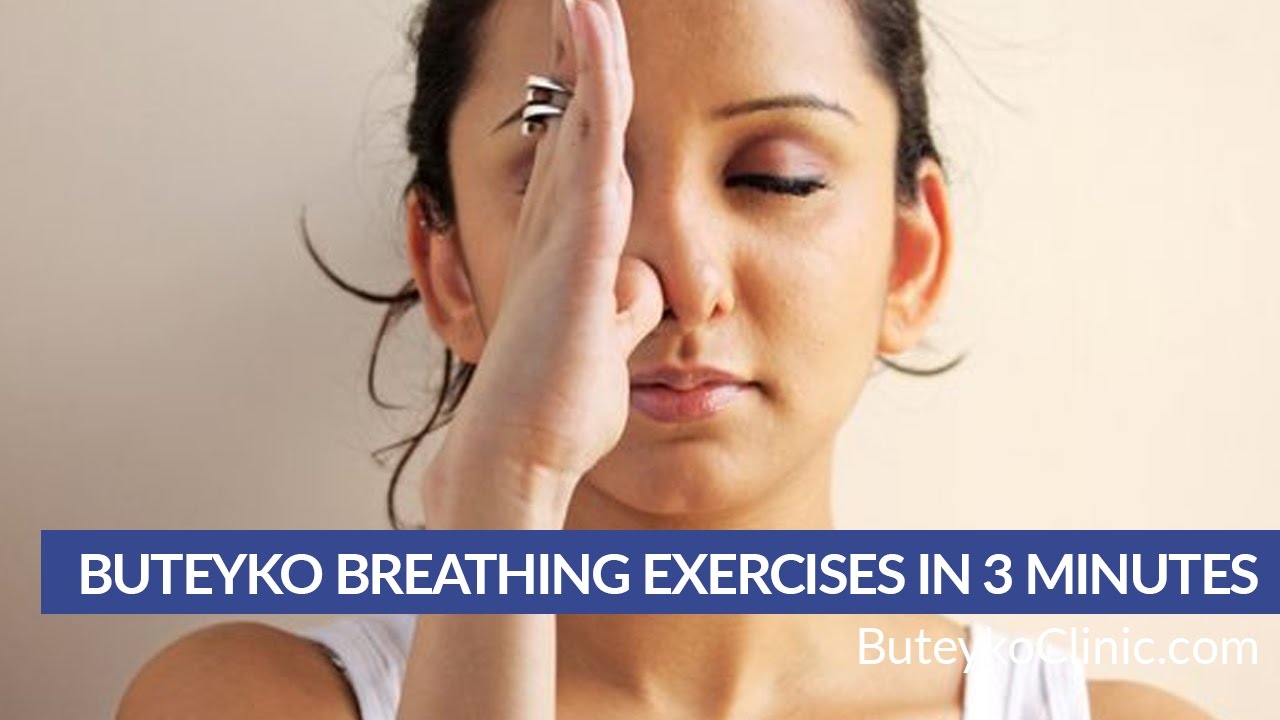
On screen, Patrick McKeown asks you to try something that sounds like a dare. Take a small breath in through the nose, a small breath out, pinch the nostrils shut, and nod your head gently while you hold. Keep holding until you feel a strong need for air, let go, calm your breathing at once, wait about a minute, and go again. Five or six rounds, he says, and the nose should be open. This eleven-and-a-half-minute video from Buteyko Clinic International is a demonstration of the first exercise McKeown uses with almost everyone, and it doubles as a short case for why nasal breathing matters more than most people assume. Along the way it raises a theory about nitric oxide that McKeown himself admits nobody has fully pinned down.

Read · 7 sections

Why start with a breath hold instead of a decongestant?

McKeown begins by describing the usual sequence. A person with a stuffed nose goes to the pharmacist for a decongestant, then to a doctor for a nasal steroid, and if the problem persists, may end up facing surgery. He sets his own approach against that path. He says he has used this exercise with thousands of people and that only about ten to twelve were unable to restore nose breathing. He claims it still works with a slight deviated septum, and that small nasal polyps can shrink. Very large polyps are a different matter, and he says those people need to see an ear, nose, and throat specialist.

That claim deserves to be read as what it is: a practitioner's reported experience, not a controlled trial result stated in the video. What the video does give is a clear mechanism to test for yourself, which is more than most advice on congestion offers.

How does the nose-unblocking breath hold actually work?

The sequence is simple, but the details matter. Start with a small, quiet breath in and a small, quiet breath out through the nose. Pinch the nose closed and hold, gently nodding or swaying as you go. The aim is to build what McKeown calls a strong air shortage without forcing it. When you release and resume breathing, breathe only through the nose and bring the volume back toward normal immediately.

The first breath after the hold will usually be bigger than normal, and McKeown tells viewers to suppress the second and third breaths to calm things down. A useful self-check is recovery: you should settle the breath within two to three breaths. If you cannot, you held too long. Rest for a minute or so, then repeat. He suggests five or six rounds, which he estimates at roughly five minutes in total, and says that by the end the nose should be temporarily decongested.

He also advises a small test along the way. Block one nostril and breathe through the other, then switch, to notice which side feels more open. Viewers may feel their diaphragm spasm during a longer hold. McKeown's instruction for that moment is to relax into the body rather than fight it, and to let go when the need to breathe becomes strong.

Note the word "temporarily." McKeown is clear that the breath hold produces a short-term effect. For a more lasting result, he says, the control pause needs to be increased, and for children the work is adjusted differently. The breath hold is, in his framing, the opening move rather than the whole practice.

Who should be careful with this exercise?

This is the part of the video that most viewers should not skip. McKeown names specific groups for whom he would not push the exercise: people with high blood pressure, type 1 diabetes, and cardiovascular issues. His advice for anyone in doubt is blunt: "If in doubt, go easy with the exercises." He describes the practice as safe for the vast majority of people, but powerful enough that holding your breath as long as possible can feel intense.

The practical takeaway is that the goal is not a heroic breath hold. It is a strong but manageable air hunger, followed by a calm recovery. Anyone with a cardiovascular condition or diabetes should check with their own clinician before attempting it.

What does the nose have to do with oxygen?

Before he asks viewers to breathe, McKeown asks them to explore their own anatomy. Drag your tongue along the roof of your mouth from front to back, he says, until you reach the soft palate. The floor of the nasal cavity, in his description, is the roof of the mouth. His reasoning is one of the more striking lines in the video: "nature doesn't waste space." The nasal cavity contains turbinates, and it also releases nitric oxide.

The argument continues from there. As air passes through the nose it picks up moisture, and McKeown says gas exchange, the transfer of oxygen from the lungs into the blood, takes place in the presence of that moisture. He cites an estimate that nasal breathing can improve arterial oxygen uptake by between 10 and 20 percent. He adds that nasal breathing also helps with oxygen delivery to the cells because of carbon dioxide, a point he says he had covered earlier in the series.

"The key is to breathe gently, softly and slowly through the nose. And by that we have to optimize our oxygen uptake."

Patrick McKeown, in the video, around 3:00

The 10-to-20-percent figure is an estimate he attributes to research rather than a finding he demonstrates on screen. Read it as a point in a larger argument about why the nose, not the mouth, should do the work.

What is nitric oxide, and why does it matter here?

Nitric oxide is the video's central mystery and its most ambitious claim. McKeown describes it as a wonderful gas and says that, in 1992, the journal Science called it a molecule of the air. In his telling, it plays a role in opening up blood vessels, in reversing cholesterol and the buildup of plaque, in neurotransmission (how brain cells communicate), and in homeostasis.

He then connects that gas to the exercise itself. His hypothesis is that after you pinch the nose, nitric oxide pools in the nasal cavity, and that this pooling is probably what helps decongest it. He is candid about the limits of his knowledge. "We're not exactly sure how this works," he says. "However, we know it works."

"We're not exactly sure how this works. However, we know it works."

Patrick McKeown, in the video, around 4:10

That honesty is worth noticing. The exercise has a track record in his clinic, and the mechanism is a working hypothesis. Viewers who want to take the nitric oxide idea further should treat it as an open question rather than settled science.

Why does a blocked nose matter beyond stuffiness?

The final section moves from technique to stakes. When someone has a head cold and a stuffed nose, they tend to breathe through the mouth. McKeown's concern is that this lets in unfiltered, cold, dry air, which he says can inflame both the upper and lower airways. He points to people prone to asthma, many of whom also have rhinitis, and argues that learning to breathe through the nose is crucial, because nasal breathing filters and conditions incoming air.

Sleep is the other stake he names. People with a blocked nose, he says, often sleep poorly, wake tired, hold their breath during the night, get up to use the bathroom, and wake with a dry mouth and a stuffed nose. Those with asthma may wake with wheezing or coughing. His conclusion is that breathing through the nose "at all times" is the goal, and the breath hold is a way to restore that habit.

"It's crucial to breathe through the nose at all times."

Patrick McKeown, in the video, around 5:36

Where to go from here

The nose-unblocking exercise is easy to try and easy to overdo, which makes the caution in the video as important as the instructions. If you try it, keep the holds comfortable, follow the two-to-three-breath recovery rule, and stop if you feel unwell. If you have high blood pressure, type 1 diabetes, a cardiovascular condition, or a large nasal polyp, speak with your own clinician first.

For a broader view, the video is most useful as an entry point. McKeown's underlying argument is that nasal breathing governs how we take in air, how we sleep, and how our airways respond to illness. The breath hold is one tool within that larger practice. Treat the five-minute routine as a test of how open your nose is today, and let the rest of the Buteyko material, including the control pause work McKeown mentions, do the longer job.

Comments

Loading the conversation…

Transcript

[0:05] [Music]

[0:07] So the first exercise we talk about is

[0:10] decongesting the nose. And it's very

[0:14] very easy to decongest the nose. You

[0:16] know, usually the treatment for nasal

[0:18] congestion is the person goes to their

[0:21] pharmacist or their drugstore and they

[0:23] get nasal decongestions or then they may

[0:26] go to their doctor, they get nasal

[0:28] steroids, you know, and if it persists,

[0:30] they may end up even having an

[0:32] operation. Whereas I've used this with

[0:34] thousands of people and only about 10 12

[0:37] people was not able to restore nose

[0:39] breathing. Now it works and even if

[0:42] there's a slight deviated septum, it

[0:44] still works. If there's small nasal

[0:46] polyps, we can shrink the polyps. If the

[0:49] polyps are very big, it's difficult. The

[0:51] the individual does have to go to their

[0:53] ear, nose, and throat specialist. The

[0:56] exercise to decongest the nose, gently

[0:58] breathe in through your nose, breathe

[1:00] out through your nose, pinch your nose,

[1:02] nod your head up and down while you hold

[1:04] your breath, hold your breath for a long

[1:06] period of time until you feel a strong

[1:08] air shortage. release your nose and

[1:11] resume breathing through your nose and

[1:13] bring your breathing volume down towards

[1:14] normal. Um, wait about a minute and then

[1:18] repeat again. So basically you hold your

[1:21] breath to establish a strong air

[1:23] shortage, release your nose, calm your

[1:26] breathing. Wait a minute and repeat

[1:28] again and repeat six times. This will

[1:30] take about 5 minutes and at the end of

[1:32] the 5 minutes your nose will temp be

[1:34] temporarily decongested.

[1:37] In order to get a more permanent

[1:39] decongestion of the nose, we need to

[1:41] increase the control paws. And for

[1:43] children, we need to increase their

[1:45] steps. However, this is always the first

[1:47] exercise I use with people. And bear in

[1:49] mind that not everybody can be doing

[1:51] this. For example, a group of people

[1:53] with high blood pressure, type 1

[1:55] diabetes, um people with cardiovascular

[1:58] issues, other cardiovascular issues,

[2:00] etc. Be careful doing this exercise.

[2:02] You're better off going easier. If in

[2:04] doubt, go easy with the exercises, you

[2:07] know, because it can be a little bit

[2:09] intense if you're holding your breath

[2:10] for as long as possible. It's safe for

[2:12] the vast majority of people, but it's

[2:14] quite a powerful exercise. So, for a

[2:16] certain category of people, we don't

[2:17] want to overdo it. The nose is not just

[2:20] the two holes in the face. For example,

[2:22] here's an anatomical model of the nose.

[2:25] And I'd like you to do this. I'd like

[2:27] you to put your tongue up into the roof

[2:28] of your mouth like this. And I'd like

[2:31] you to drag your tongue all the way

[2:33] along the hard pallet until you reach

[2:35] the soft

[2:36] [Music]

[2:37] pallet. So you get a sense of the size

[2:40] of the nasal cavity because the floor of

[2:42] your nose is the roof of the mouth and

[2:44] nature doesn't waste space. So inside

[2:46] the nasal cavity are turbinates, but

[2:48] also there's a gas released into the

[2:50] nasal cavity called nitric

[2:51] oxide. Moisture. Um when you breathe

[2:54] through your nose, you carry moisture.

[2:56] The incoming air picks up moisture and

[2:58] you've got this moisture laden air

[3:00] arriving to the lungs and gas exchange

[3:03] oxygen transfer from the lungs to the

[3:05] blood take place in the presence of

[3:07] moisture. Nasal breathing has been

[3:09] estimated to improve arterial oxygen

[3:12] uptake by between 10 and 20%. So not

[3:15] only do people with who breathe through

[3:17] their nose, not only do they get a

[3:19] better oxygen uptake, but they also have

[3:20] ox better oxygen delivery to the cells

[3:23] due to carbon dioxide as I spoke about

[3:25] earlier. And another factor is of course

[3:27] nitric oxide. Nitric oxide is a is a

[3:30] wonderful gas. Um in 1992 the journal

[3:33] science said it was molecule of the air.

[3:35] So it plays a role in many functions in

[3:37] the human body including opening up the

[3:40] blood vessels, reversing cholesterol,

[3:42] reversing the buildup of plaque, plays a

[3:43] role in neurotransmission

[3:45] um and how the brain cells communicate

[3:47] with each other and also in homeostasis.

[3:49] The key is Katherine to breathe gently,

[3:52] softly and slowly through the nose. And

[3:56] by that we have to optimize our oxygen

[3:58] uptake. Now before we go um what I'd

[4:01] like to do is I show you an exercise to

[4:02] unblock your nose. It's very very

[4:04] simple. We're not exactly sure how this

[4:07] works. However, we know it works. So,

[4:10] it's probably based on the premise of

[4:12] nitric oxide that when you breathe in

[4:14] through your nose and breathe out

[4:15] through your nose and pinch your nose,

[4:18] after you pinch your nose, nitric oxide

[4:19] pools in the nasal cavity and it's

[4:22] probably nitric oxide that's helping to

[4:24] decongest the nose. So, I'd like you to

[4:26] do this exercise as follows. Take a

[4:30] small breath in through your nose. Small

[4:31] breath out through your nose. Pinch your

[4:33] nose. And now gently nod your head up

[4:37] and down as you hold your breath. And

[4:39] hold your breath until you feel a fairly

[4:40] strong need for air. Continue holding

[4:42] your breath. Continue holding your

[4:44] breath. When you feel a fairly strong

[4:46] need for air, let go of your nose.

[4:48] Breathe through your nose and calm your

[4:49] breathing immediately. Excellent. And

[4:51] calm your breathing immediately. And

[4:53] then we wait for about a minute or so.

[4:55] Now that nose unblocking exercise will

[4:58] also work during a head cold and because

[5:00] often times the risk is that if we have

[5:02] a head cold the nose is stuffy. So

[5:04] therefore we breathe through the mouth

[5:06] and then we're taking you know

[5:08] unfiltered cold dry air into the airways

[5:11] and it's going to lead to for some

[5:12] people inflammation of the airways both

[5:14] the upper and the lower. um say people

[5:16] who are prone to asthma for example you

[5:19] know and many asthmatics they have

[5:20] rhinitis of the nose so their nose is

[5:22] stuffed and it's crucial that we learn

[5:25] to breathe through the nose not only um

[5:29] does nasal breathing have to sterilize

[5:31] the incoming air but if we have a

[5:33] stuffed nose it adversely affects our

[5:36] sleep people with blocked nose don't

[5:38] sleep very well they're tired they're

[5:41] often holding their breath and they wake

[5:43] up exhausted they often need to get up

[5:44] to go to the bathroom during the middle

[5:46] of the night and there's other aspects.

[5:47] They wake up with a dry mouth, stuffed

[5:49] nose and if they've asthma they need

[5:51] wheezing or coughing. So, it's crucial

[5:53] to breathe through the nose at all

[5:54] times. So, let's try it again. Take a

[5:57] small breath in through your nose, small

[5:59] breath out through your nose. Hold your

[6:00] nose and as you hold your breath, gently

[6:03] nod your head up and down and hold your

[6:05] breath for as long as you can. To

[6:07] unblock the nose, you need to hold the

[6:09] breath for as long as you can. To

[6:11] unblock the nose, you need to hold. So,

[6:13] keep going. Keep going. You may feel

[6:15] your diaphragm spasm. Relax into your

[6:17] body. And when you really feel the need

[6:19] to breathe, let go. Breathe through your

[6:21] nose and calm your breathing. Excellent.

[6:23] So now we wait a minute. So we do it

[6:25] about five times. It your nose should be

[6:28] free. Um certainly after the fifth time,

[6:31] and you might even find that it gets

[6:32] freer a little bit before that. And one

[6:34] way to determine if your nose is open or

[6:36] closed is just basically block one

[6:39] nostril and breathe through it. and then

[6:42] block the other nostril and breathe

[6:43] through it if you'd like to try it

[6:44] there. You'll get a sense of which

[6:46] nostril is more open or closed or if

[6:49] there's a change in your nostrils as

[6:51] well. So after about a minute we we do

[6:54] it again and initially if you feel a

[6:56] little bit lightaded it's only initial

[6:58] don't worry about it. Um you know just

[7:00] go with the next breath hold a little

[7:02] bit less. So again take a small breath

[7:05] in through your nose small breath out

[7:06] through your nose. Pinch your nose with

[7:08] your fingers and gently nod your head up

[7:11] and down. At the same time, hold your

[7:13] breath and keep holding your breath

[7:15] until you feel a strong need for air, a

[7:18] strong hunger for air. When you feel a

[7:20] strong hunger for air, let go. Breathe

[7:22] through your nose and calm your

[7:24] breathing

[7:27] immediately. Excellent. So as you're

[7:30] holding your breath, you can imagine

[7:31] that nitric oxide is pooling in the

[7:33] nasal cavity and it's nitric oxide

[7:35] that's helping to do the work of

[7:36] decongesting the nose. Now that's only a

[7:39] temporary measure. At the same time, it

[7:42] will help to decongest the nose. But

[7:44] when you change your breathing down

[7:46] towards normal, the nose then remains

[7:49] decongested. And even if there's pollen

[7:51] outside, you know, if there's various

[7:53] triggers that usually if it's allergic

[7:55] rhinitis, various triggers that cause

[7:56] nasal congestion, we can still address

[7:59] it um by using that exercise to

[8:02] temporarily help it and also by using

[8:04] the remaining exercise to permanently

[8:06] change breathing to reset the

[8:08] respiratory center in the brain. So that

[8:11] breathing volume comes down towards

[8:12] normal and with a normal breathing

[8:14] volume, the nose remains

[8:16] decongested. Okay. So we'll try it

[8:18] again.

[8:19] Take a small breath in through your

[8:21] nose, small breath out through your

[8:22] nose. Pinch your nose, and gently nod

[8:25] your head up and down. And hold your

[8:27] breath for as long as you can. Hold your

[8:29] breath for as long as you can. And when

[8:31] you feel a relatively strong need for

[8:33] air, let go. Breathe through your nose

[8:36] and calm your breathing. And we'll try

[8:38] it in one more

[8:40] time. So when we look at, you know,

[8:44] human beings, infants are innate nasal

[8:47] breeders. We were born as an as a nose

[8:49] breeder and we had our mouths closed for

[8:51] the first 5 6 months of of life. And it

[8:54] seems to be during when when we first

[8:57] get our our first teeth that we get

[8:59] nasal we get an upper respiratory tract

[9:01] infection. We get you know nasal

[9:03] congestion and the infant at the very

[9:05] start they continue trying to breathe

[9:07] through their nose but they feel stuffy

[9:09] and eventually then they understand then

[9:11] to switch to open the mouth and that

[9:13] seems to be the very start of it. So as

[9:15] as human beings um we were born

[9:19] breathing through our nose and also the

[9:20] vast majority pretty much all animals

[9:22] are innate nasal breeders. You know when

[9:24] I was looking through the research which

[9:26] animals breathe through their nose which

[9:28] animals breathe through their mouth I

[9:29] could actually only find three diving

[9:32] birds um three animals which are mouth

[9:36] breeders. They can breathe through their

[9:38] mouths and that's including ganuts,

[9:40] pelicans and penguins. And the vast

[9:42] majority of other animals including dogs

[9:45] are innate nasal breeders. So

[9:47] interesting if you look at a horse

[9:49] always the mouth is closed. A cat mouth

[9:51] is closed. And it's only if a farm

[9:53] animal is sick that the revert to mouth

[9:55] breathing. So if we see an animal

[9:57] breathing through the mouth it's not a

[9:59] good sign. And half of human beings in

[10:02] the western world um have a habit of

[10:05] habitually breathing through the mouths.

[10:08] Okay, can we try that once more? Yeah.

[10:10] So, take a small breath in through your

[10:11] nose, small breath out, hold your nose,

[10:14] and gently nod your head up and down for

[10:16] as long as you can. And I need you to

[10:17] hold your breath for as long as

[10:18] possible. Hold your breath for as long

[10:20] as possible. So, continue holding your

[10:22] breath. Continue holding your breath.

[10:24] Continue holding your breath. Continue

[10:26] holding your breath. When you feel a

[10:28] strong air shortage, let go and continue

[10:30] relaxing into your body. When you feel a

[10:32] strong air shortage, let go. Breathe

[10:34] through your nose and then calm your

[10:36] breathing. Excellent. And that's how you

[10:38] decongest your nose. Now, that exercise

[10:40] will also help if we're feeling a little

[10:42] bit fatigued. And also say for somebody

[10:45] with constipation, they hold their

[10:47] breath for as long as they can and it

[10:49] relieves constipation. So that breath

[10:52] hold is very very useful for that

[10:54] exercise. you know, literally

[10:56] decongesting the nose in five five

[10:58] minutes or so. And even if somebody, you

[11:01] know, if for example, they have a

[11:03] deviated septum, which many people do. I

[11:05] have a deviated septum, but I can still

[11:07] breathe through my nose. Um, you know,

[11:10] with a deviated se septum, the vast

[11:12] majority of people can still breathe

[11:15] through their nose. And the rule of

[11:16] thumb that I use is if you can breathe

[11:18] through your nose for 1 minute, you can

[11:20] do it for life. So, you've had your

[11:21] mouth closed for more than one minute,

[11:23] so you can breathe through your nose for

[11:25] life.

Patrick McKeown
ArtistPatrick McKeown

Founder of Buteyko Clinic International, teaching the Buteyko breathing method that grew out of his own struggles with asthma and disrupted sleep.

View profileWebsite
Explore Topics
Buteyko-methodNose-unblockingNasal-breathingBreath-hold-exerciseNitric-oxide

Got Questions?

Frequently Asked Questions

Take a small silent breath in and out through the nose, pinch the nostrils, and gently nod your head while holding your breath until you feel a strong need for air. Release, breathe only through the nose, and calm your breathing immediately, then rest about a minute and repeat five or six times. Patrick McKeown says the nose should be temporarily decongested by the end of about five minutes.
McKeown recommends repeating the exercise five or six times, with about a minute of rest between rounds. He says the nose should be free by the fifth round, and that it may feel freer earlier. If you cannot recover the breath within two to three breaths, you held too long and should shorten the next hold.
McKeown names people with high blood pressure, type 1 diabetes, and cardiovascular issues as those who should be careful. He advises going easy if in doubt, because the exercise is powerful even though he considers it safe for most people. Anyone in these groups should check with their clinician before trying it.
McKeown offers nitric oxide as a probable explanation: he suggests it pools in the nasal cavity after the nose is pinched and helps decongest it. He openly says the exact mechanism is not fully understood, though the exercise works in his experience. Treat it as a working hypothesis rather than established science.
McKeown argues the nose filters and humidifies incoming air, and that moisture supports gas exchange in the lungs. He cites an estimate that nasal breathing can improve arterial oxygen uptake by 10 to 20 percent. He also links mouth breathing during colds to inflammation of the airways and to poorer sleep.
According to McKeown, people with a blocked nose often sleep poorly, hold their breath during the night, wake up tired, and may need to get up to use the bathroom. They also tend to wake with a dry mouth and a stuffed nose, and those with asthma may wake wheezing or coughing.
No, McKeown describes the breath hold as a temporary measure that helps decongest the nose in the moment. For a more lasting result he says the control pause needs to be increased over time, and he presents the breath hold as the opening exercise rather than the whole practice.

Continue Reading

More from Patrick

View All
Unblocking a Stuffy Nose: The Breath-Hold Method Explained
Inspire

Unblocking a Stuffy Nose: The Breath-Hold Method Explained

A child pinches her nose, nods gently, and pretends to dive for a stick at the bottom of a pool. Patrick McKeown's nose-unblocking exercise …

1 min read
Buteyko Breathing: Why Breathing Less Calms the Body
Inspire

Buteyko Breathing: Why Breathing Less Calms the Body

Patrick McKeown's short Buteyko demonstration argues that the deep breath we're told to take under stress works backward. Here is the reason…

1 min read
Staying Present When the Moment Feels Unbearable
Inspire

Staying Present When the Moment Feels Unbearable

Thich Nhat Hanh explores how to remain anchored in the present moment even when it brings discomfort, pain, or emotional overwhelm.…

1 min read
Afepakian Remix: Ocarina, Field Recordings and Maleku Voice
Inspire

Afepakian Remix: Ocarina, Field Recordings and Maleku Voice

A mantra-based song becomes an organic electronic piece in the Liquid Bloom Mix of "Afepakian." Here is how ocarina, field sound and an indi…

1 min read

Keep exploring

Continue your journey

More wisdom and gatherings from across the BrightStar directory.

More Articles

Browse the full library of teachings, interviews, and guides.

Back to all articles →

Teachers & Artists

Explore the lineages, musicians, and guides of the conscious world.

Explore artists →

Find an Event

Kirtan, retreats, sound baths, breathwork, festivals — happening soon.

Browse events →