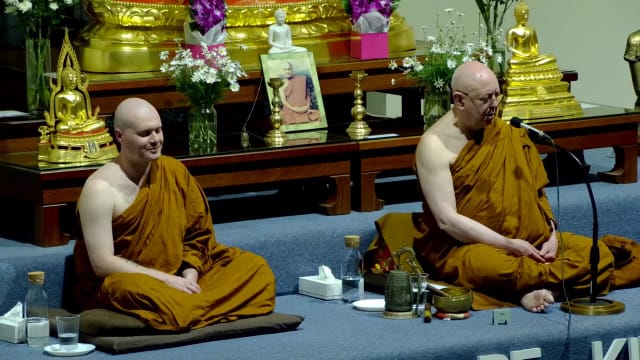
In the hills near Serpentine, Western Australia, stands a working Buddhist monastery that exists at the intersection of ancient tradition and contemporary Western life. Bodhinyana Buddhist Monastery, the forest monastery of the Buddhist Society of Western Australia, represents a rare institutional commitment: the establishment of authentic monastic practice in a cultural and geographical context far removed from Buddhism's Asian origins. Under the direction of Ajahn Brahm, the monastery operates as both a training ground for ordained monks and a refuge for lay practitioners seeking to deepen their engagement with Theravada Buddhist teachings.
Bodhinyana Buddhist Monastery functions as a dedicated center for monastic training and practice within the Theravada tradition. Located in a forested landscape that echoes the natural settings where Buddhist monasticism historically developed in Southeast Asia, the monastery provides the infrastructure and discipline necessary for monks to pursue intensive spiritual training. The monastery's existence represents one of the significant attempts in the Western world to transplant not merely the teachings of Buddhism, but the lived monastic system through which those teachings have traditionally been transmitted and preserved.
The monastery operates under the Buddhist Society of Western Australia, an organization established to bring authentic Theravada practice to Western practitioners. This institutional framework distinguishes Bodhinyana from informal meditation groups or dharma centers; it represents a formal commitment to maintaining the monastic sangha—the community of ordained practitioners—as a living institution within a Western context.
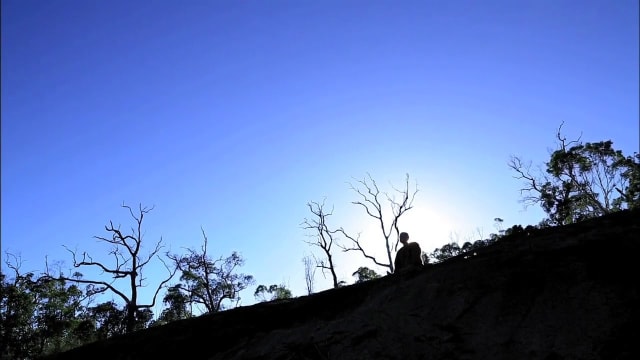
The choice of a forest location near Serpentine reflects a deliberate alignment with Buddhist monastic tradition. Forest monasteries have held a central place in Theravada Buddhism, particularly in Thailand and other Southeast Asian countries where the tradition flourished. The forest environment supports the conditions monastics seek: relative seclusion, simplicity, and direct engagement with the natural world. By establishing Bodhinyana in a similarly rural and forested setting, the founders created a physical and psychological space conducive to the intensive practice that monastic life demands.
This choice also reveals something important about how Western Buddhist monasticism develops. Rather than adapting Buddhism to fit existing Western institutions or urban centers, Bodhinyana's designers recognized that certain conditions for practice might be universal. A forest monastery in Australia can serve the same function as a forest monastery in Thailand—providing a structured environment where the mind can be systematically trained through meditation, study, and disciplined community living.
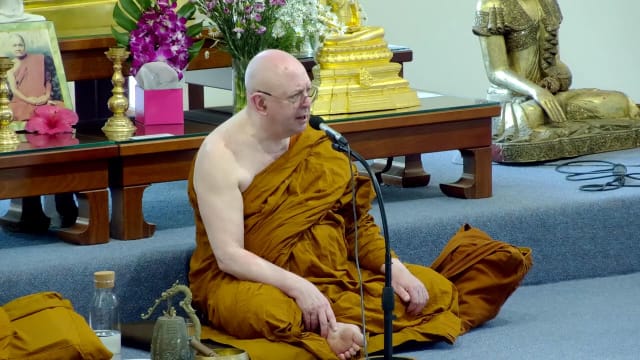
The monastery's direction under Ajahn Brahm has been central to its character and function. Ajahn Brahm brings to his role the authority of someone trained in the traditional Thai forest meditation lineage, making Bodhinyana a place where established monastic forms meet Western sensibilities. His leadership ensures that the monastery maintains genuine continuity with the broader Buddhist tradition while remaining responsive to the specific needs and contexts of Western practitioners and monks.
The role of such teachers in establishing Western monastic communities cannot be overstated. Monastic life operates according to the Vinaya, a detailed code of conduct established by the Buddha and refined over centuries. The complexity of this tradition requires teachers who understand its depths and can guide both individual practitioners and the community as a whole. Ajahn Brahm's presence at Bodhinyana signals that this is not an experimental adaptation of Buddhism, but a genuine continuation of a continuous lineage.
For monks at Bodhinyana, daily practice typically includes early morning meditation, study of Buddhist texts, chanting, work practice within the monastery, and instruction from senior teachers. This schedule reflects patterns established in forest monasteries across Asia, adapted to the realities of Western climate and social context. The monks' commitment to celibacy, simplicity, and renunciation of worldly engagement distinguishes their path from other spiritual pursuits, establishing clear parameters for their training.
The existence of functioning Buddhist monasticism in the West remains relatively rare. Many Western Buddhist centers operate without resident monks, or with only a handful. Bodhinyana's role in maintaining an actual monastic sangha—a complete community of ordained practitioners—addresses a fundamental need within Western Buddhism. The sangha is understood in Buddhist teaching as one of the three jewels, along with the Buddha and the Dharma (teachings). Without living monastic communities, this aspect of Buddhism's institutional structure remains incomplete in the West.
While Bodhinyana's primary function is to support the monastic training of ordained practitioners, the monastery also welcomes lay visitors and practitioners. This openness reflects a fundamental principle in Buddhist teaching: that progress toward awakening is not restricted to monks, and that lay practitioners have always played a vital role in supporting and engaging with the dharma. Visitors to Bodhinyana can participate in group meditation, listen to teachings, and observe the rhythms of monastic life.
This accessibility serves multiple purposes. For lay practitioners, contact with a functioning monastery provides inspiration and practical instruction that can deepen their own practice. For the broader community, it demonstrates what serious Buddhist commitment looks like, serving as a living response to common Western questions about what Buddhism actually is and how it operates in practice. The monastery becomes, in effect, a teaching institution through its very existence.
The establishment of monasteries like Bodhinyana represents a critical juncture in Buddhism's encounter with the West. Unlike earlier phases of Buddhism in Western nations, which often focused on making the teachings intellectually accessible to Western audiences, monastic communities embody a commitment to the full structure and discipline of the Buddhist path. They represent an investment not in translating Buddhism into Western terms, but in transplanting it as a complete way of life.
Such monasteries also address a practical reality: Buddhist teachings, particularly in the Theravada tradition, have always understood monastic life as the optimal context for serious practice. While lay practitioners can certainly develop significant spiritual capacities, the monastic life—with its removal from worldly obligations, its structured schedule, and its immersion in a community of practice—creates conditions specifically designed for deep transformation. By maintaining monasteries, Western Buddhist communities ensure that this dimension of the tradition remains alive and available.
For those interested in learning more about Bodhinyana or experiencing the monastery directly, the Buddhist Society of Western Australia provides information about visiting, participating in retreats, and supporting the community. Those new to Buddhist practice might explore introductory teachings available through BSWA media or other Western Theravada centers, building a foundation of understanding before visiting a forest monastery. Practitioners already engaged in meditation can deepen their practice through extended retreats or by studying directly with teachers trained in the Thai forest tradition. The existence of Bodhinyana and other Western monastic communities represents an ongoing experiment in how ancient Buddhist wisdom can take root and flourish in new soil—an experiment that depends on the engagement and support of practitioners committed to the path.