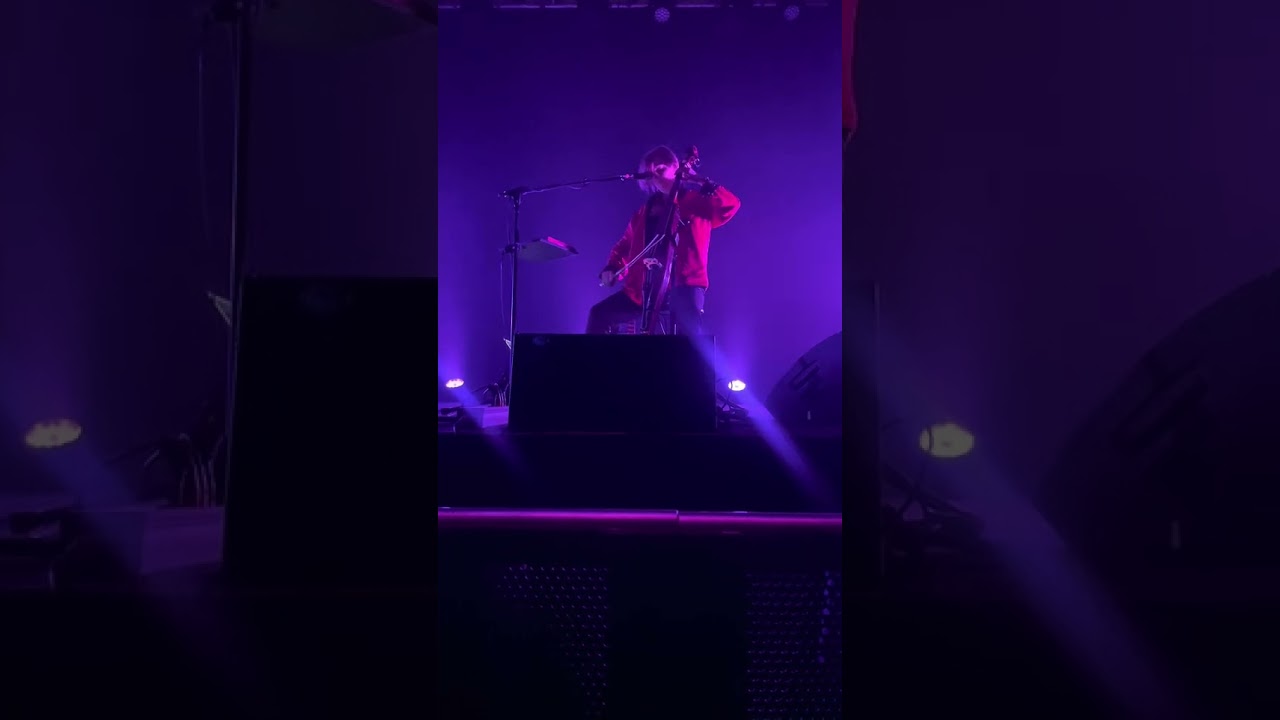
"Bake Sale for the Insurrection" is a cello composition by Shannon Hayden that uses the mundane ritual of a bake sale as a metaphor for subversion and social change. The piece, from the 2013 album Solid State Cello, demonstrates how art can frame ordinary communal acts as vessels of resistance, challenging hierarchies and conventions through sonic and conceptual juxtaposition. The work invites listeners to reconsider how insurgency operates at the margins of everyday life—not as dramatic rupture, but as the quiet reclamation of shared space and resources.
Hayden's title deliberately pairs two domains that rarely coexist: the domestic, apolitical fundraiser and the charged language of uprising. Rather than depicting violent revolution, the piece explores insurrection as a mode of being—a way of organizing, gathering, and redistributing resources outside conventional power structures. In this frame, an insurrection is not necessarily an armed conflict but a deliberate act of resistance against normalized systems. By attaching this language to something as humble as a bake sale, Hayden suggests that resistance begins in spaces where people gather informally, where traditional hierarchies momentarily dissolve.
The cello, typically associated with classical refinement and institutional music-making, becomes the vehicle for this idea. Hayden uses the instrument not to legitimize the bake sale through high-art framing, but to dignify grassroots, community-centered action. The friction between the cello's cultural weight and the bake sale's ordinariness creates conceptual space for reflection on what constitutes meaningful change.
The genius of "Bake Sale for the Insurrection" lies in its recognition that movements do not begin with declarations or ideology alone—they begin with people sharing resources, time, and labor. A bake sale represents one of the simplest forms of collective action: neighbors baking, selling, and pooling funds toward a shared goal. What makes this significant is the voluntary cooperation it requires and the absence of profit motive that typically governs market transactions.
Hayden's work suggests that when communities gather to feed one another and fund causes collectively, they are rehearsing alternative economic relationships. Each transaction at the bake sale becomes a microcosm of mutual aid—the principle that communities can meet their own needs without deference to institutional channels. This is insurrectionary not because it is violent, but because it demonstrates self-organization and challenges the notion that social needs must be met through sanctioned, hierarchical systems.
The cello composition sonic underscores this theme by moving between modes of formal structure and improvisation. Where classical cello music typically adheres to strict harmonic and rhythmic frameworks, Hayden's piece likely plays with those conventions, suggesting that insurgency involves both commitment to shared principles (the "structure") and flexibility in how those principles are enacted (the "improvisation"). The bake sale is both a formal gathering and an improvisational moment—a space where people adapt and respond to one another in real time.
By setting a bake sale to cello music, Hayden performs a reframing act—she elevates a grassroots economic practice to the status of worthy artistic subject. This legitimizes community action as something worthy of serious aesthetic attention. Art, in this sense, does not need to depict resistance through obvious imagery or messaging; instead, it can honor resistance by representing it with the same compositional care typically reserved for abstract or elite subject matter.
The album title Solid State Cello reinforces this approach. "Solid state" suggests stability, coherence, and material reality—the cello as a grounded, physical instrument whose sound is produced through the direct friction of bow on string. There is nothing virtual or theoretical about it. Similarly, the bake sale is solid-state activism: it relies on actual flour, sugar, butter, human hands, and face-to-face exchange. Hayden's artistic gesture is to take seriously the materiality and integrity of these ordinary practices.
Released in 2013, "Bake Sale for the Insurrection" emerged in a moment of renewed interest in grassroots activism and mutual aid networks. The Occupy Wall Street movement (2011) had recently demonstrated the power of decentralized organizing and community self-sufficiency. Food-sharing networks, co-ops, and community gardens were gaining visibility as alternative economic models. Hayden's piece arrives in conversation with these developments, offering a musical meditation on how ordinary people sustain movements through cooperation.
The four-minute length of the composition suggests a deliberate brevity—perhaps the duration of a bake sale itself, or the span of attention required to recognize a moment of resistance unfolding. Hayden does not stretch the concept across a lengthy symphony; instead, she crystallizes it into a compact, concentrated form. This mirrors how insurgency often operates at the margins: brief moments of intensity, withdrawal, regrouping, and renewed action.
Embedded in "Bake Sale for the Insurrection" is a vision of politics that does not require state power or institutional recognition to matter. Instead, Hayden's piece affirms what anarchist and leftist thinkers have long argued: that communities possess the capacity to meet their own needs through direct cooperation, and that doing so is itself a political act. The bake sale becomes a space where people practice non-hierarchical decision-making, where exchange is not mediated by profit, and where collective resources are pooled for shared benefit.
This is distinct from charity, which typically involves institutional intermediaries and reinforces hierarchies between giver and receiver. A bake sale, by contrast, can be structured as a reciprocal gathering where everyone participates as both producer and consumer, baker and buyer. The insurrectionary potential lies in the demonstration that this is possible—that people can organize themselves without authority.
To deepen your engagement with Hayden's work, consider exploring the full Solid State Cello album to understand how other pieces in the collection address themes of materiality, labor, and collective action. Additionally, seek out writing on prefigurative politics—the idea that movements rehearse in the present the structures they hope to create in the future. A bake sale, understood through this lens, becomes not just a fundraiser but a prototype for how society could organize itself. Finally, reflect on the ordinary gatherings and cooperative acts in your own community: What makes them insurrectionary? When does sharing food or pooling resources become a political statement?