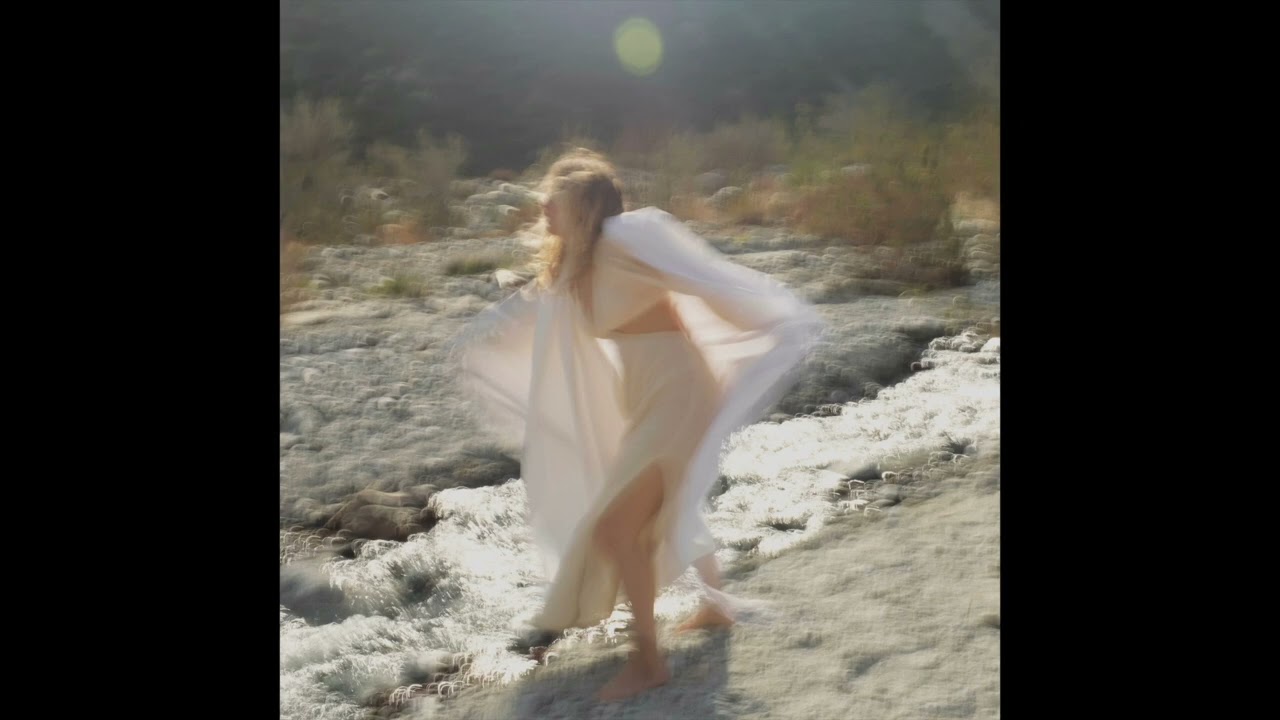
"All My Life Is a Ceremony" is a devotional song that turns ordinary experience into sacred practice. Released in June 2022 as part of the Divine Surrendering EP under the Doe Paoro name, it is written by Sonia Kreitzer and Devin Gati, with Gati producing, mixing, and mastering the track. In four minutes and twenty-three seconds it sets up a bride walking toward the unknown, a vow made to spirit, humility addressed as a tender teacher, and a chorus that refuses to claim mastery of anything. Its central move is simple and easy to underrate: it treats the wandering, the grief, and the not-knowing as the ceremony itself, rather than as the obstacles standing between a person and some finished state of wisdom. What follows is a reading of the lyrics, the way the song is built, and why its repeated admission of being a student carries more weight than a claim to arrival.
The song opens with a sound before it opens with a sentence. For the first several seconds there is only instrumental texture, and then a single image arrives: a bride, headed toward a destination nobody can name. Listeners who come to devotional music expecting certainty tend to notice the choice right away. The first figure in the song is not a guru, a saint, or a sage. It is a bride, which is to say someone who has said yes to a commitment before she knows its full shape. The song's opening line is "Bride to the unknown," and the phrasing does not ask the listener to understand the unknown. It asks the listener to walk toward it, in a posture of promise.
The next line defines the terms of that promise: "My vow is to spirit." The vow is not to a doctrine, a plan, or a self-improvement project. It is addressed to something larger than the singer, and the song is careful to keep that object vague. Spirit is named without being described, which leaves room for the listener's own relationship to the sacred to fill the gap.
Then the song turns inward. "And when I am alone / quiet enough to hear it" arrives around the 0:26 mark, and it is the most practical instruction in the piece. Hearing requires quiet, and quiet happens most reliably when no one else is present to perform for. The vow to spirit is thus not kept in public gestures. It is kept in the small, unwitnessed moments when a person stops talking long enough to listen. The refrain that follows, "the one, the one, the one," repeats as an invocation rather than a statement. It is less a name than a turning toward.
Around the 0:56 mark, the song delivers its clearest lesson: "Humility, you have been a most tender teacher." The word choice matters. Humility is not called a harsh teacher, a strict one, or a necessary one. It is tender. That adjective reframes the lessons that usually arrive as humiliation, failure, or correction. In this reading, the experiences that bring a person low are not punishments. They are instruction given gently, by a teacher who wants the student to see clearly.
The verse then makes a request, and it is a request rather than a boast: "Mystery, show me how to surrender." Surrender here is not defeat. It is a skill the singer is asking to be taught. The song positions mystery as the next teacher in line, and the singer as a student who knows the lesson is not finished. Anyone who has tried to let go of a fixed outcome, or to stop arguing with a situation that will not change, will recognize the difficulty the lyric names. The song does not pretend surrender is easy. It asks for instruction in it.
"Humility, you have been a most tender teacher / Mystery, show me how to surrender."
— "All My Life Is a Ceremony," Doe Paoro (Divine Surrendering, 2022), verse, around 0:56 and 1:08
The chorus is the emotional center of the song, and its structure is revealing. The line "Cause I'm still learning" arrives around 1:13, and it repeats, with "I'm still learning" stacked twice before the title phrase lands. Then "All my life's a ceremony" closes the phrase, appearing at roughly 1:32 and again near the 3:25 mark.
The sequence is worth slowing down for. The song does not say "I have learned" or "I am wise." It says "I'm still learning," present tense, ongoing, unfinished. In many spiritual traditions the figure of the perpetual student is a sign of depth rather than a shortfall. The one who thinks they have finished learning is often the one who has stopped listening. By placing the admission of incompleteness inside the chorus, the most repeated and memorable part of the song, the writers make ongoing learning the thing a listener is most likely to carry out of the room.
The second half of that chorus is the conceptual leap. "All my life's a ceremony" moves the learning from a private, slightly embarrassing confession ("I'm still learning") into a public, ritual frame. A ceremony has form, repetition, and attention. It is performed rather than achieved. Calling a whole life a ceremony means that the daily work of learning is not a waiting room before the real thing. The learning is the real thing, and it has dignity precisely because it is repeated.
The second verse shifts from instruction to grief, and the register changes accordingly. Around 2:06 the song begins: "Every tear I offer / To the love that I have known." The image is striking. Tears are not framed as evidence of failure or weakness. They are offerings, placed deliberately on an altar of love, and the object of the offering is love that has already been known and lost or changed.
This is one of the song's most generous ideas. Grief is usually something a person tries to get through as quickly as possible. Here, grief becomes a form of devotion. The singer does not ask to stop crying so they can get on with the spiritual life. The crying is the spiritual life, offered upward. The verse then extends the same generosity to the past: "In my wandering, I honor / The ones that walked me home." Wandering, which in most narratives is a sign of being lost, becomes something to honor. And the people who helped the singer find their way back are named as the reason the path made sense at all.
The bridge-like refrain, "the ones, the ones, the ones," repeats the structure of the earlier "the one" chant, now with a plural. Where the first verse invoked a singular presence, the second acknowledges a community of those who guided the singer. The repetition does not argue a point. It works like a litany, a form familiar to any listener who has sat through a ritual that moves by repetition rather than argument.
The lyric sheet shows a deliberate architecture. The song moves through a verse about the vow, a short address to humility and mystery, the chorus of learning, a second verse about tears and wandering, and then a return to the same address and chorus. That return matters. The song does not resolve into a triumphant final statement. It circles back to the same admission, "I'm still learning," and ends on the same line. The form itself enacts the message: the student does not graduate, the ceremony does not end, the learning continues.
Listeners who want to hear how the recording itself handles that circling will need the track rather than a description. The arrangement, the placement of voices, and the way the refrains are sung are part of how the song's stillness is achieved, and they are better experienced directly than paraphrased.
The video description identifies "All My Life Is a Ceremony" as one part of the Divine Surrendering EP, which was announced for release on June 10, 2022. The title of the EP and this song share a single idea: surrender is not presented as a single act but as a practice that unfolds across a life. The song's own vocabulary of surrender, humility, and mystery gives the EP a clear devotional thread to follow.
The track was published to YouTube on June 8, 2022, two days before the EP's release date, and at the time of this writing has been viewed more than 43,000 times. Those numbers say little about the song's depth. What they do suggest is that a four-minute devotional piece with a simple, repeated chorus can find listeners who are looking for something to sit with rather than something to be impressed by.
Start with the lyrics, then listen to the full recording with the words in front of you. Notice where the song asks for quiet, where it names a teacher, and where it admits to still learning. If the song reaches you, the Divine Surrendering EP is available on Bandcamp at doepaoro.bandcamp.com/album/divine-surrendering, and the full project offers more of the same devotional attention. Then try the simplest practice the song points toward: spend a few minutes alone, quiet enough to hear something, and say to yourself the line that closes the chorus. All my life is a ceremony. The learning is part of the rite.