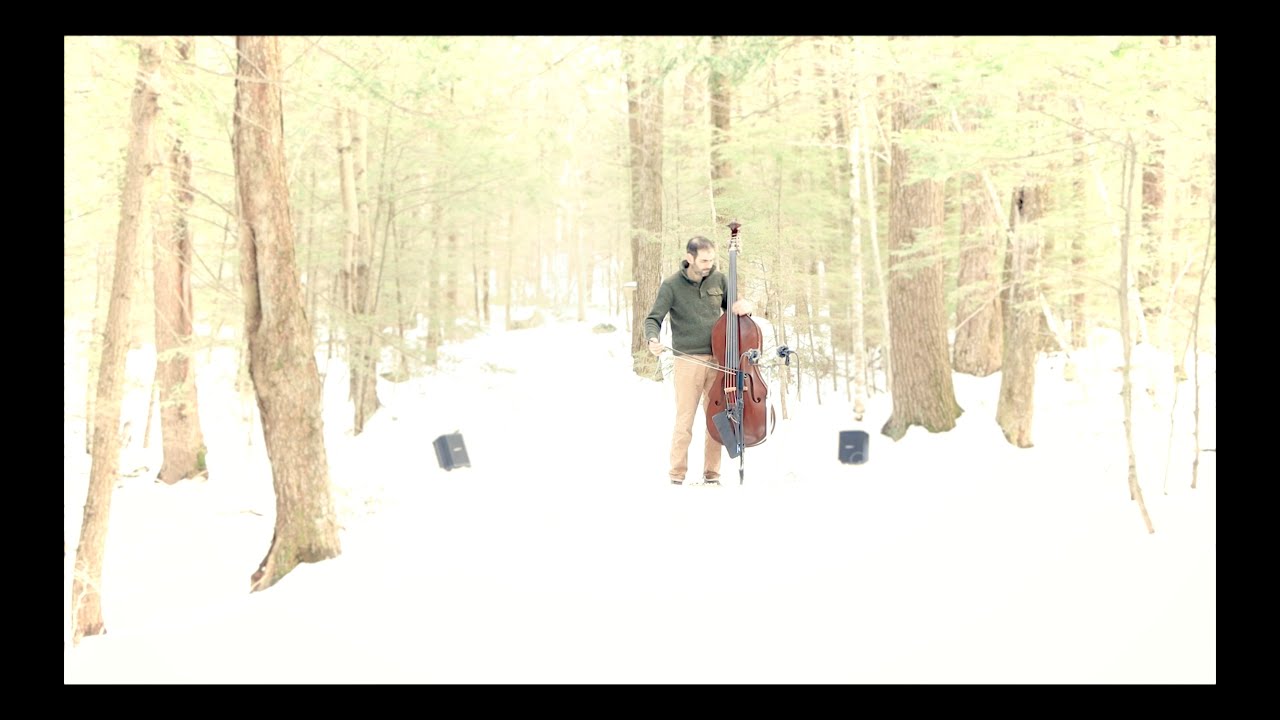
"The Sherpas Lament" is a live collaboration between the composer and performer Garth Stevenson and the Alash Ensemble, a group from Tuva, the Siberian republic on the border with Mongolia. The recording was made on 11.7.11 at Le Poisson Rouge, the Greenwich Village club in New York, and posted to YouTube in November 2011. It runs just over twelve minutes. The video has no published transcript, so this article works from what the upload itself provides: its title, its performer credits, its date and place, and the links its creator chose to include. That is a thin record, and it is worth being clear about its limits before going further.
The description is brief. It states that Garth Stevenson "collaborates with the Alash Ensemble from Tuva" and credits four members by name: Nachyn Choodu, Bady-Dorzhu Ondar, Ayan-ool Sam, and Ayan Shirizhil. It does not assign instruments or roles to each performer, and it does not describe the arrangement, the tuning, or the way the two musical traditions were combined. Anyone hoping for a breakdown of the harmonic material or the structure of the piece will not find it in the metadata, and this article will not invent one.
What the record does establish is the setting. The performance was live, in a room that hosts contemporary and cross-genre programming, and it was captured with enough care to be posted as a complete performance rather than a fragment. The date and venue are stated plainly, which matters for a recording like this: it fixes the collaboration to a specific night in 2011 rather than leaving it as an undated studio experiment.
Alash is a Tuvan ensemble, and Tuva is known outside the region largely for its vocal traditions, including throat singing, in which a single performer produces more than one pitch at once. The description does not say whether that technique is used on this recording, and it would be a mistake to assume it. What can be said with confidence is that the piece is presented as a meeting between two musical worlds: a Tuvan group and an artist working in New York, performing in the same room on the same night.
That kind of meeting is worth noticing on its own terms. Cross-cultural collaborations in live settings tend to test whether each tradition can keep its own logic while sharing a stage. A recording preserves that test in a way a press release cannot. Whatever the exact musical choices, the video is evidence that the collaboration happened in front of an audience and was considered worth documenting in full.
The title names a lament, a form that in many traditions is a slow, grieving or mournful song. The word "Sherpas" points to the Himalayan people, not to Tuva, and the description offers no explanation of the connection. A viewer should not assume that the piece is a literal depiction of Sherpa music or a tribute with a documented history. The title is the creator's, and its reasoning sits outside the material available here.
If this recording has drawn you in, the most useful next steps are the sources the creator linked. The description points to the Alash Ensemble's website at alashensemble.com and to Garth Stevenson's website at garthstevenson.com. Those pages are more likely than a video description to hold the background, the instrumentation, and the story of how the collaboration came together. Listening to the full twelve minutes more than once is also worthwhile: with no transcript to lean on, the music itself is the primary document, and close listening will reveal more about the piece than any summary can.