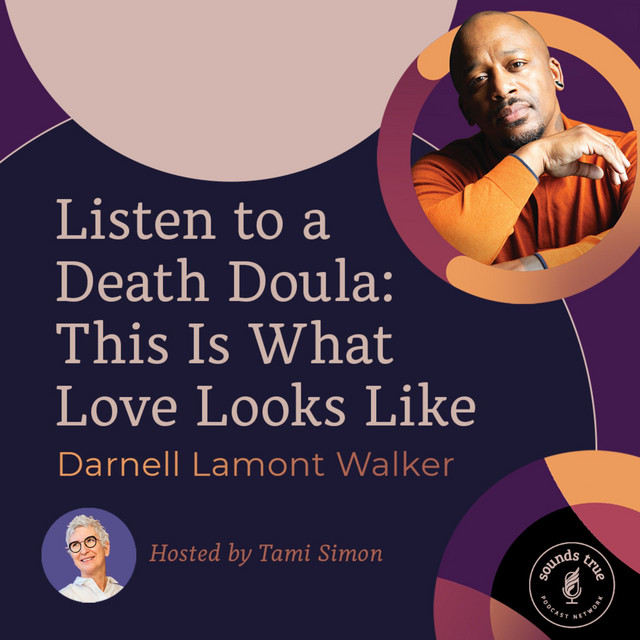
In the quiet moments between life and death, profound truths emerge. Death doula Darnell Lamont Walker has spent decades witnessing these sacred transitions, and his message is both simple and revolutionary: "Let people love you." This phrase, repeated countless times at bedsides across his career, carries within it the essence of what it means to live—and die—with an open heart.
In his conversation with Tami Simon on the Sounds True podcast "Insights at the Edge," Walker reveals how our greatest spiritual lessons often come disguised as our most challenging moments. As an Emmy-nominated writer and seasoned death doula, Walker brings a unique perspective to the intersection of and human vulnerability.
Walker's work has shown him a universal human pattern: the closer we get to our most vulnerable states, the higher we build the walls around our hearts. Whether facing terminal illness, profound grief, or simply the fear of being truly seen, we instinctively protect ourselves from the very thing we need most—love and connection.
This protective mechanism, while understandable, often becomes our greatest barrier to . Walker observes that those approaching death frequently struggle not with the physical aspects of dying, but with allowing themselves to receive care, support, and unconditional love from others.
The Fear of Being Seen
Many of Walker's clients express deep anxiety about being "seen" in their final days—not just physically, but emotionally and spiritually. They worry about burdening others, appearing weak, or losing their carefully constructed identity. This fear of authentic visibility extends far beyond the deathbed and reflects a broader human challenge in our daily lives.
The practice of asks us to examine these fears and recognize them as invitations to deeper healing. When we understand that our vulnerability is not a weakness but a gateway to connection, we begin to transform our relationship with both love and mortality.
Walker's approach to death work transcends traditional caregiving models. He views each interaction as a spiritual exchange, a moment where the veil between the physical and metaphysical worlds becomes thin. His presence at the bedside isn't just about comfort—it's about creating space for profound spiritual awakening.
The phrase "let people love you" becomes a mantra, a gentle invitation to surrender the illusion of separation that keeps us isolated in our suffering. This isn't passive acceptance but active participation in the flow of divine love that connects all beings.
The Transmission of Presence
What makes Walker's work particularly powerful is what Tami Simon describes as "genuine transmission." This isn't merely intellectual understanding but the palpable presence of someone who has integrated deep spiritual truths through direct experience. Walker embodies the teachings he shares, creating a field of that extends beyond words.
This quality of presence—cultivated through years of sitting with the dying—offers a masterclass in how to hold space for others' transformation. It demonstrates that true spiritual teaching happens not through concepts but through the quality of being we bring to each encounter.
Through his work, Walker has discovered that grief, like love, is often resisted rather than embraced. Our culture's discomfort with death extends to our relationship with loss, creating additional suffering on top of natural grief processes. Walker's approach involves normalizing these experiences and revealing their potential for spiritual growth.
Grief, in Walker's understanding, isn't something to be "gotten over" but rather a doorway to deeper compassion and connection. It strips away pretenses and reveals what truly matters, creating opportunities for the kind of authentic relating that many people spend their entire lives avoiding.
The Healing Power of Being Held
Central to Walker's message is the recognition that healing happens in relationship. The phrase "let yourself be held" encompasses both physical comfort and emotional support, but it also points to a deeper spiritual truth—that we are always being held by something greater than ourselves.
This understanding transforms the death experience from one of isolation and fear to one of connection and grace. It also provides a template for how we might live more fully by allowing ourselves to be supported throughout our lives, not just in our final moments.
While Walker's insights emerge from death work, their applications extend into every aspect of conscious living. The willingness to "let people love you" becomes a daily practice of opening to support, acknowledging interdependence, and releasing the exhausting burden of trying to appear invulnerable.
This practice might look like accepting help when offered, sharing struggles with trusted friends, or simply allowing others to see us in our imperfection. Each of these acts becomes a small death—a letting go of the ego's protective strategies in favor of authentic connection.
Building Spiritual Resilience
Walker's work suggests that our capacity to face life's inevitable challenges, including our own mortality, grows stronger when we practice receiving love and support. This isn't about becoming dependent but about recognizing that develops through community and connection rather than isolation.
The spiritual path, rather than being a solo journey toward enlightenment, becomes a collaborative exploration of what it means to be fully human and fully connected to the divine mystery that encompasses both life and death.
Walker's conversation with Tami Simon represents what she calls "the growing edge of spiritual understanding"—the place where ancient wisdom meets contemporary challenges. His work demonstrates how traditional spiritual concepts like surrender, compassion, and presence manifest in very practical, immediate ways.
This growing edge involves moving beyond spiritual concepts to embody spiritual truths in the midst of life's most challenging circumstances. Walker's example shows how develops not through retreat from difficulty but through wholehearted engagement with it.
The profound teachings Walker shares invite us to examine our own relationship with vulnerability, love, and support. How might our lives change if we truly took to heart his simple instruction to "let people love you"?
This integration process involves recognizing the small ways we push love away—deflecting compliments, refusing help, minimizing our needs, or maintaining emotional distance to avoid potential hurt. Each moment we choose connection over protection becomes a practice in the art of being loved.
Walker's work reminds us that we don't need to wait until we're facing death to embrace these teachings. Every day offers opportunities to practice receiving love, allowing ourselves to be seen, and contributing to the web of care that supports all life.
The wisdom of the deathbed—that love is what matters most, that connection heals, that vulnerability is sacred—can transform how we approach every aspect of our lives. In learning to die well, we learn to live well. In learning to be loved, we learn to love.
Ready to explore more transformational wisdom? Discover how can deepen your spiritual journey and connect you with teachers like Darnell Lamont Walker who embody the profound truths they share.
- The simple phrase 'let people love you' carries profound spiritual wisdom that applies to both living and dying
- Our resistance to receiving love often intensifies in vulnerable moments, creating barriers to healing and connection
- Grief and loss, when embraced rather than avoided, become gateways to deeper spiritual awakening and compassion
- True spiritual teaching happens through presence and embodiment, not just intellectual concepts
- Vulnerability is not weakness but a sacred doorway to authentic connection and divine love
- The fear of being 'seen' in our imperfection keeps us isolated from the support we most need
- Spiritual resilience develops through community and connection rather than isolation and self-reliance
What does it mean to 'let people love you' in practical terms?
Letting people love you means allowing yourself to receive care, support, and affection without deflecting or minimizing it. This includes accepting help when offered, sharing your struggles with trusted friends, allowing compliments to be received rather than deflected, and being vulnerable enough to let others see your imperfections and needs.
How can death doula wisdom apply to everyday living?
Death doula wisdom teaches us that what matters at the end of life—love, connection, authentic relationships—should guide how we live daily. This means prioritizing genuine connections over surface-level interactions, practicing vulnerability as a spiritual discipline, and recognizing that our interdependence is not weakness but a fundamental aspect of human existence.
Why do we build walls around receiving care when we need it most?
We build protective walls due to fear of being seen as weak, worry about burdening others, and cultural conditioning that values independence over interdependence. These walls often intensify during vulnerable times because our ego's protective mechanisms activate more strongly when we feel threatened or exposed.
What is the difference between spiritual concepts and spiritual transmission?
Spiritual concepts are intellectual understandings of spiritual truths, while spiritual transmission involves the direct sharing of realized wisdom through presence and embodiment. Transmission creates a palpable field of consciousness that facilitates awakening beyond mere conceptual understanding.
How does grief serve as a gateway to spiritual awakening?
Grief strips away pretenses and reveals what truly matters, creating opportunities for authentic connection and deeper compassion. Rather than something to overcome, grief becomes a doorway to understanding our interconnectedness and the impermanent nature of all things, leading to greater spiritual awareness.
What role does community play in spiritual development?
Community provides the relational context necessary for spiritual growth. Through allowing ourselves to be supported and supporting others, we practice the fundamental spiritual principles of love, compassion, and interconnection. Spiritual resilience develops through these connections rather than through isolation.
How can we practice vulnerability as a spiritual discipline?
Vulnerability as spiritual practice involves consciously choosing to share authentically, ask for help when needed, express emotions honestly, and allow others to witness our imperfections. Each act of vulnerability becomes a small surrender of ego protection in favor of genuine connection and spiritual growth.