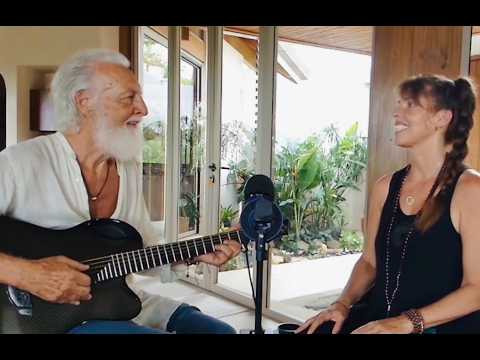
"Choku Rei" is a sacred chant composed by Jonathan Goldman, Andi Goldman, Laurelle Shanti Gaia, and Sarah Benson, released on the 2006 album Reiki Chants via Spirit Music. The track uses sustained vocal toning and intentional sound to invoke and embody Choku Rei — the first and most foundational symbol in the Usui Reiki system, commonly translated as "Place the power of the universe here" or "Direct spirit." At over 15 minutes in length, it is designed not merely as a listening experience but as a sound healing meditation: the repetition of the symbol's name functions as a vibrational key, meant to amplify the practitioner's or listener's connection to universal life-force energy (Ki). With nearly half a million views, it has become a widely used resource in Reiki circles, energy healing sessions, and contemplative practice.
Choku Rei (pronounced "cho-koo-ray") is the first symbol taught in Usui Reiki at the First Degree (Shoden) or Second Degree (Okuden) level, depending on the lineage. Its kanji can be interpreted as "direct spirit" or "put the power of the universe here," and it is drawn as a coil or spiral ending in a vertical line — a shape that itself encodes the idea of spiraling universal energy being directed downward into physical reality. In practice, Reiki practitioners draw or visualize this symbol to intensify the flow of healing energy, to focus intention, and to cleanse a space or object of discordant vibrations.
The symbol is considered a light switch for Reiki energy: it doesn't create the energy so much as it focuses and amplifies it. This is why its invocation through chant — rather than through silent visualization alone — represents a meaningful expansion of traditional practice. Sound, in the framework Jonathan Goldman has developed over decades, is itself a carrier of intention and vibration, capable of resonating with the body's subtle energy field in ways that visual or mental practice alone may not reach.
Jonathan Goldman is a leading figure in the sound healing movement, an author, musician, and teacher whose foundational formula — Frequency + Intention = Healing — has shaped how thousands of practitioners understand the relationship between sound and consciousness. His books, including Healing Sounds and The 7 Secrets of Sound Healing, synthesize research from acoustics, cymatics, and ancient sacred traditions to argue that intentional sound is one of the most direct tools available for shifting physiological and energetic states.
Goldman's work is distinguished by its insistence that intention is not a soft add-on to frequency — it is co-equal. Two sounds at the same pitch but with different intentions, he argues, will produce measurably different effects on the listener's nervous system and energy field. This principle is directly operative in "Choku Rei": the chant is not merely a repetition of syllables but a directed act of sacred invocation, with the voices of Goldman, Andi Goldman, Laurelle Shanti Gaia, and Sarah Benson combining to create a layered harmonic field around the symbol's name.
In Goldman's framework, the human voice is the most accessible and powerful sound healing instrument available to any person. Toning — the sustained production of vocal sound on a single pitch or shifting pitches, without melody in the conventional sense — creates standing waves in the body that can entrain the nervous system, shift brainwave states, and, according to subtle energy traditions, interact directly with the body's meridian system and chakras.
When the name of a sacred symbol like Choku Rei is toned rather than simply spoken, several things happen simultaneously. The phonemes themselves carry vibrational qualities: the open "o" vowel in "Choku" resonates in the chest and heart space; the long "ei" diphthong in "Rei" (meaning spirit or soul in Japanese) opens upward toward the crown. Repetition over an extended period — the track runs more than 15 minutes — allows the listener to move through the initial cognitive engagement with the words into a more somatic and meditative absorption of their vibration. This is the same logic underlying Sanskrit mantra practice and Gregorian chant: duration and repetition are not redundant but essential.
The collaboration with Laurelle Shanti Gaia and Sarah Benson, both experienced Reiki Masters, brings an additional layer of authenticity. The chant is not produced as ambient background music by outside composers; it emerges from within the Reiki community's own lineage and intentional practice, which Goldman and his collaborators regard as integral to its efficacy.
Reiki Chants, released in March 2006 on Spirit Music under Sound Healers Publishing, is a full album dedicated to using vocal sound to support Reiki practice. "Choku Rei" is one of its central tracks. The album is used in multiple contexts within the Reiki and sound healing communities:
- During Reiki sessions: Practitioners play the track as an ambient soundscape to support the energetic environment of a healing session, using the ongoing invocation of the symbol to maintain focused intent.
- For self-practice: Reiki students and masters use the chant during self-treatment, allowing the sound to support their own visualization or drawing of the Choku Rei symbol.
- In attunement preparation: Some Reiki teachers use the track to prepare students' energy fields before receiving attunements, where sacred symbols are formally transmitted.
- As a standalone meditation: Many listeners use it simply as a 15-minute sound meditation, regardless of Reiki training, finding that the sustained toning induces relaxation responses and a sense of expanded awareness.
The visual form of the Choku Rei symbol — a counterclockwise (or in some lineages, clockwise) spiral attached to a vertical line — is not incidental. The spiral is one of the oldest symbols in human spiritual iconography, found in Celtic knotwork, Hindu yantra, Sufi geometry, and the DNA double helix. It encodes the movement of energy from diffuse, cosmic scale down to a focused, local point — exactly what the symbol is used to do energetically: draw universal life-force and concentrate it precisely where it is needed.
When practitioners chant the symbol's name while holding its image in mind, they are working with both auditory and visual streams of sacred information simultaneously — a bimodal approach that many contemplative traditions consider more potent than either channel alone. Goldman's toning practice effectively converts the symbol from a purely visual and tactile tool (drawn in the air or on the body) into a sonic one, accessible to practitioners in eyes-closed meditative states or for those whose primary sensory attunement is auditory rather than visual.
This is a common question among those drawn to the track without formal Reiki initiation. Within traditional Usui Reiki, the symbols are considered to be activated fully only after an attunement — a formal transmission from a Reiki Master that "opens" the student to working with the symbol's energy. Without attunement, the symbol functions more as an object of devotion or a vibrational focus than as a direct healing tool in the technical Reiki sense.
However, Goldman's approach to sacred sound is broadly inclusive: he consistently teaches that intentional toning is available to anyone, and that the human voice resonating with sacred syllables has inherent value regardless of formal initiation. Many listeners without Reiki training report using the "Choku Rei" chant as a general relaxation and meditation aid, a grounding practice, or a way of connecting with what they understand as divine or universal energy. This positions the track at an interesting intersection — simultaneously a specialist tool for Reiki practitioners and an accessible entry point for anyone drawn to sacred sound.
For those moved by "Choku Rei," Jonathan Goldman's broader catalog on Reiki Chants explores additional Reiki symbols through the same approach of sustained toning, including Sei He Ki (the emotional/mental healing symbol) and Hon Sha Ze Sho Nen (the distance healing symbol). Goldman's books — particularly Healing Sounds: The Power of Harmonics and The 7 Secrets of Sound Healing — provide the theoretical and practical framework underpinning his approach to sacred sound.
For those interested in Reiki itself, studying with a lineage-certified Reiki Master to receive formal attunements remains the traditional path to working with the symbols in their full technical capacity. Organizations such as the International Association of Reiki Professionals (IARP) and the International Center for Reiki Training can connect seekers with qualified teachers. Sound healing training through Goldman's own Sound Healers Association offers pathways specifically oriented toward the intersection of vocal toning and energy medicine that "Choku Rei" so beautifully embodies.