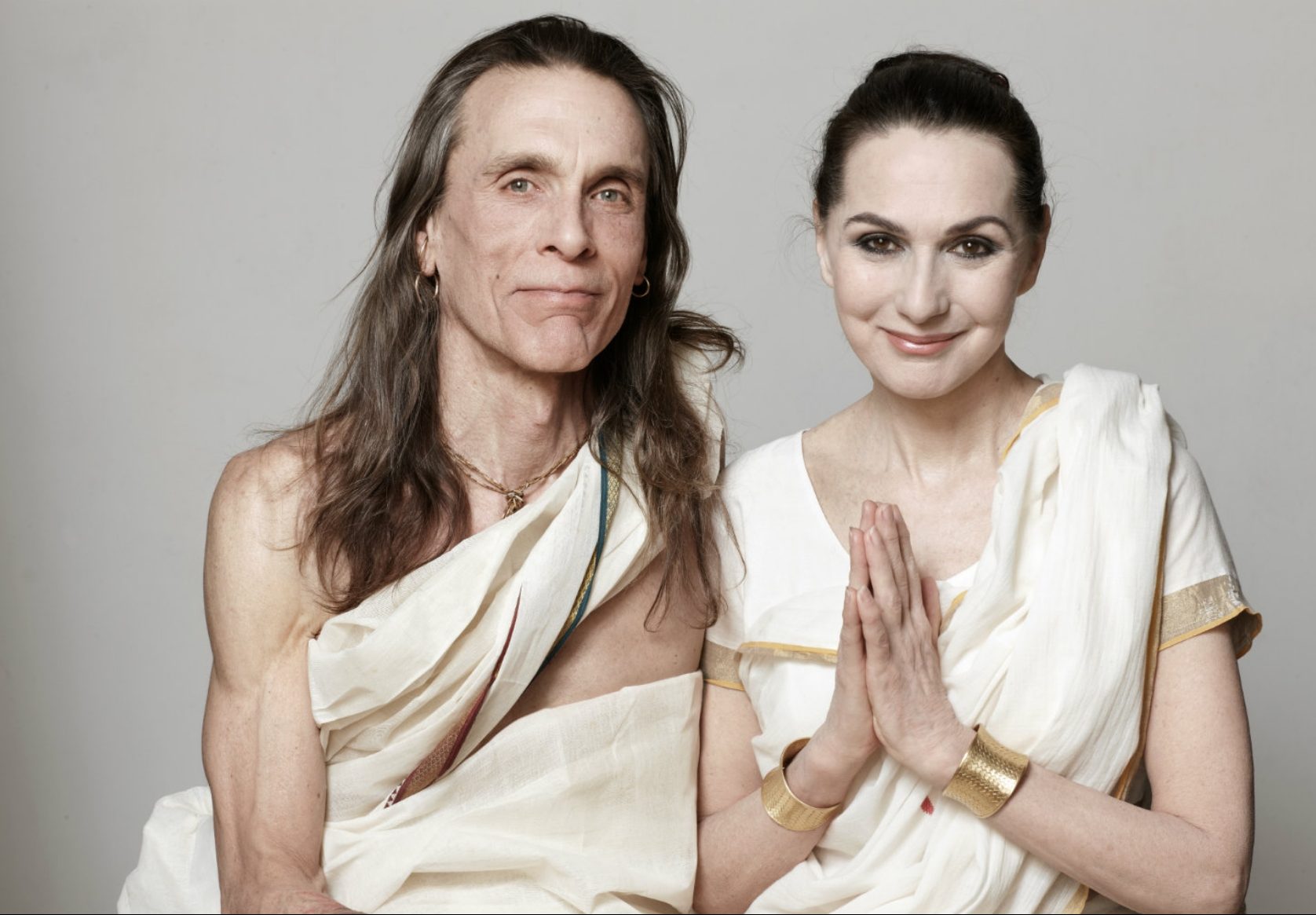

Sharon Gannon doesn't teach yoga the way most Americans have learned it. If you've encountered yoga primarily as a fitness class—an hour of poses set to ambient music, ending with a brief savasana—Jivamukti Yoga will feel like a different species entirely. Gannon insists that the physical postures you're doing are inseparable from how you eat, what you chant, which scriptures you study, and whether you're willing to confront your participation in animal suffering. This isn't yoga-flavored exercise. It's a demanding spiritual practice that happens to include challenging asana.
Your first encounter with Sharon Gannon should be a Jivamukti class at one of the method's certified studios. Not a video, not a book—an actual class. Jivamukti is built around five tenets (ahimsa, bhakti, dhyana, nada, and shastra), and you need to experience how they interlock in real time. You'll move through vinyasa sequences while the teacher offers readings from the Yoga Sutras or Bhagavad Gita. You'll chant in Sanskrit. You'll hear explicit connections drawn between the poses you're attempting and the ethical demand to practice nonviolence, which in Jivamukti means veganism, full stop. The room will likely smell of incense. The teacher will adjust you physically. This immersive, multi-sensory environment is the transmission method Gannon designed, and it doesn't translate fully to other formats.
After your first class, attend two or three more within the same week. Jivamukti's monthly themes and scriptural focus mean each class builds on previous ones. One session won't give you the cumulative effect of Gannon's approach—the way devotional practice (bhakti) supports meditation (dhyana), which deepens your relationship to scripture (shastra), which makes the ethical commitments (ahimsa) feel less like rules and more like natural expressions of understanding.
Once you've established a basic practice, seek out workshops or intensives that focus specifically on chanting (nada) and scripture study. Gannon came to yoga through New York's avant-garde arts scene in the 1980s, and her approach to sacred sound reflects both her background as a musician and her training with traditional teachers like Shri Brahmananda Sarasvati. The chanting isn't decoration—it's technology for shifting consciousness.
Then investigate Jivamukti's explicit commitment to animal rights and social justice. This isn't a side interest; it's structural. Attend a workshop or community discussion on ahimsa and veganism. Gannon and co-founder David Life opened their first studio in the East Village in 1984 when American yoga was still taught in church basements. They made veganism non-negotiable before that was culturally common, even in progressive spaces.
Your first class will be physically demanding—expect vigorous vinyasa sequencing influenced by Gannon's study with Shri K. Pattabhi Jois. But the intellectual and ethical demands may be more disorienting. You'll be asked to consider your diet, your consumption patterns, your relationship to animals. If you came expecting a workout, you'll get one, but you'll also get a lecture on the Bhagavad Gita and an invitation to examine whether your life reflects the principles you claim to value.
Beginners often mistake Jivamukti's ethical rigor for self-righteousness or reduce its devotional elements to exotic aesthetics. Neither is accurate. Gannon isn't interested in yoga as cultural appropriation or spiritual performance. She studied with traditional teachers and insists that the practice's Indian philosophical roots can't be separated from its postures without gutting the tradition. The veganism isn't virtue signaling—it's the most basic application of ahimsa (nonviolence), the first tenet.
Others assume the chanting and scripture study are optional, aesthetic choices. They're not. Gannon designed Jivamukti as an integrated system. You can't cherry-pick the asana and ignore the ethics.
Jivamukti tends to hit deepest during life transitions when you're questioning what you actually value versus what you've been conditioned to accept. People often come during breakups, career shifts, or moments of ethical awakening—times when surface-level yoga won't satisfy and you need a practice that addresses the whole architecture of your life.
Day 1: Attend a beginner-friendly Jivamukti class at a certified studio.
Day 2: Research the five tenets. Write down your current relationship to each.
Day 3: Attend another class. Notice what's repeated from Day 1.
Day 4: Read a chapter of the Yoga Sutras or Bhagavad Gita (translations are available free online).
Day 5: Attend a third class. Pay special attention to the chanting.
Day 6: Spend fifteen minutes researching veganism and ahimsa. Be honest about your resistance.
Day 7: Rest. Reflect on whether you're ready for a practice that will ask you to change your life, not just your flexibility.