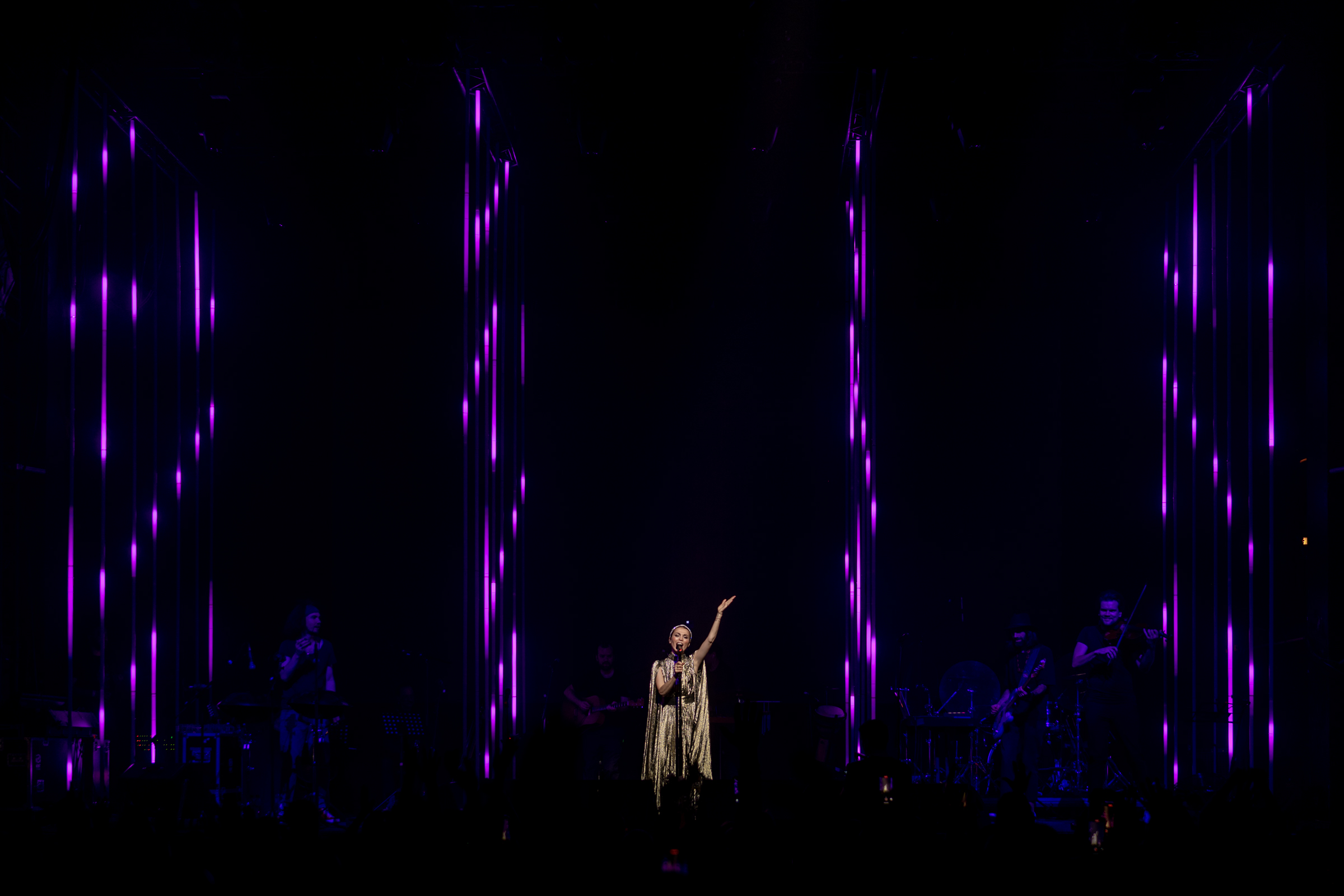

Sati Ethnica's work doesn't fit neatly into playlists or background listening. This is intentional. As a hypnotherapist and ethno-electro composer, she creates what she calls "sound environments for spiritual immersion"—pieces that function more like guided ceremonies than songs. For newcomers, this requires a different approach than discovering a typical artist.
Unfortunately, without access to specific album titles or recorded talks, the best recommendation is to seek out whatever full-length recording is most readily available through wellness and spiritual community channels where her work circulates. Look for pieces described as incorporating field recordings and sacred instruments over electronic foundations. Avoid starting with excerpts or samples—her compositions are structured to guide attention over extended durations, and fragments won't demonstrate how her hypnotherapy background shapes the listening experience.
When you find a complete work, plan for at least 45-60 minutes of uninterrupted listening. This isn't music for multitasking.
Your initial encounter will likely feel strange. Sati Ethnica doesn't use Western tonality as her organizing principle, so if you're accustomed to chord progressions and melodic resolution, you'll need to recalibrate. The rhythmic structures come from ceremonial music traditions where repetition serves a trance-inducing function, not from verse-chorus patterns designed to hold consumer attention.
Expect long stretches where very little seems to "happen" by conventional standards. The changes are micro-level: a gradual layering of overtones, subtle shifts in the cycling patterns of ancient instruments, the slow fade of one textural element as another emerges. Her hypnotherapy training shows in how she paces these transitions—they're timed to lower psychological resistance and deepen focus.
The electronic production provides a foundation that feels simultaneously ancient and futuristic. This isn't world-fusion where traditional samples get dropped over club beats. The synthesis and sacred instruments occupy the same compositional space, structured around what she calls "the rhythmic and tonal principles embedded in sacred sound practices."
The biggest misunderstanding: treating this as ambient music. Ambient is designed to be ignorable, to create atmosphere without demanding attention. Sati Ethnica's work demands attention precisely by using techniques that lower your defenses against sustained focus. If you put this on while working or socializing, you're missing the point entirely.
Another mistake is expecting cross-cultural sampling or New Age fusion. She's not borrowing aesthetics from sacred traditions—she's working within their structural logic. The difference matters.
Finally, beginners often bail too early. If nothing's "happened" in the first fifteen minutes, that's not a bug. Sit with the discomfort of musical time that moves at ceremonial pace.
Sati Ethnica's compositions tend to hit differently depending on where you are. People report the deepest impact during transitions: between jobs, relationships, homes, or identities. The work seems to function best when you're already in a liminal state and need tools for navigating unfamiliar internal territory.
It also resonates during periods of active spiritual practice—meditation retreats, plant medicine integration, somatic therapy. The hypnotic pacing can accelerate or deepen whatever process you're already engaged in.
Conversely, if you're in a highly stimulated, externally-focused phase of life, this music may feel inaccessible or simply boring.
Days 1-2: Find one complete recording. Listen through once without expectations, just noting your resistance points and where your attention naturally goes.
Days 3-4: Second listen, this time lying down in darkness. Notice what changes when you remove visual input.
Day 5: Research one of the sacred instruments or traditions she incorporates. Understanding the original ceremonial context will shift how you hear the electronic layers.
Day 6: Listen again, treating it as an active practice rather than passive consumption. Stay present with whatever arises.
Day 7: Rest. Notice what residue remains.
This work isn't for everyone, and that's fine. But if you've been searching for music that takes ancient ceremonial function seriously while embracing modern production tools, start here.