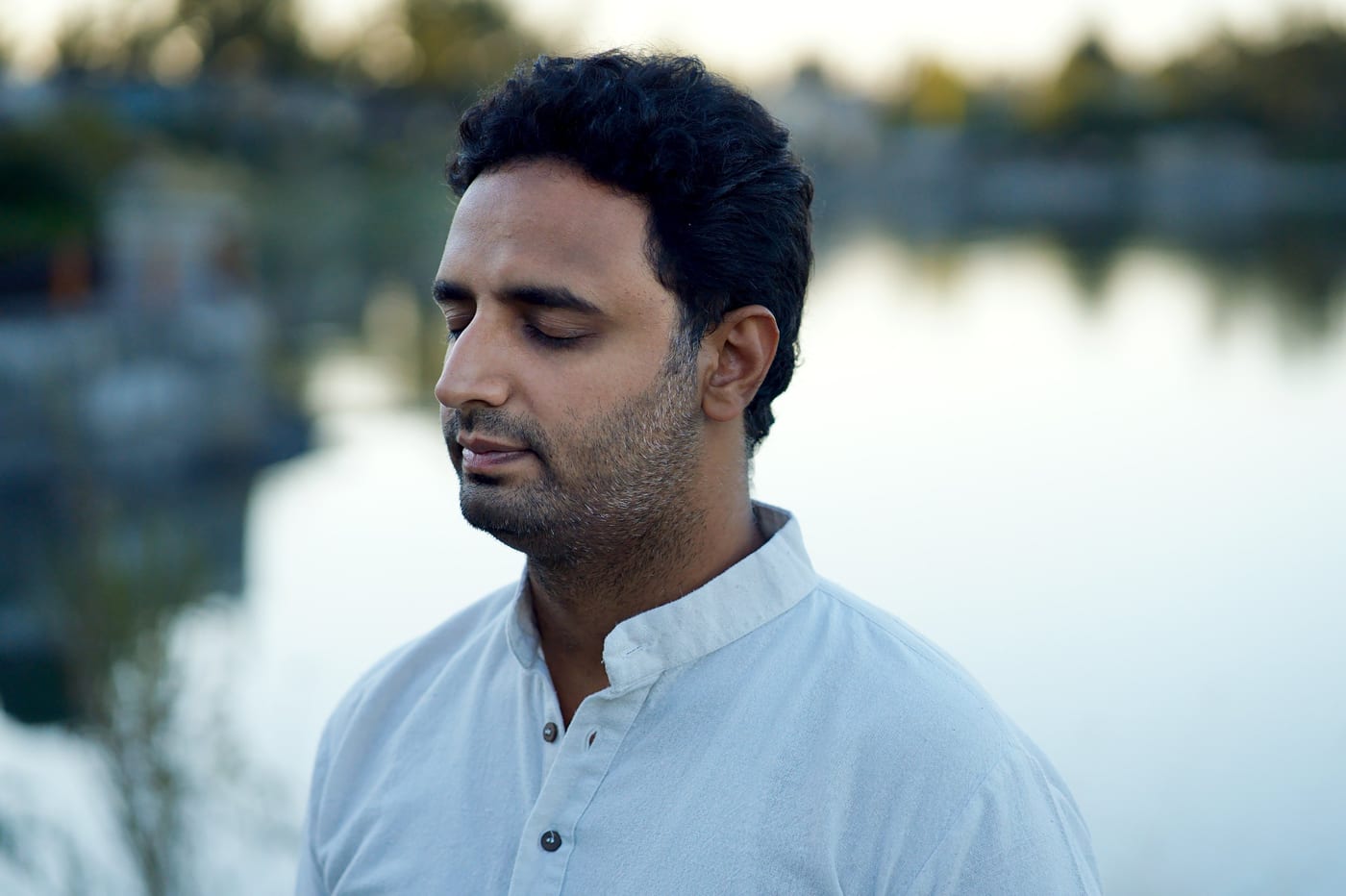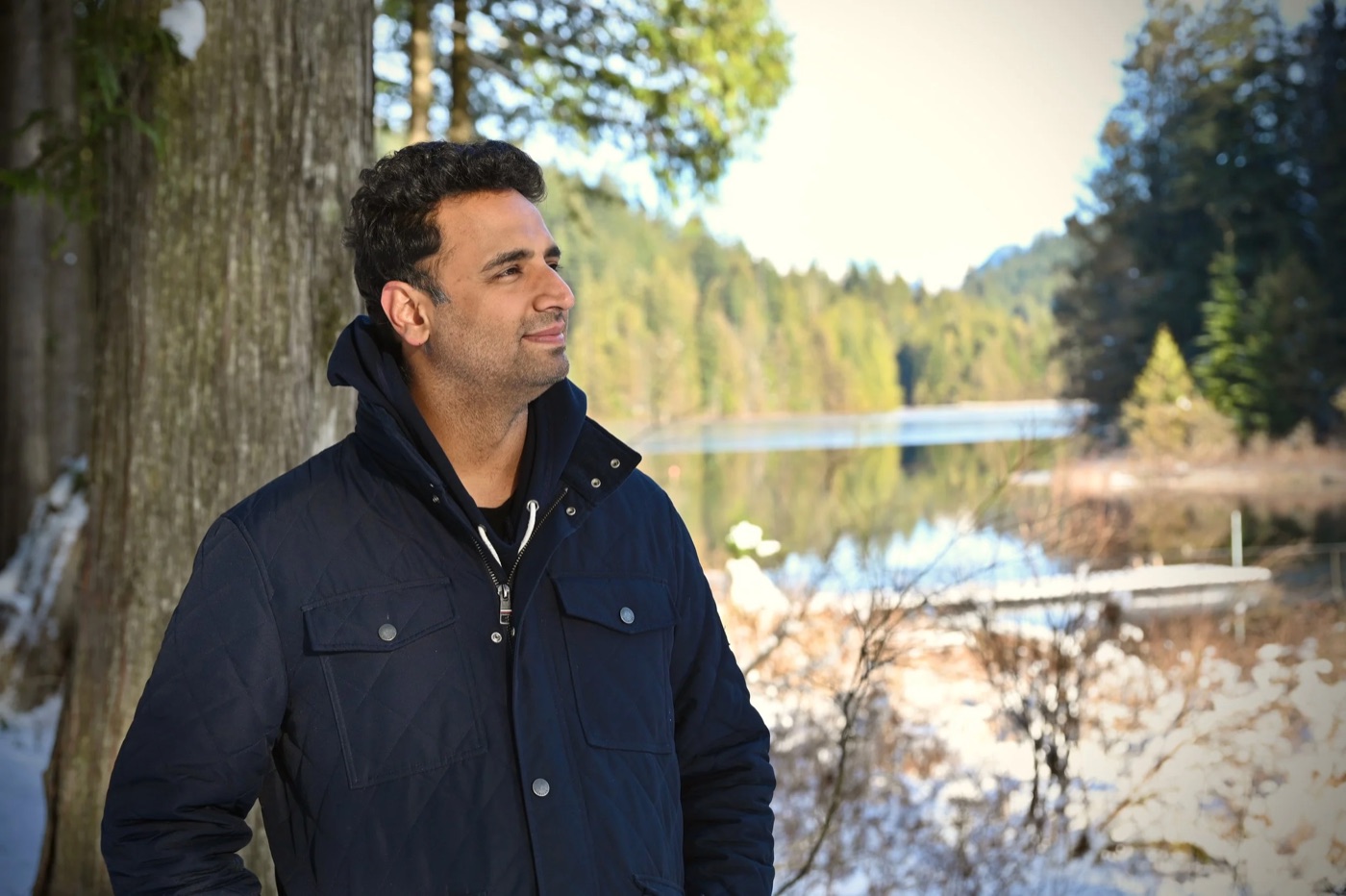

Saqib Rizvi is a Vancouver-based meditation teacher who describes his work as guiding people on their inner journeys and bringing science and spirit together. He is a former professional engineer with an MBA in Marketing Communications, and the habits of that training show in how he teaches.
His teaching is analytical before it is atmospheric. Accounts of his sessions and workshops describe a pattern: he breaks a concept about consciousness or a meditation technique into parts, explains it, and then invites the student to test it in direct experience. His guided meditations on Insight Timer are described as plain in their instructions. They are less incantatory and less ambient than much of what the platform offers, and more concerned with the mechanics of awareness and attention.
He works in two formats, one-to-one mentoring and live workshops, and shares recorded talks and meditations on Insight Timer and YouTube. In a private session the work is practical: what to observe in the mind, and what to do when resistance arises. Anyone expecting a soothing hour should know his manner is described as direct and cooler than warm. He is not a reassuring presence by temperament.
The central theme is identity. He returns to the idea that the "self" is a story the mind maintains, and that meditation shows the difference between the story and the awareness watching it. His own biography is the working example. He describes being caught in a "Mind Prison" of conservative mindset and religious doctrine, hearing a quiet voice of intuition that questioned it, and eventually leaving both his religious identity and his career.
A second theme is the convergence of contemplative wisdom and science. His reading runs from Buddha and Lao Tzu to Osho, Neale Donald Walsch and Rupert Spira, and to consciousness-and-physics writers including Nassim Haramein, Robert Lanza, Amit Goswami, Rupert Sheldrake, Dean Radin and Carl Jung. A third is direct experience over belief: frameworks are meant to send the student back to their own observation, not substitute for it. His site puts the same idea as "all paths are pathless," meaning any path chosen leads to the same point.
The governing question is "Who am I?", the one that drove his own search. Around it sit more specific ones that follow from his themes. Which of my beliefs did I inherit rather than verify? Which roles, whether religious, professional or psychological, am I mistaking for myself? What is left of experience when I stop expecting comfort from it? He does not ask for belief in his conclusions. He asks students to set aside the assumption that meditation is merely stress relief, and to check the claims against their own practice.
The voice is that of an engineer: clear, logical, skeptical of nonsense, and wary of wellness-industry vocabulary. Mystical subject matter is discussed without apology, but it is framed as the outcome of rigorous self-inquiry rather than as something beyond reason. The sources I have do not establish that humor, long silences or scripture-reading are central to his delivery, and I won't claim them. What can be said is that he leans on explanation, on references to research and on his own story, and that the register is precise and unsentimental rather than devotional or ecstatic.
It lands best for analytically minded people, including engineers, scientists and other professionals who recognize something of his earlier self, and who have been put off by teaching that demands faith. It also suits experienced meditators who want rigorous instruction, and newcomers who want to understand the framework before they practice. No prior background is required, though a willingness to have one's assumptions examined is.
Several kinds of listener may bounce off it:
- Those seeking devotional sweetness, or assurance that the universe is fundamentally loving, will find little of it.
- Those drawn to energy work, chakra systems or ecstatic, embodied devotional practice may find it too intellectual.
- Those who find the frequent references to quantum physics and consciousness research unnecessary, or suspect them of borrowing scientific legitimacy, will have a real objection. Whether those references are persuasive is a fair question, and it depends on how much weight a listener gives to the researchers he cites. His stated position is that the frameworks should point back to direct experience and not distract from it.
- Those wanting meditation as a sleep aid or productivity tool will not find it here.
- Those looking for a guru to revere will be disappointed, since he presents himself as a guide toward the student's own clarity, not an authority to believe in.
By his own account, his path is eclectic rather than sectarian. The bio names Buddha and Lao Tzu, along with Osho, Neale Donald Walsch and Rupert Spira, as the teachings his search drew on. It places him at the Tushita Meditation Centre in Dharamsala, where he refined his meditation practice, and at the "Zorba The Buddha" meditation centre in Delhi, where he facilitated spiritual programs. He has also shared meditations with a global community on Insight Timer.
The bio does not name a single teacher, lineage or school that he belongs to, and I won't assign one. What it describes is a practitioner who left inherited religious identity behind and built his teaching from several sources, held together by an engineer's insistence on testing what he is told.