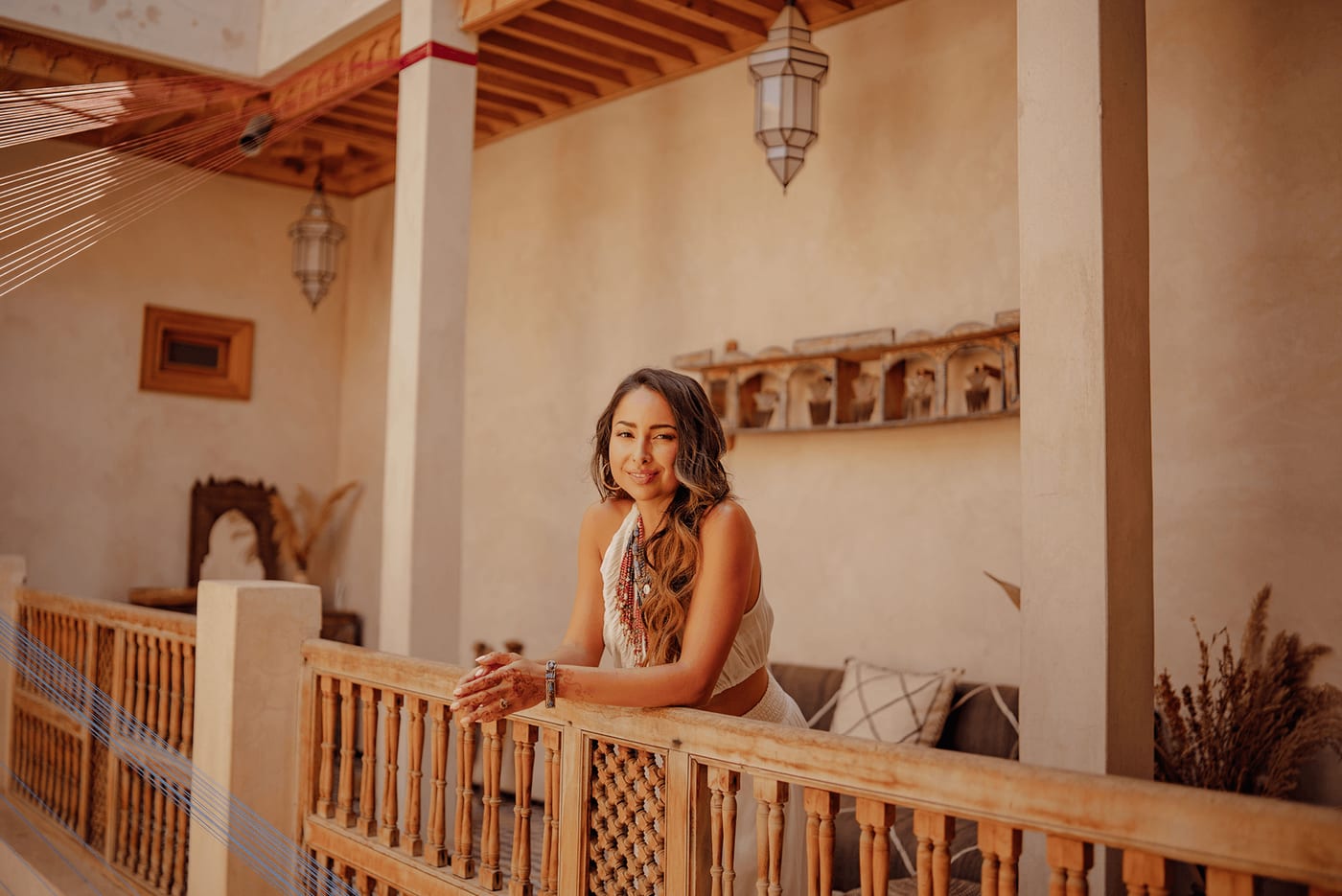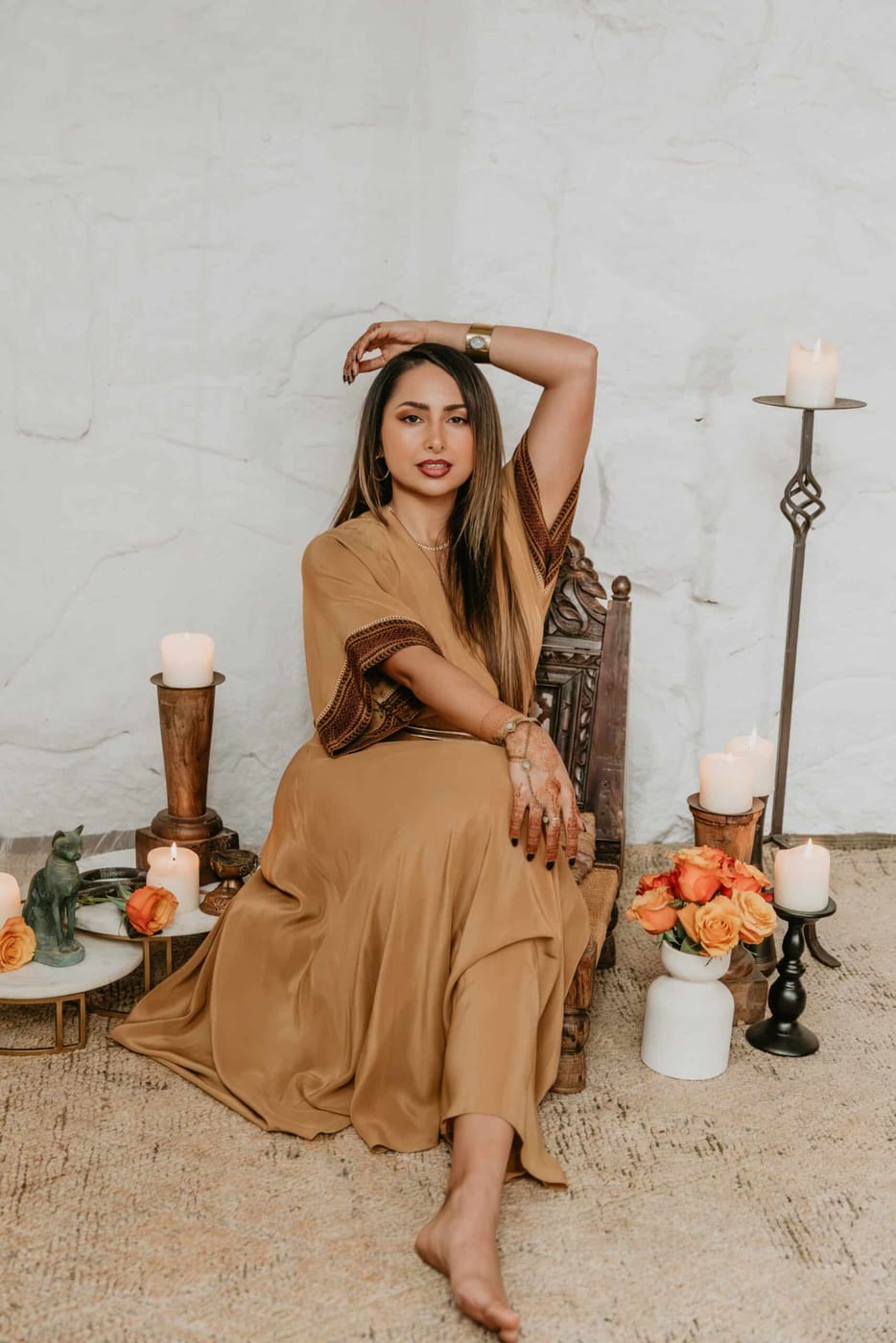

Sahara Rose came to music from a long way around. She is a bestselling author, speaker and spiritual teacher, host of the Highest Self Podcast, and the creator of the Dharma Archetypes framework (Visionary, Teacher, Artist, Entrepreneur, Activist). Her teaching has always favored lived wisdom over theory, spirituality that is felt and expressed in daily life. My Body Is An Altar, released on March 8, 2024, is the place where that conviction becomes sound.
It is a twelve-track album and her most substantial full-length musical statement. It follows a run of singles she released from 2023 onward, and it sits alongside later singles that keep pressing the same themes: trust, desire, embodiment. Think of it less as a side project than as another room in the same house. What she teaches in text and on the podcast, she practices here in sound.
Detailed documentation of the album's production is thin, so this guide stays honest about what can be said with confidence. The title and the surrounding singles point to contemporary, rhythmic music that bridges pop accessibility and sacred themes. It is not the hushed, drone-heavy territory of traditional meditation music. Her broader work treats sensuality, heartbreak and desire as legitimate sacred subjects, and the tone around this release reads as playful and embodied rather than reverent or ethereal.
Expect a voice that speaks as a person, not a priestess at a remove. Expect pacing built to be moved with, not simply sat still beside. For specifics of instrumentation and arrangement, press play and let your own ears settle it. That is the best advice anyone can give for this record.
I can't responsibly walk through the sequence track by track, since the full tracklist isn't something I can verify here. A few titles from her surrounding catalog, though, tell you where her attention lives.
"Trust Flow" and "Trust The Path" are singles from the same creative period, and their titles suggest the grounding, surrender-oriented side of her work. If you want a sense of the album's introspective pole, begin with songs in this vein.
"Wine Ya Waistline" and "Sexy Dark Night Of The Soul" sit at the other pole. The first is playful and physical; the second pairs the language of mystical crisis with sensuality, which is a very Sahara Rose move. These are singles rather than confirmed album cuts, but they map the territory the album lives in: the body as a place where longing and devotion are not opposites.
Check the album's tracklist on Spotify to see which of these, if any, appear in the twelve.
Here the album resists easy filing. Her work draws on the Ayurvedic and dharmic traditions of India, approached through the divine feminine and embodied practice rather than renunciation. She does not claim bhakti devotionalism, and she doesn't belong to a formal guru-shishya lineage. So this is not kirtan, and it is not ambient healing music.
What it is: a contemporary, pop-adjacent expression of the Shakti principle, the sacred body, in a modern idiom. The title makes a devotional claim, that the body is itself the altar, but it makes it in a voice that is ironic, warm and unafraid of pleasure. It belongs to the wave of teachers reclaiming the body as a site of the sacred instead of an obstacle to it.
This album is for the listener who is tired of spiritual music that asks them to leave their body behind. If you are in a season of heartbreak, reclaiming desire, rebuilding trust in yourself, or simply trying to feel at home in your skin, it speaks your language. It suits people who already know her podcast and want her ideas in a form they can dance to, and newcomers curious about her approach to embodiment.
It will land less well for those seeking reverent chanting, monastic stillness, or strict classical devotional sound. Listeners who want silence for meditation should look elsewhere.
Give it one uninterrupted pass, alone, in the evening, with headphones or a good speaker and nothing else competing for your attention. Let your body respond before your mind comments: notice where you want to sway, where you soften, where you resist. Then try it a second time as ritual. Light a candle, move, or simply put a hand on your chest and listen as though the song were addressed to the part of you that has been waiting to be taken seriously.
Treat it as embodied practice rather than background sound, and it will give back more than a casual play ever could.