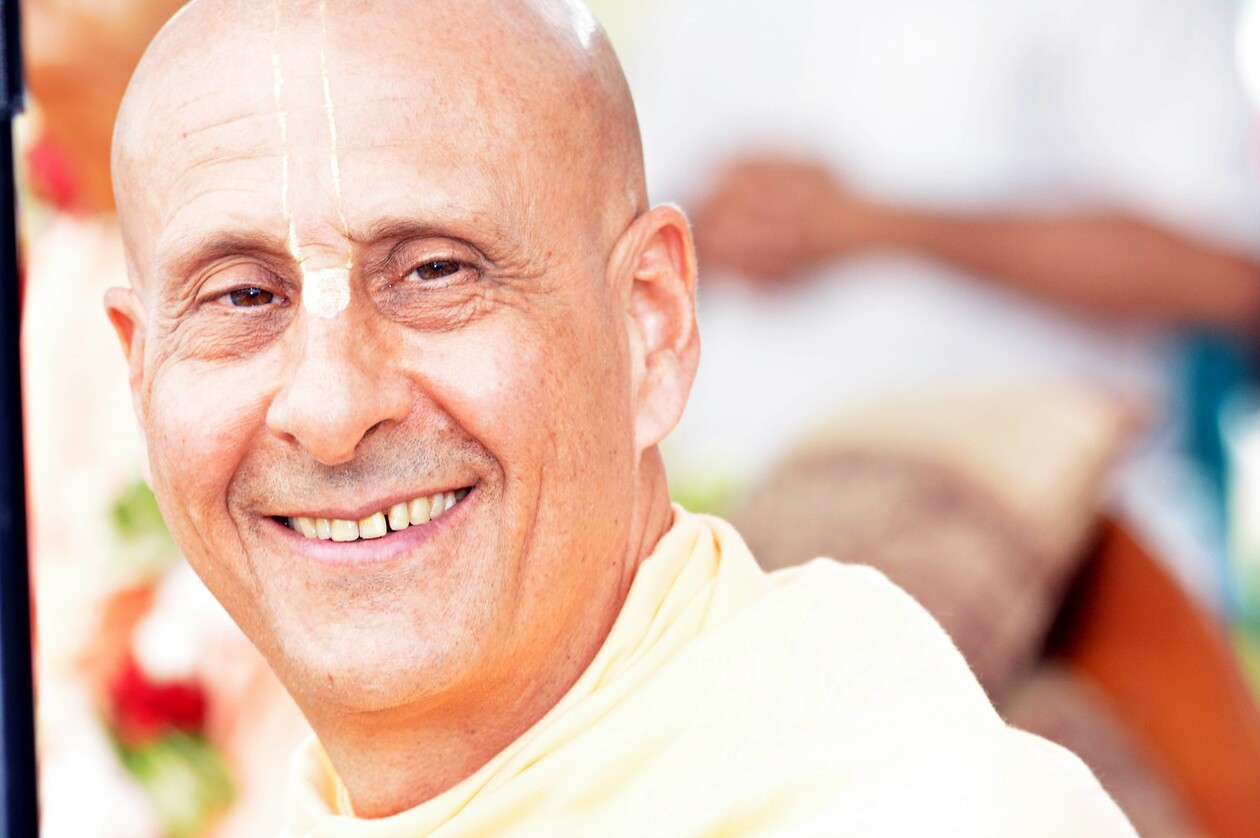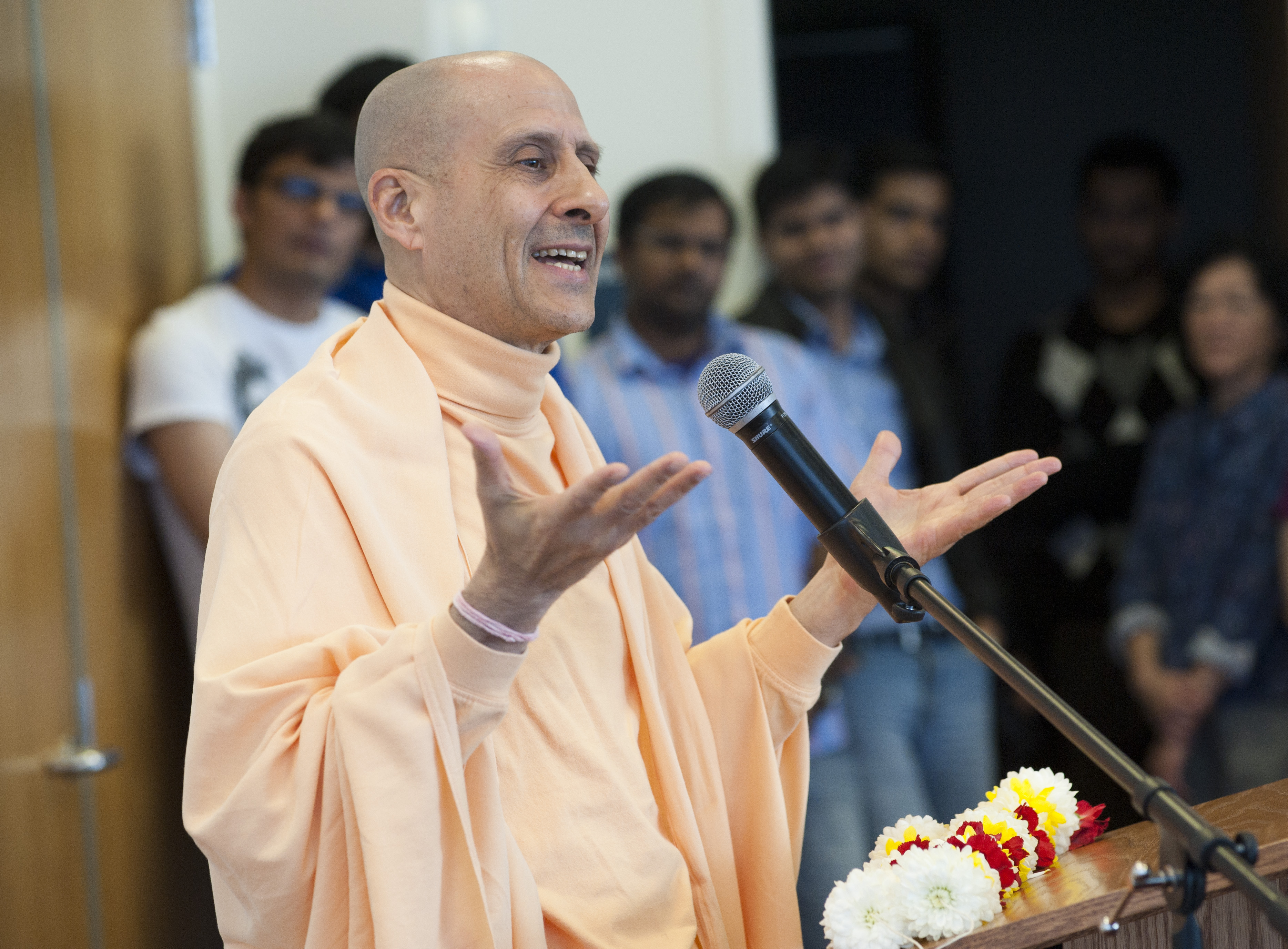

Radhanath Swami's Teaching: Approach, Method, and Voice
The Shape of a Session
A teaching session with Radhanath Swami typically unfolds through story. He builds toward insight indirectly, circling a question through narrative rather than delivering systematic instruction. Expect extended accounts—historical, scriptural, or personal—that accumulate texture before arriving at their point. The pace is unhurried. A single parable might occupy twenty minutes, with detours into character motivation, historical context, or emotional subtext. He rarely rushes to application.
Silence punctuates but does not dominate. Unlike teachers who cultivate long contemplative pauses, Radhanath Swami maintains a conversational rhythm, though he'll let a question hang briefly before answering. Retreats and longer sessions may include kirtan—devotional chanting—but the core transmission happens through spoken word. The setting often feels less like a meditation hall and more like an intimate gathering, even when addressing hundreds.
Recurring Themes
Three concerns appear with enough frequency to constitute the architecture of his teaching. First: humility as spiritual bedrock. Not the performative kind, but a functional recognition of limitation that allows something larger to work through a person. He returns repeatedly to the dangers of ego in spiritual life—how it masquerades as devotion, how it corrupts service, how it isolates.
Second: service as practice. Radhanath Swami's teaching is inseparable from action in the world. The litany of projects—school meals, eye surgeries, sustainable agriculture—aren't charity grafted onto spirituality; they're presented as the inevitable expression of bhakti. Devotion that doesn't feed someone, restore sight, or rebuild soil is, in his framework, incomplete.
Third: the accessibility of the sacred through relationship. He emphasizes connection to the divine as personal and reciprocal, not abstract or distant. Bhakti yoga is positioned as a path of love, and love requires an object. This relational dimension—framed through devotion rather than philosophical inquiry—shapes every teaching.
Questions to Sit With
Radhanath Swami doesn't traffic heavily in koans or paradoxes. His questions are often straightforward and practical: What am I serving? Where does my gratitude actually live? Am I listening, or preparing my next performance?
The more challenging inquiry, implied but not always directly stated, concerns sincerity. He asks students to examine whether their spiritual life is real or decorative—whether practice transforms behavior or merely accessorizes identity. This isn't posed confrontationally, but it threads through teachings on humility and service: Is this changing me, or am I collecting experiences?
Aesthetic and Delivery
The delivery is earnest. Radhanath Swami rarely employs irony or the self-deprecating wit common among Western dharma teachers. Humor appears, but it's gentle—a warm observation about human foibles, not sharp cultural critique. The tone remains reverent without becoming precious.
Story is the primary vehicle. He draws heavily from traditional narratives—scriptural accounts, lives of saints—but weaves in contemporary examples and, notably, material from his own journey (detailed in The Journey Home, a bestseller that functions as extended teaching narrative). These autobiographical threads aren't confessional; they're illustrative, selected to demonstrate principles rather than to reveal personality.
Scripture is referenced but not exhaustively analyzed. He'll cite texts to anchor a point, but this isn't textual scholarship. The approach is devotional interpretation—what does this passage ask us to feel and do?—rather than philosophical exegesis.
Who It Lands For
This teaching finds traction with those hungry for devotion as a legitimate path, particularly practitioners weary of purely technique-based spirituality. It appeals to people who want their inner life connected to tangible impact—service-oriented individuals frustrated by purely contemplative traditions.
It resonates with seekers who value lineage and tradition but aren't interested in rigid orthodoxy. Radhanath Swami operates within the bhakti tradition without demanding doctrinal purity from students. There's room for those exploring rather than converting.
Who May Bounce Off
Students seeking rigorous philosophical inquiry may find the approach too sentiment-focused. Those drawn to deconstructive or apophatic traditions—teachings that strip away concepts—might chafe at the relational, devotional language that saturates this work.
The earnestness can read as unexamined optimism to practitioners shaped by teachers who foreground difficulty, doubt, and the deconstructing of spiritual fantasy. The emphasis on humility, while genuine, is presented more as virtue than as the sometimes brutal dismantling it can become in other lineages.
The Wider Tradition
Radhanath Swami teaches squarely within the bhakti yoga lineage, a devotional stream within Hindu tradition that emphasizes loving relationship to the divine as the primary means of transformation. Bhakti distinguishes itself from jnana (knowledge-focused) and karma (action-focused) paths by centering emotion and devotion—though in practice, all three interweave.
His modern expression of bhakti bridges monastic rigor and householder accessibility, traditional devotion and contemporary social activism. The teaching carries forward an ancient current while insisting that current must irrigate the world.