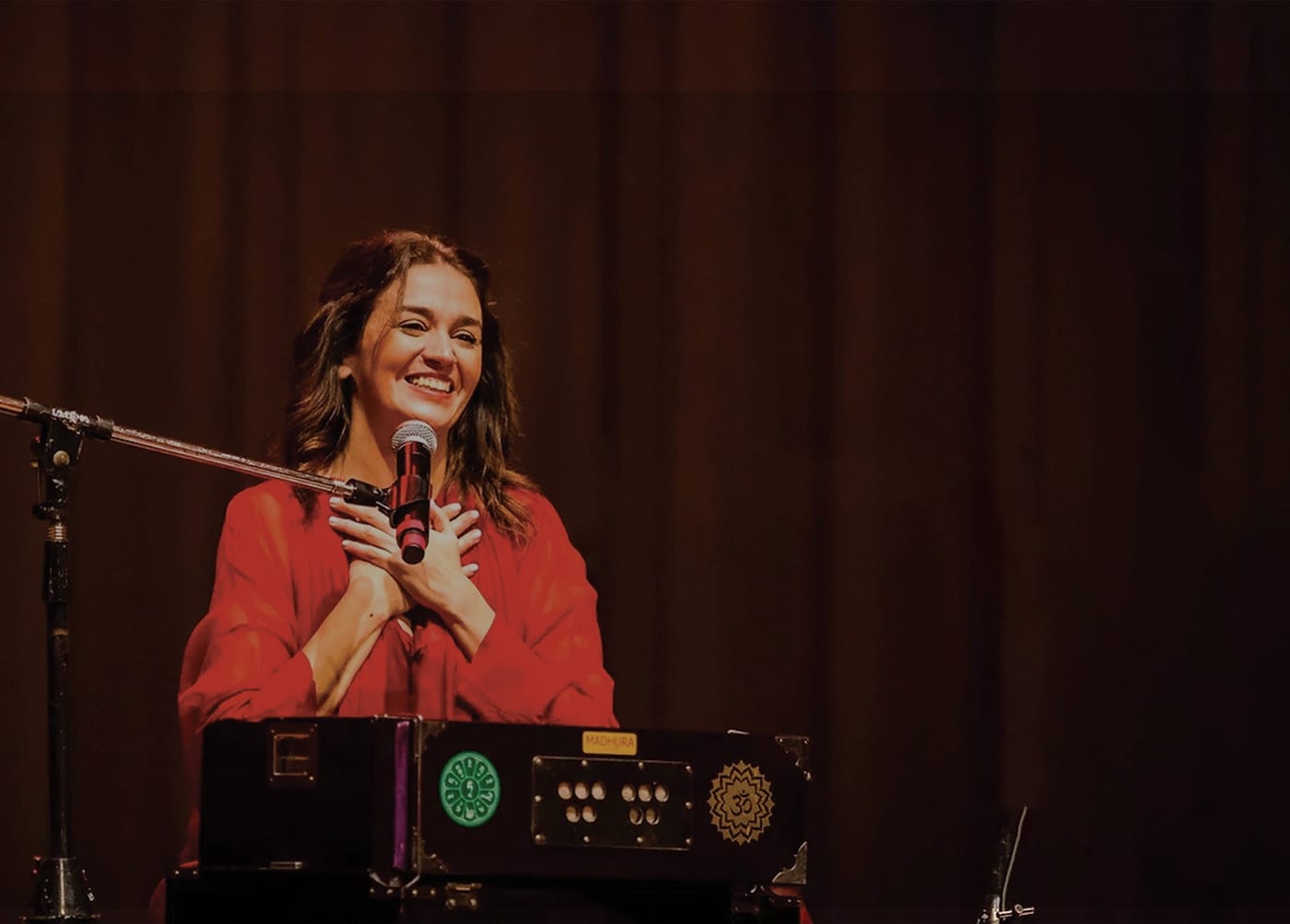

The Best Entry Point: Inner Light (2017)
Start with Inner Light, her debut album. It introduces her voice and the range of her mantra practice without overwhelming you. It opens with fundamentals and builds into a coherent listening experience: Sanskrit lyrics on a clear alto voice, with minimal instrumentation such as harmonium and light strings. Listen to it front to back, ideally in one sitting. Her albums reward sequence more than shuffle.
The Next Three Stops
**1. Into the Heart (2019).** This is the natural second step. It deepens the meditation work and shows her practice maturing over two years.
**2. Beyond (2023).** Her most recent album, at seven tracks, and the most polished. It was produced by Anibal Kerpel and her long-time collaborator Diego Marchionatti. The production is slightly fuller, but her voice remains the primary instrument. It's worth saving until you've absorbed the earlier work.
3. A single chosen by tradition. Once you know her sound, singles work well as focused practice. Om Tare (2023) is a mantra to Tara, the Buddhist deity associated with compassion. Ganesha Sharanam (2022) addresses Ganesha and is traditionally chanted to open ceremonies and remove obstacles. Shakti Gayatri (February 2026) is her newest release. If you'd rather start with something more contemporary, Lokah Samastah (2020) is framed as a prayer for challenging times.
What to Expect
Expect slow pacing, space between phrases, and little ornamentation. There's no drum machine, no synth, and no layered loops, only her voice, harmonium, perhaps strings, and silence. The bio describes her voice as luminous and soothing. Think of it as chamber music for chanting: intimate and built for close attention. The mantras are mostly in Sanskrit, with very little English.
Common Beginner Misunderstandings
"This is kirtan, so I'll be singing along in a circle." Streaming platforms tag her as kirtan, but her work is closer to solo practice than to communal call-and-response.
"It's background music." It can sit in the room, but the arrangements are sparse by design. Played while you're distracted, it may feel like nothing is happening.
"It's only for Buddhists." Her foundation is Tibetan Buddhism, but the catalog crosses Hindu, Buddhist, Sikh, and shamanic mantra traditions. She grew up in an interfaith household with a Jewish father and a Christian mother, and that sensibility shows. You don't need to identify with any tradition.
"I need to understand the Sanskrit first." You don't. The sound and repetition work before comprehension does.
"It's mindfulness-lite." It isn't secular wellness. It assumes some openness to contemplative practice.
When It Lands Hardest
Her own path into this work began with loss. After her mother's sudden passing in 1999, she started formal studies in Buddhist scriptures, mantras, and meditation. That history suggests where the music may hit hardest: periods of grief, transition, or exhaustion, when noise feels intolerable and you want something steady. It also suits anyone already building a sitting practice, or a yoga teacher looking for something to open or close a class. If you want high-energy music, this isn't the moment for it.
A One-Week Starter Plan
Day 1: Play the first few tracks of Inner Light with no other task. Sit or lie down and just listen.
Day 2: Play the same tracks again. Pick one phrase and hum along quietly, without worrying about pronunciation.
Day 3: Finish Inner Light, start to end.
Day 4: Begin Into the Heart. Listen for what's different from the debut.
Day 5: Take a single mantra and repeat it. Try Om Tare if you want a compassion focus, or Ganesha Sharanam if you're starting something new and want a sense of clearing the way.
Day 6: Try her guided meditations on Insight Timer, where she also offers courses and workshops. Hearing her teach alongside the chanting adds useful context.
Day 7: Listen to Beyond in full. Afterward, notice which of the week's pieces you'd return to, and make that your daily practice going forward.
Keep sessions short, ten to twenty minutes, and at the same time each day. Consistency matters more than length.