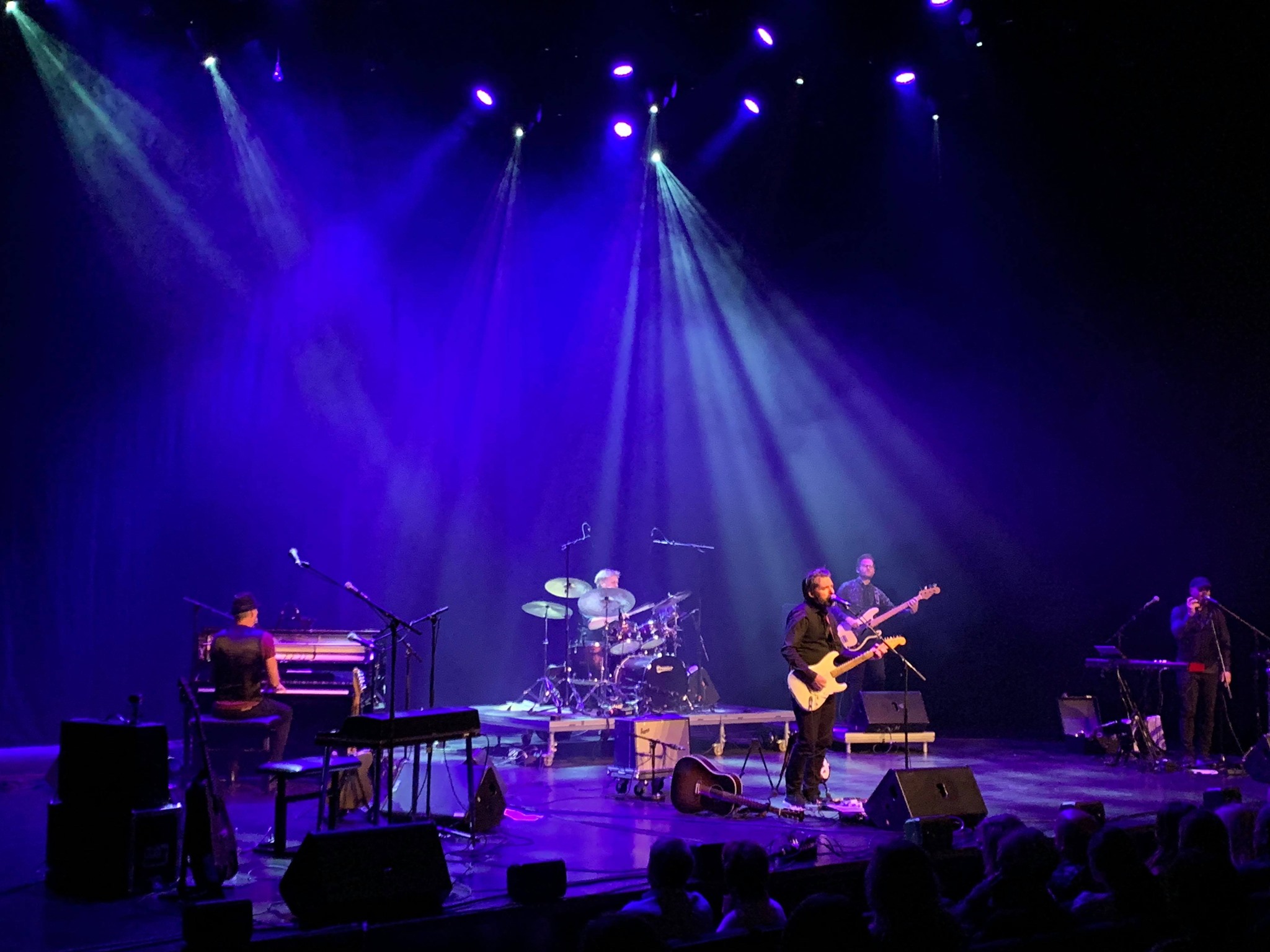

Melle's music arrives quietly, the way late afternoon light slips through half-drawn curtains. His sound is rooted in self-produced indie pop, but calling it simply "pop" misses the deliberate restraint at its core—the way he treats silence as an instrument, how he lets a single Rhodes piano line breathe before layering in a second element. This is bedroom pop that has outgrown its laptop origins without abandoning the intimacy that defined it.
The instrumentation is tactile and specific. Melle works with what he calls his "signature instruments"—a rotating cast of acoustic and electronic tools that anchor his compositions. You'll hear the warmth of analog synths butting up against fingerpicked guitar, drum machines programmed with human hesitation, bass lines that walk rather than drive. His voice sits in the mix like another texture rather than a focal point demanding attention. It's conversational, occasionally doubled or harmonized with himself, never pushing into the theatrical range that indie pop sometimes mistakes for emotion.
Tempo-wise, Melle favors the middle ground—not quite downtempo, not uptempo enough to be called energetic. His tracks move at the pace of thought, of walking through a city you know well enough to stop noticing. The textures are what pull you in: the grain of a particular synthesizer patch, the room tone captured around an acoustic guitar, the subtle distortion on a vocal that suggests analog tape even if it was never near one.
Melle emerges from the Dutch independent music scene, a tradition that values melodic intelligence and production restraint over bombast. Artists like Benny Sings and Eefje de Visser have established a template: songs built on strong melodic bones, production that serves the composition rather than overwhelming it, and a resistance to the glossy maximalism that dominates much contemporary pop. It's a lineage that traces back through European indie pop—artists who absorbed R&B, soul, and electronic music without losing sight of the song itself.
This is not devotional music in the traditional sense—no mantras, no gospel testifying, no kirtan call-and-response. But there's something devotional in Melle's approach to craft, in the discipline of self-production and the commitment to doing everything himself. From instrumental tracking to final mix decisions, he handles the entire chain of creation. This isn't DIY as aesthetic pose; it's a working method that shapes the sound itself.
What distinguishes Melle in this landscape is his resistance to studio slickness while maintaining professional clarity. His production doesn't sound lo-fi or deliberately rough; it sounds deliberately chosen. Each element has space around it. You can hear the decisions—why this particular synthesizer sound, why this degree of reverb, why these instruments and not others.
His 2026 album Before I Lose It spans thirteen tracks and represents his fullest realization of this approach—instrument-forward songwriting where the production choices are compositional choices, where the arrangement is the song as much as the melody. Following that, the Reworks EP—released on vinyl only—showed another dimension: his willingness to strip songs down, to reimagine catalog material with collaborative arrangements featuring seven different contributors. It's a move that reveals confidence, the ability to trust that the songs can hold up under different treatments.
If you're coming to Melle's music for the first time, adjust your expectations away from immediacy. These aren't songs built on hooks that grab you in fifteen seconds. They're built on accumulation—details that reveal themselves on second and third listens, production choices that become more interesting as you notice them.
What may surprise you is the warmth. For all the restraint, this isn't cold music. The analog elements, the careful mic placement, the human imperfections programmed into the drum machines—it all adds up to something inviting rather than distant. You might also be surprised by the consistency of vision. This is clearly the work of a single sensibility making all the decisions, for better and worse.
In the wider landscape of conscious music and independent production, Melle occupies a specific niche: the self-contained artist working with intention rather than affect. He's not chasing the ambient-spiritual market, not positioning himself as a meditation soundtrack. But there's attention here—to sound, to space, to the small decisions that accumulate into a sonic identity. It's the consciousness of craft, the devotion to doing it yourself not because you have to, but because that's how the work needs to be made.